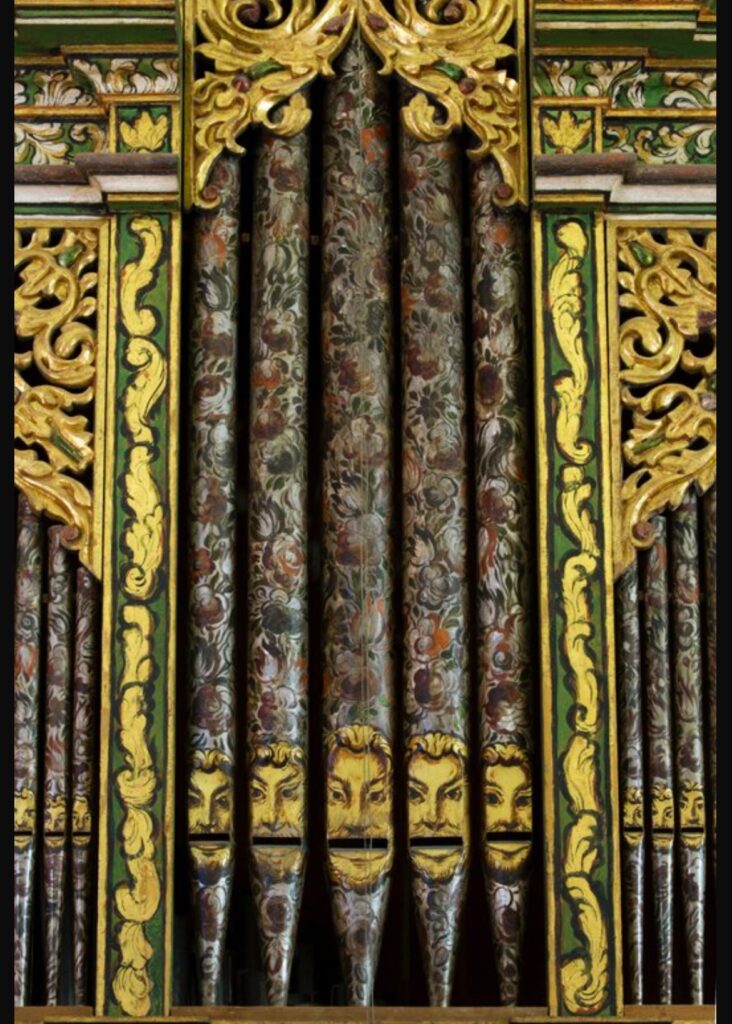
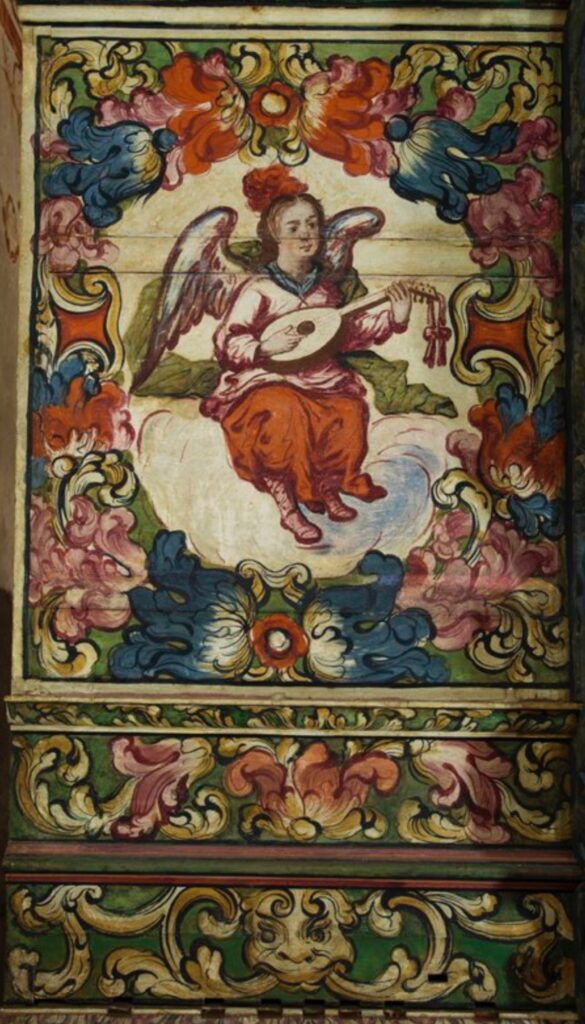
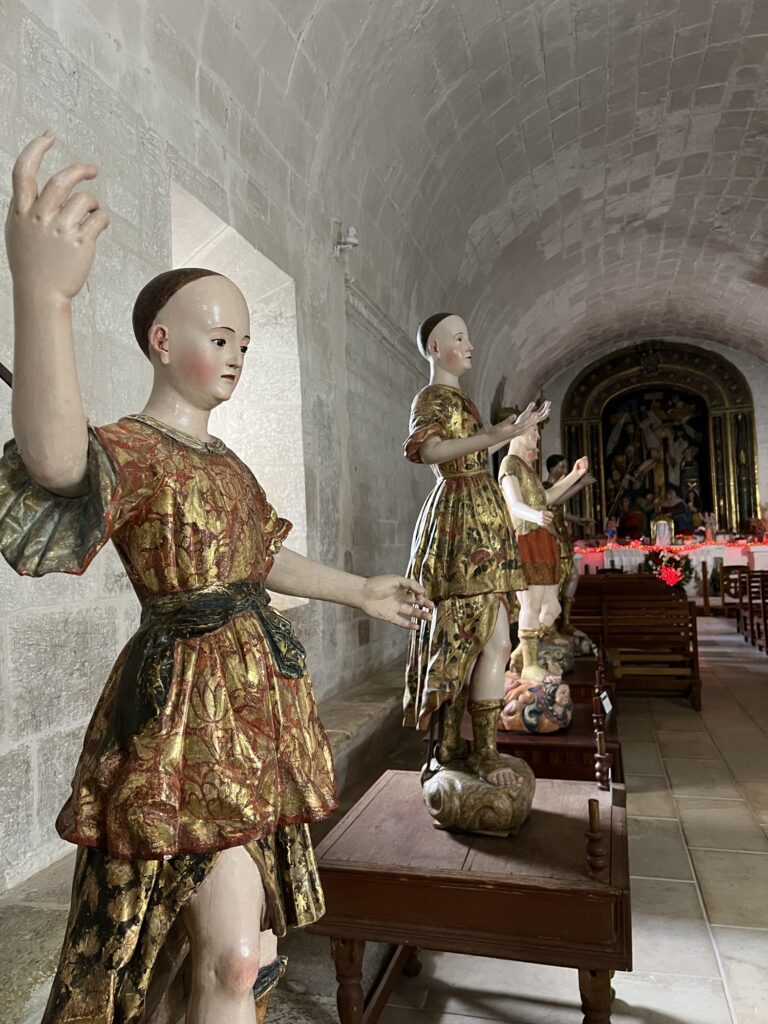
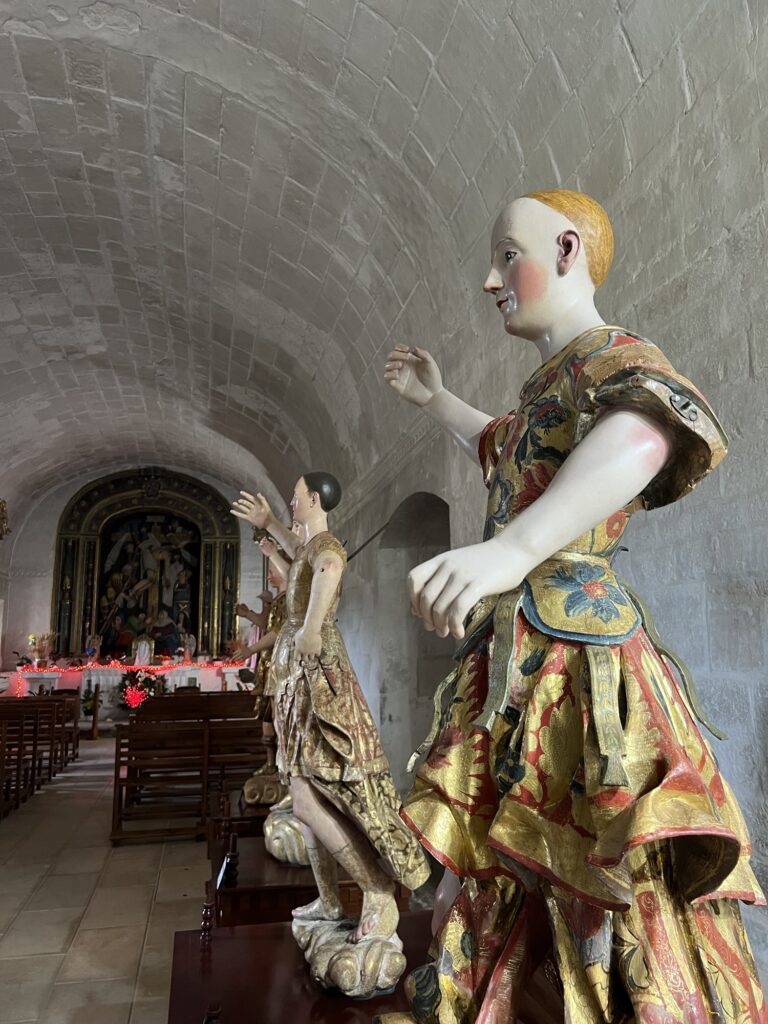
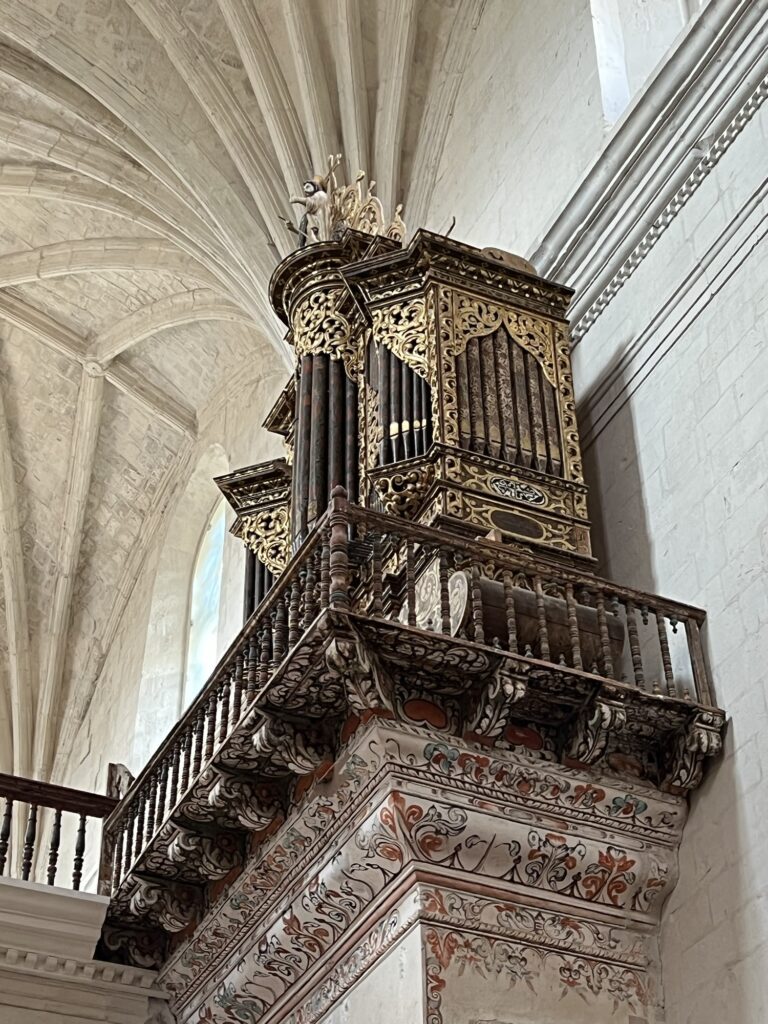
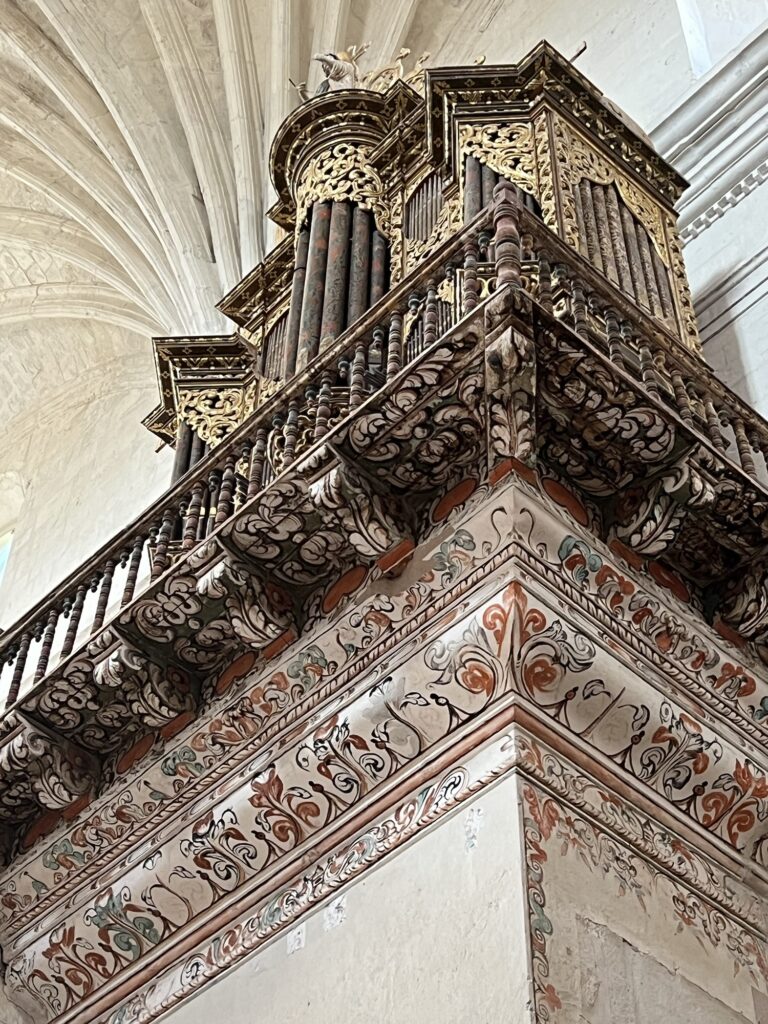
Los mascarones custodios adornan los tubos del magnífico órgano de Tlacochahuaya, cada vez que el órgano suena ellos nos cuentan una historia, un secreto, los misterios de los glifos entre los muros del templo.
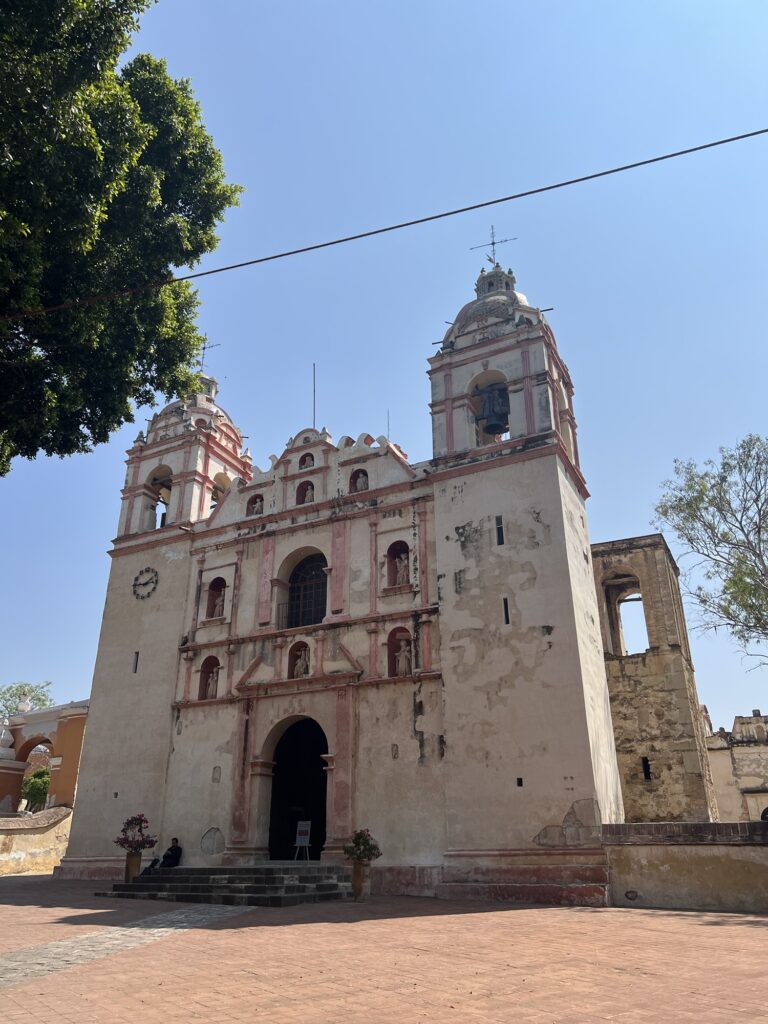
Siguiendo la ruta Dominicana, en los valles centrales de Oaxaca, nos acercamos al templo y ex-convento de San Jerónimo Tlacochahuaya, con uno de los interiores y frescos más hermosos de esta ruta así como su órgano que imponente cobra vida, desde sus tubos que parecen observarnos con una mirada más allá del tiempo y el misterio de su esencia.
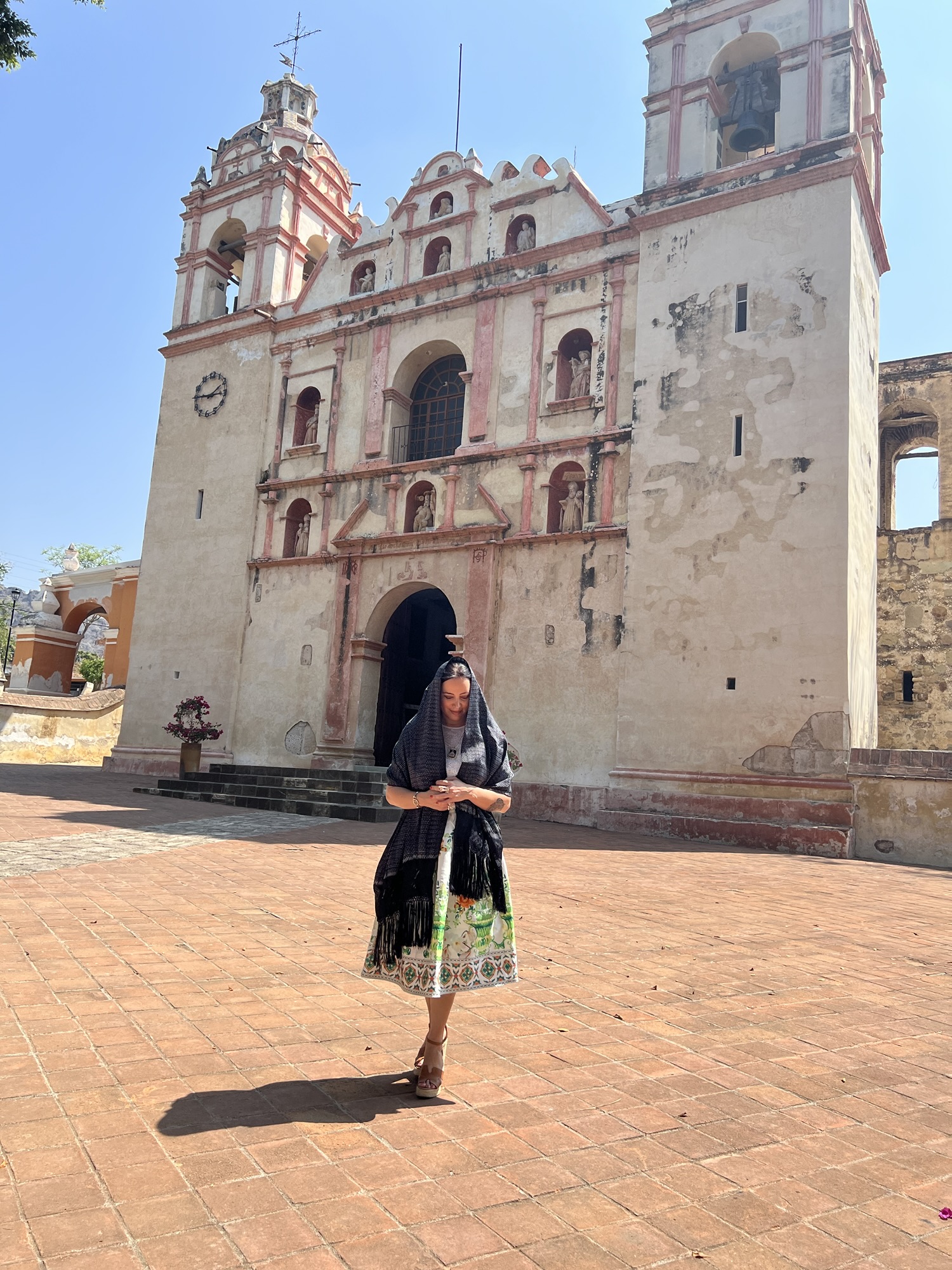
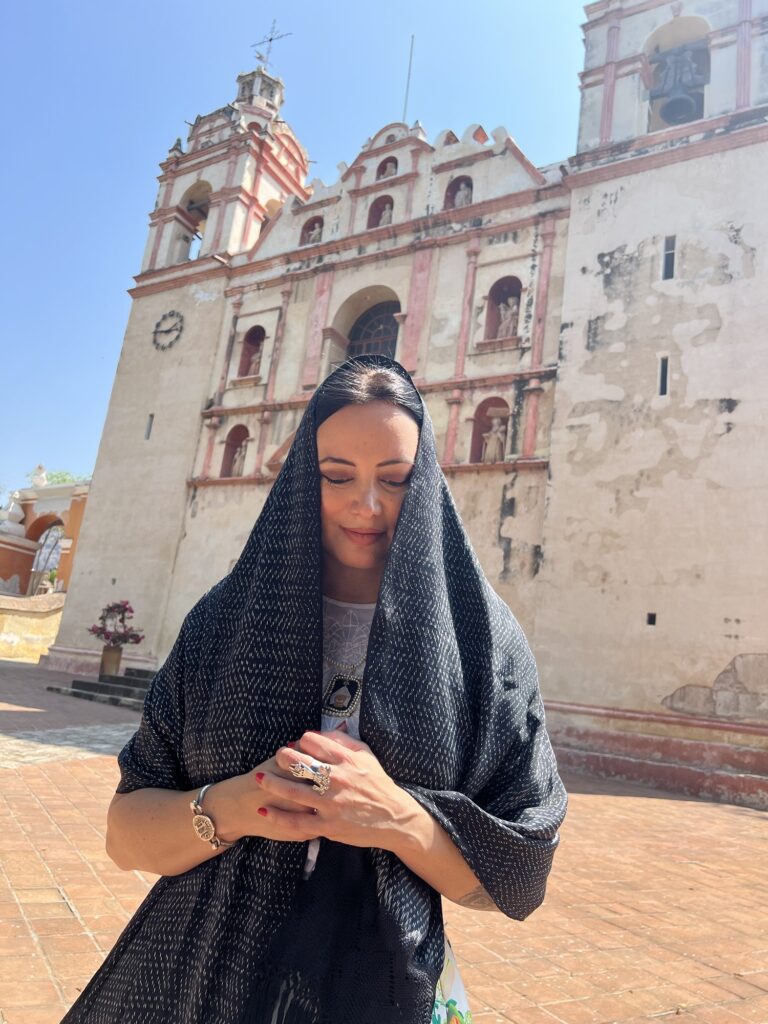
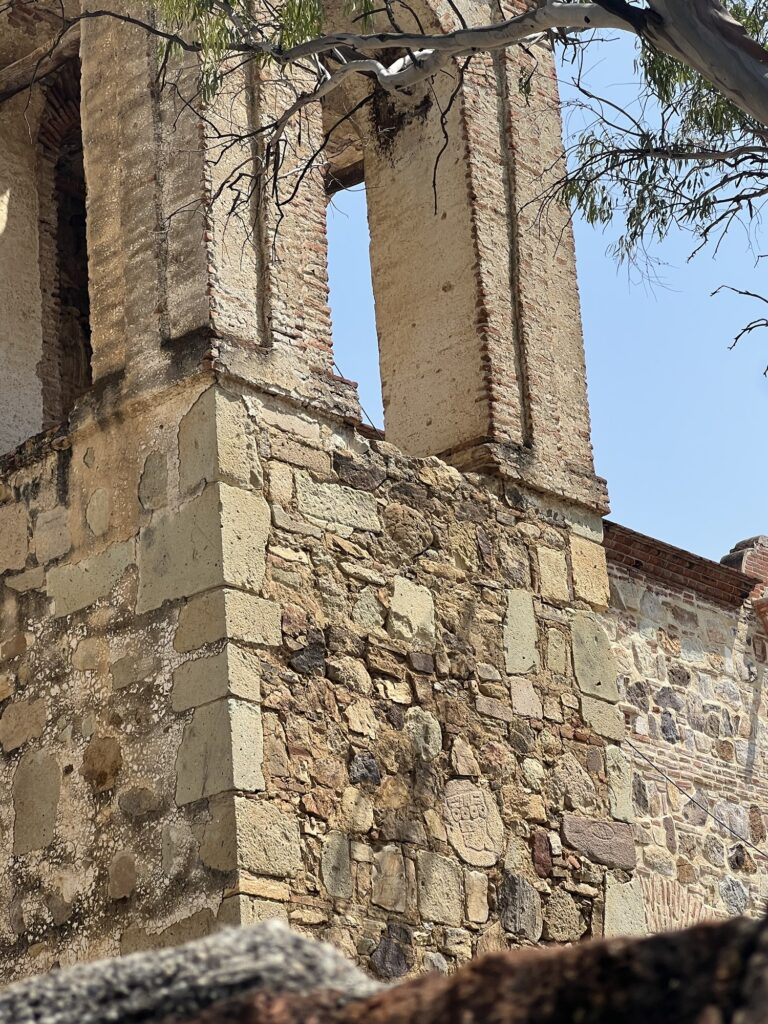
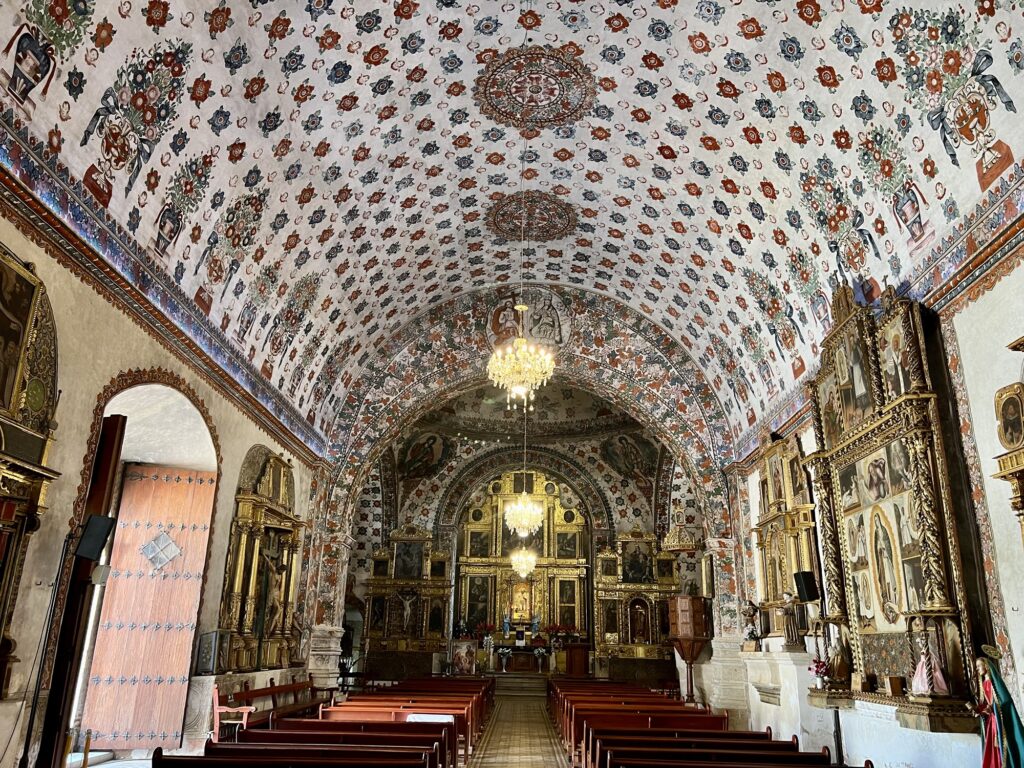
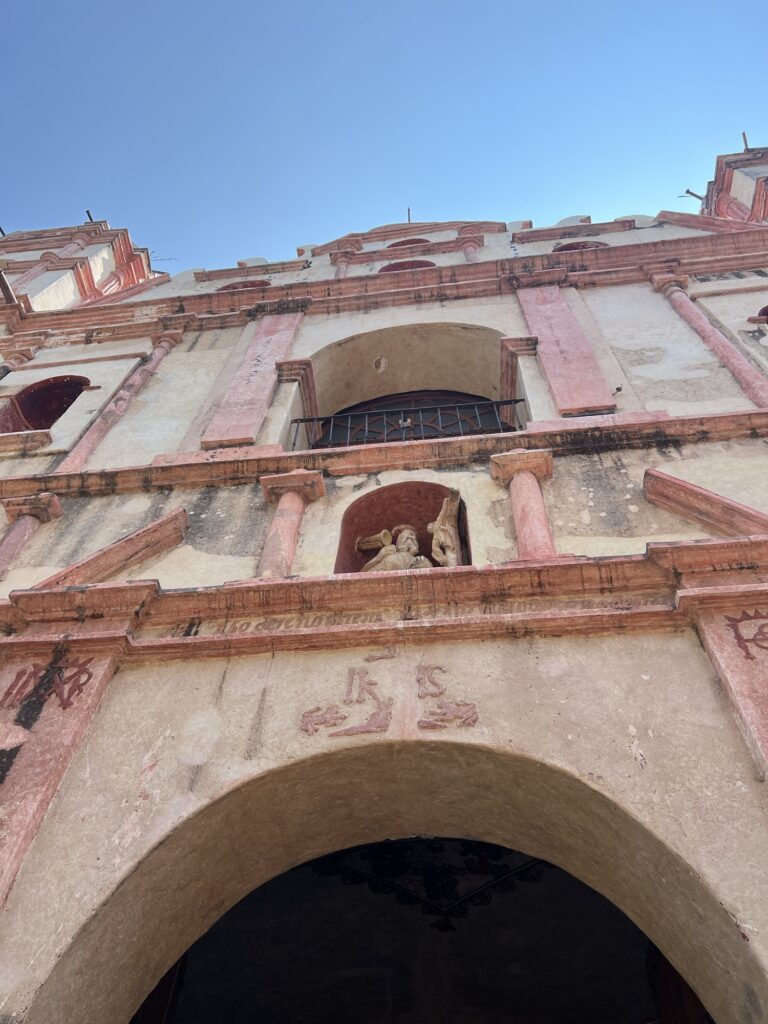
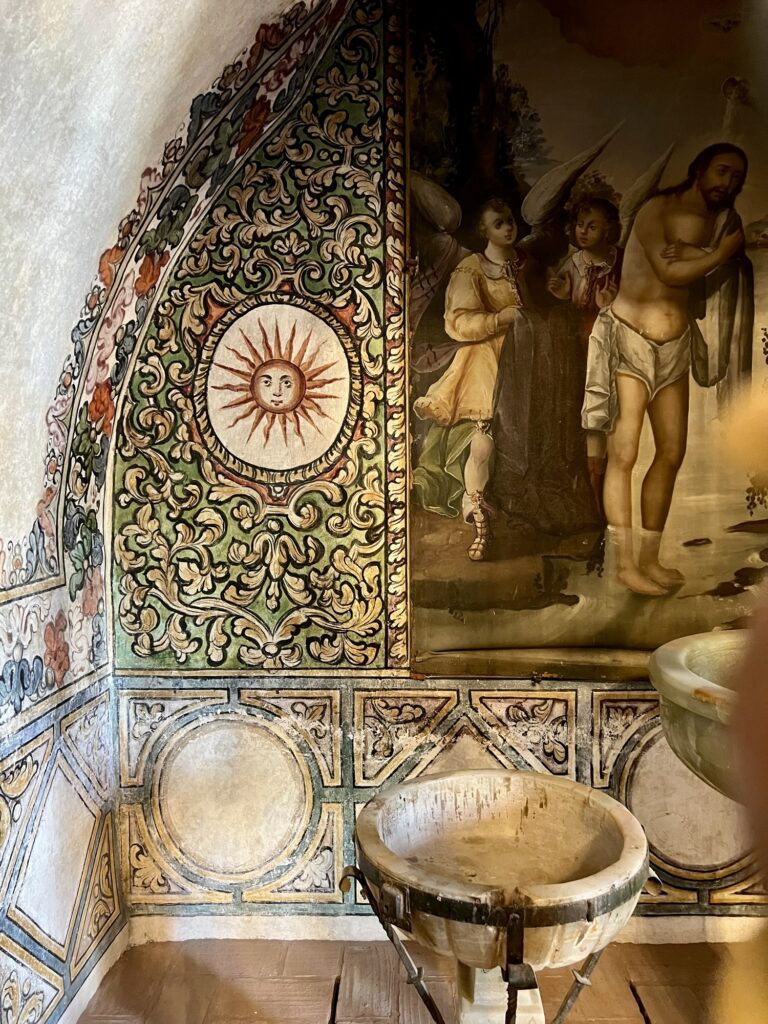
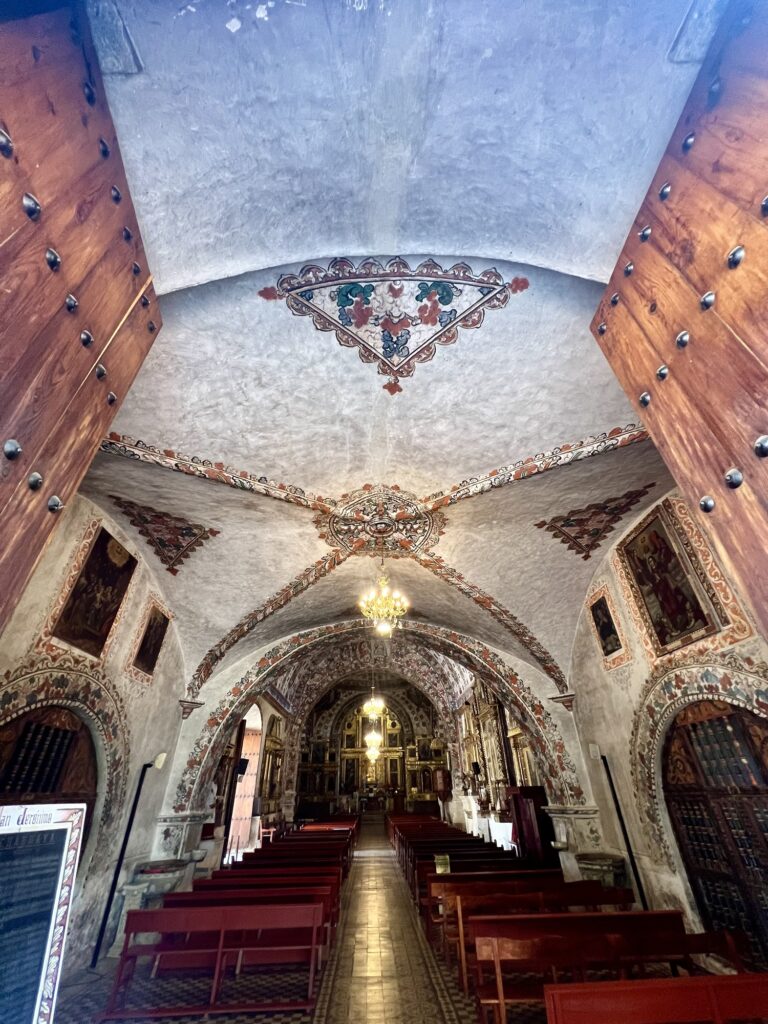
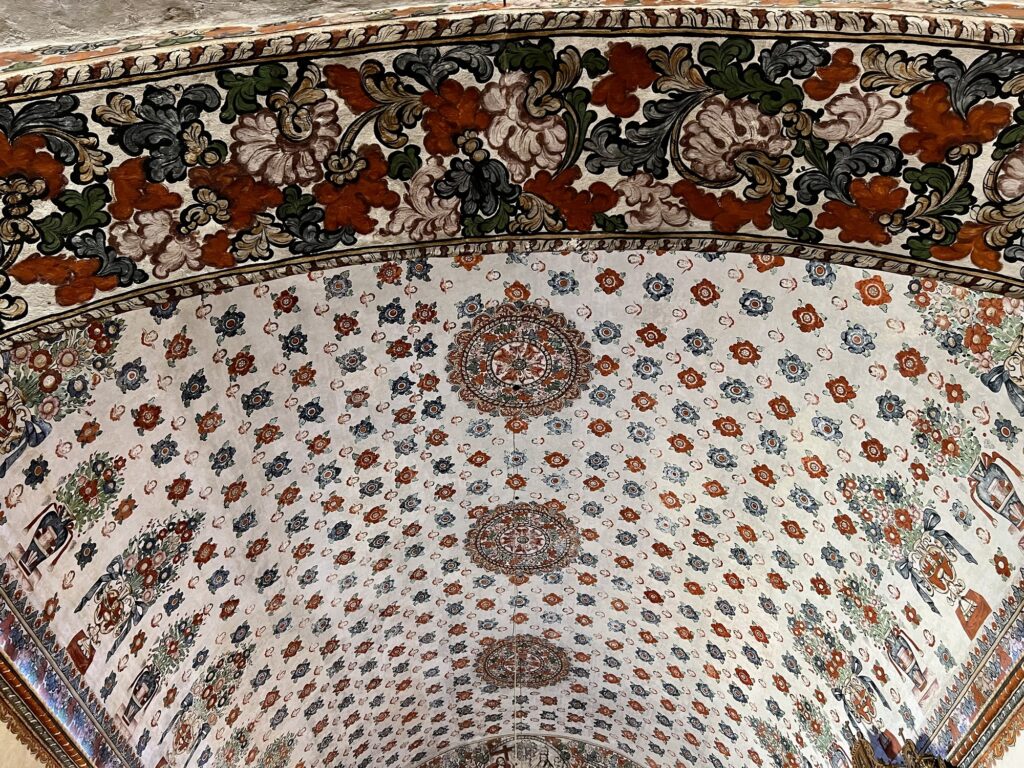
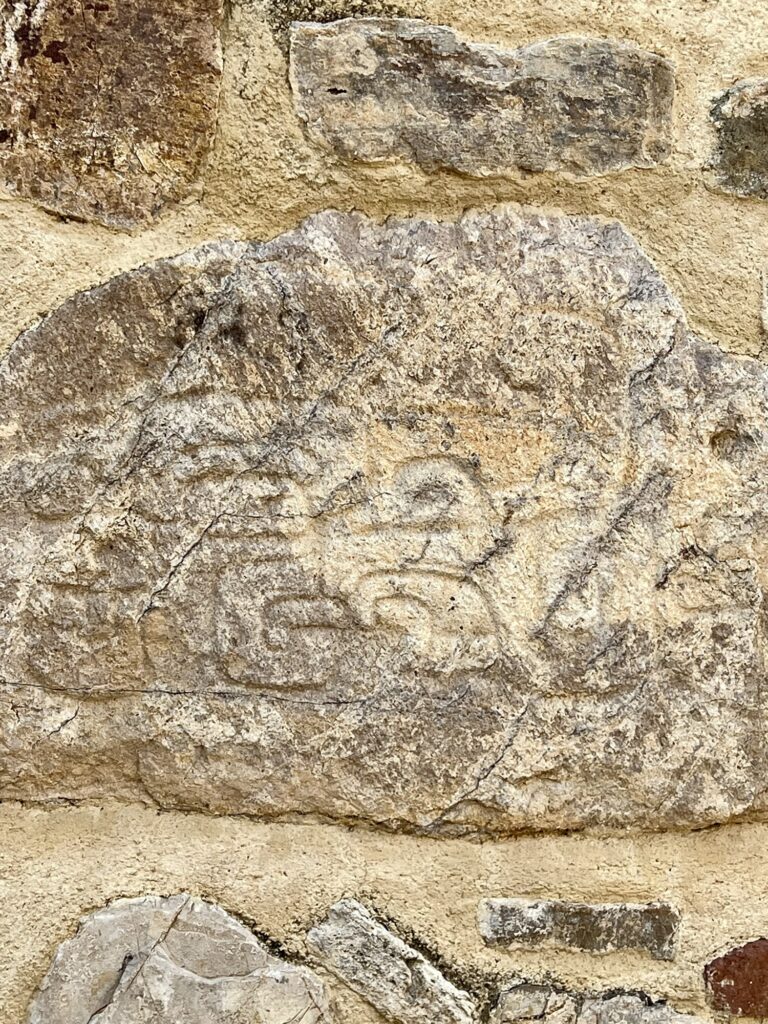
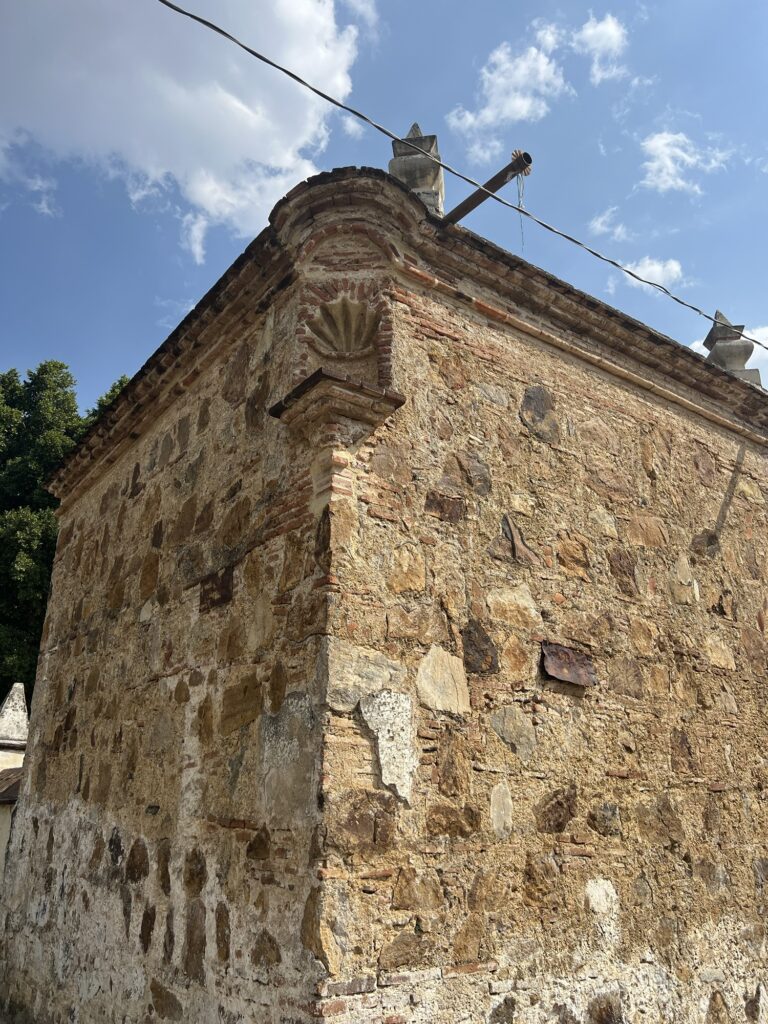
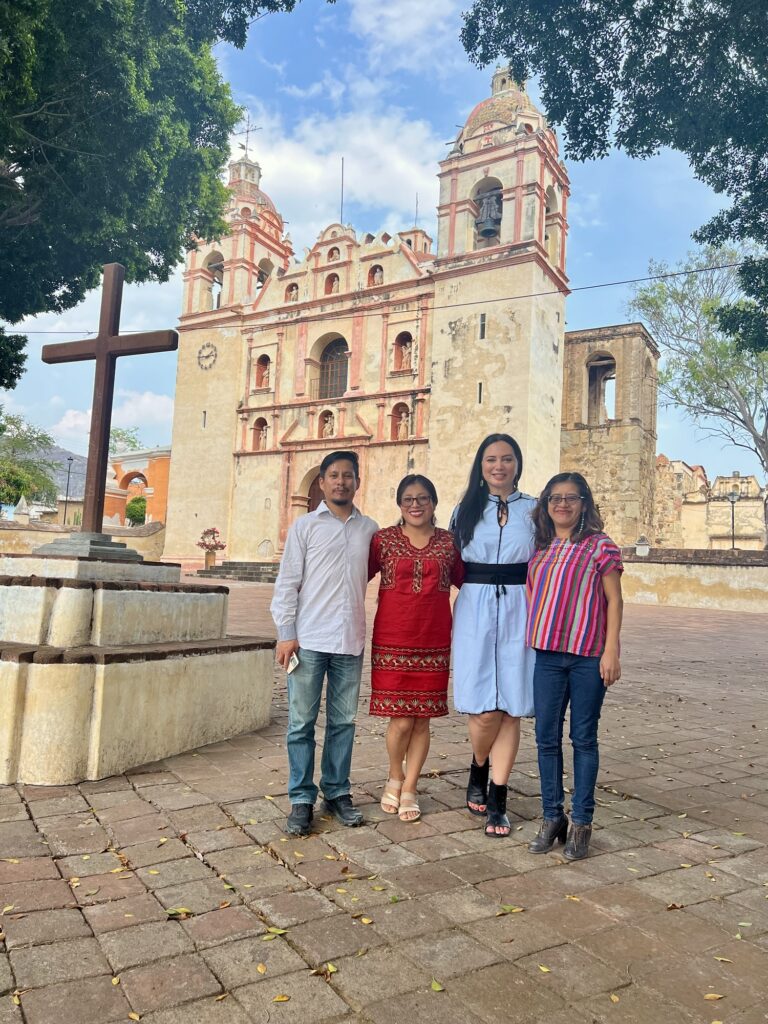
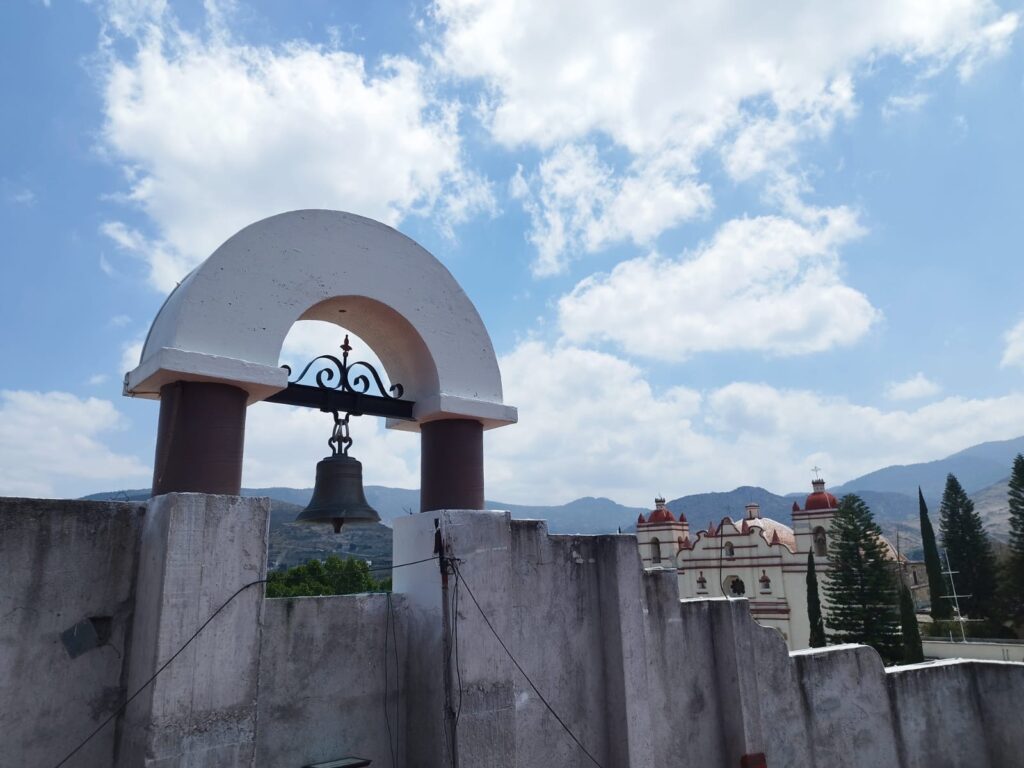
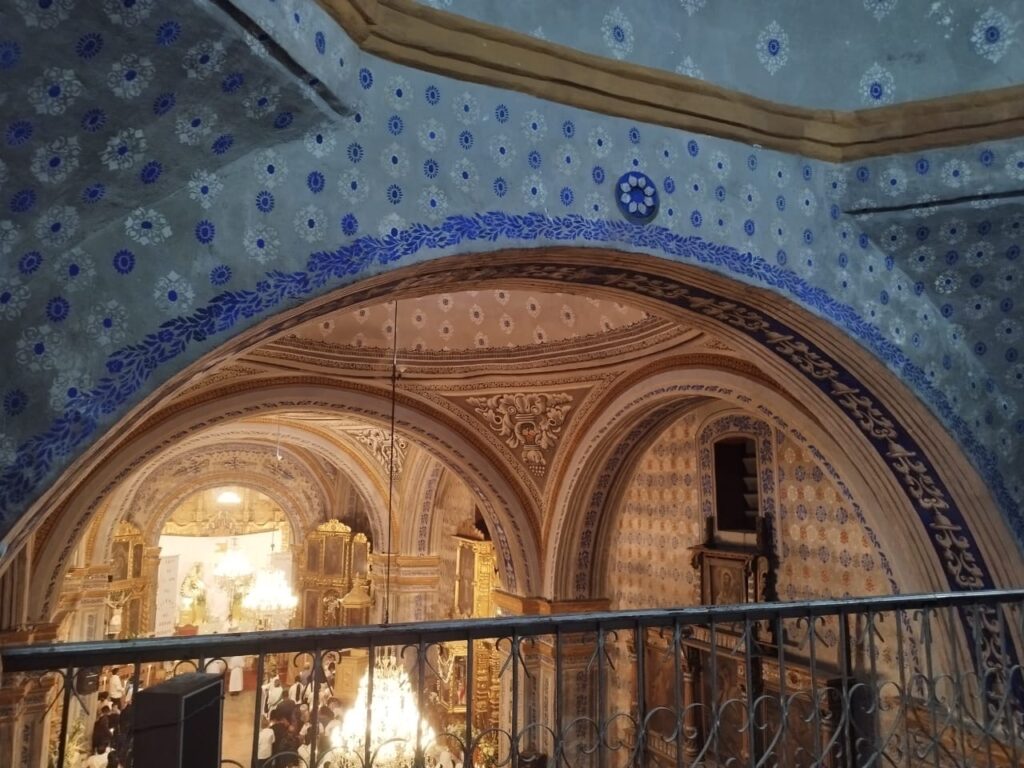
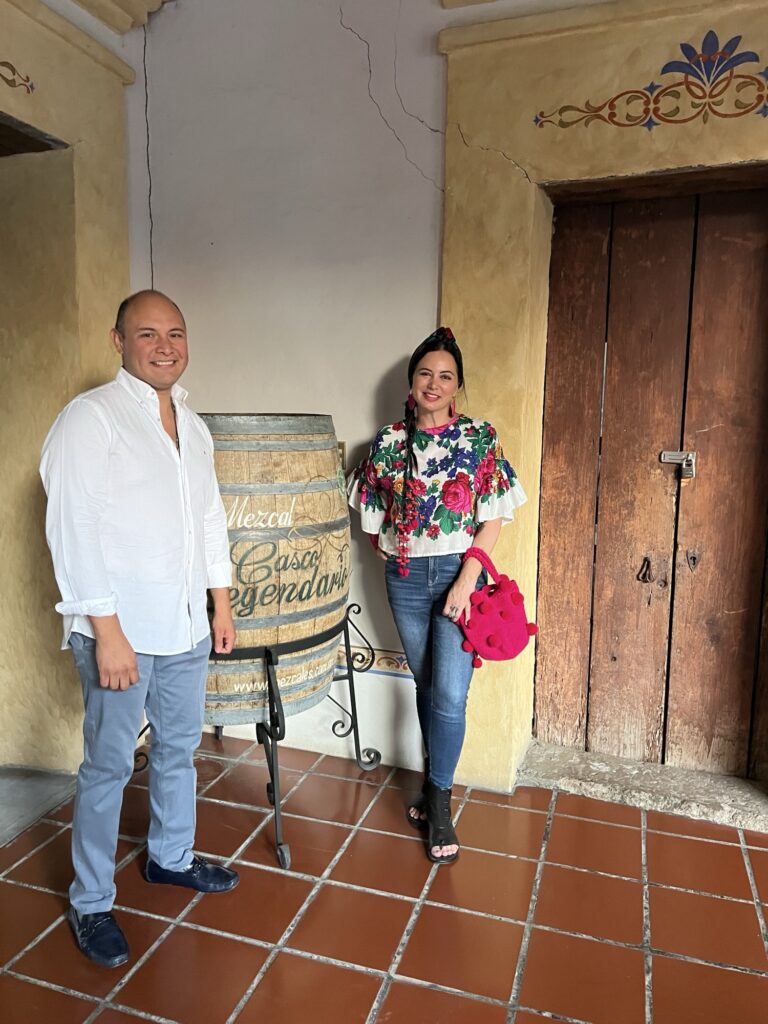
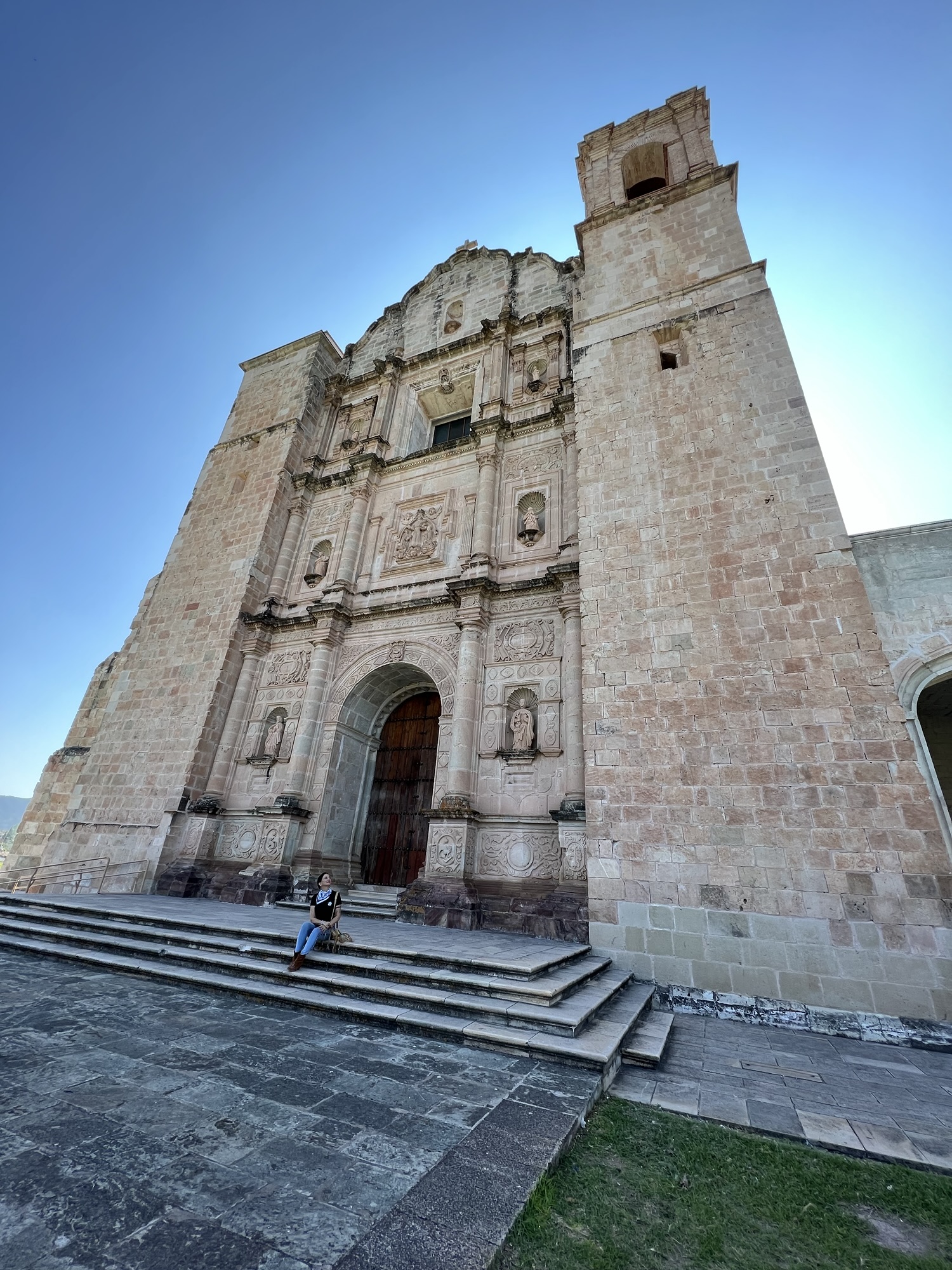
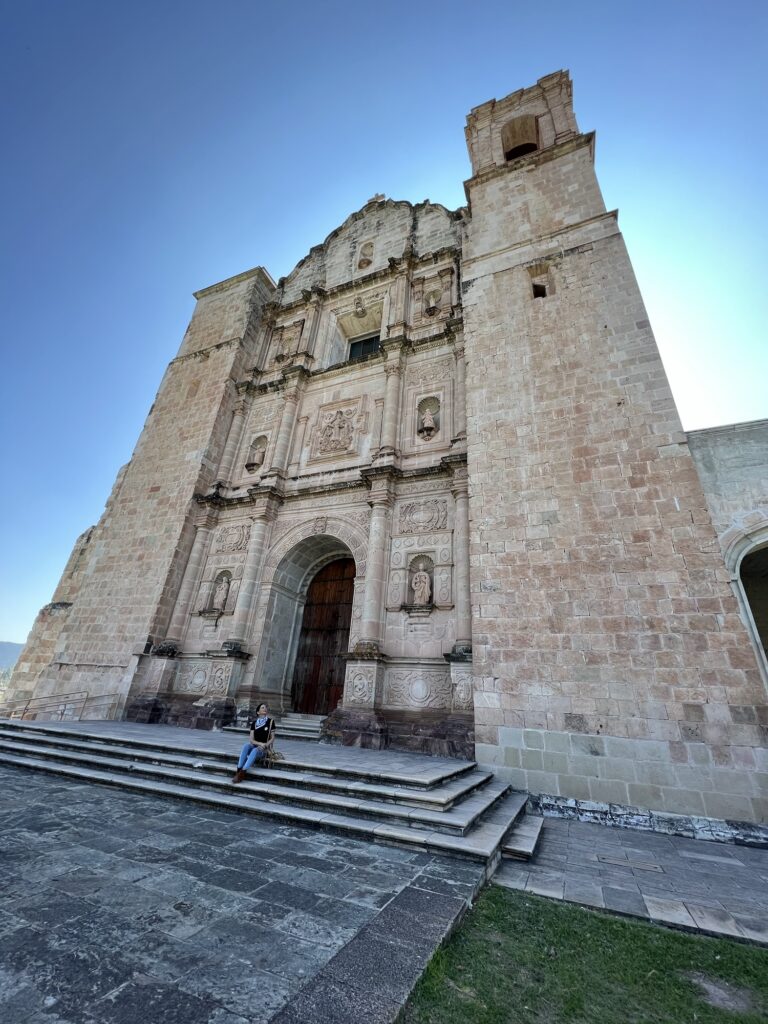
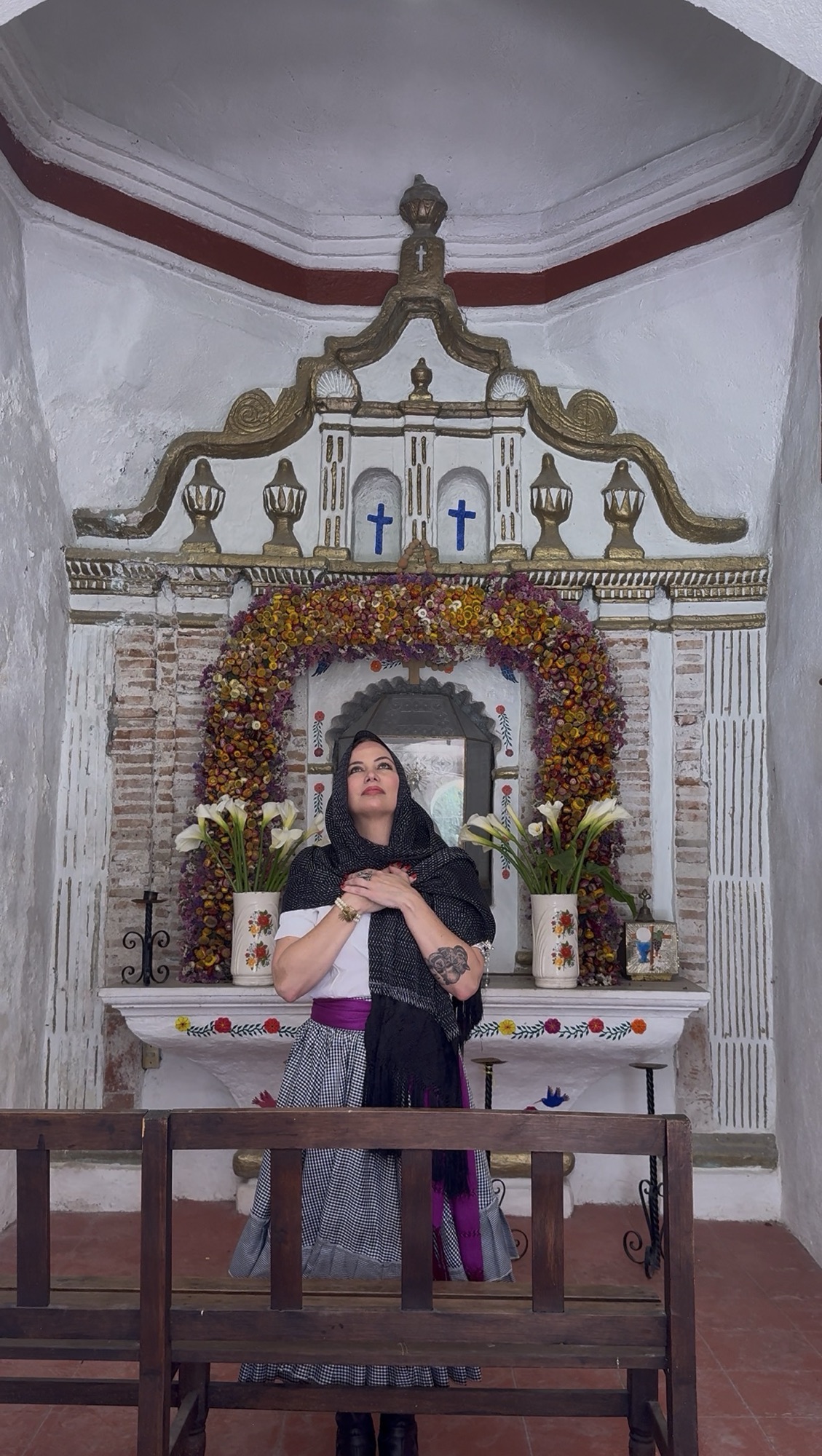
Montserrat Franco frente al templo y ex-convento de Tlacochahuaya Observa fijamente este muro del campanario del templo de Tlacochahuaya, dos glifos se encuentran allí como fiel testimonio de presencia Zapoteca a través de los siglos.Debido a su compleja serie de frescos y retablos, el templo de Tlacochahuaya ha sido nombrado como la “Capilla Sixtina Zapoteca” Fachada de la entrada principal del templo de San Jerónimo Tlacochahuaya Baptisterio con frescos restaurados en 1999, escena de San Juan El Bautista y el Rey Sol. Se atribuye a los artistas Zapotecos bajo la guía de los frailes Dominicos.Entrada al templo con su nave principal, los frescos muy particulares del arte en las cortes renacentistas Europeas El patrón de flores y jarrones, se destaca el color rojo carmesí el cual proviene de la grana cochinilla y el azul añil, tintes naturales utilizados en Oaxaca desde antes de la llegada Europea. Al observar detenidamente los muros del templo encontramos verdaderos testimonios de glifos Zapotecas. Detalle de un maguey en uno de los muros a la entrada principal que conduce al templo El Templo y Ex-Convento de San Jerónimo Tlacochahuaya. Ruta Dominica de los Valles Centrales de Oaxaca.
Orígenes
Tlacochahuaya se considera tradicionalmente fundada por un guerrero zapoteca llamado Cochicahuala, cuyo nombre significa “el que lucha de noche”.
Tras la llegada de los españoles, las tierras fueron otorgadas a Don Gaspar Calderón y la región fue evangelizada por la Orden Dominicana.
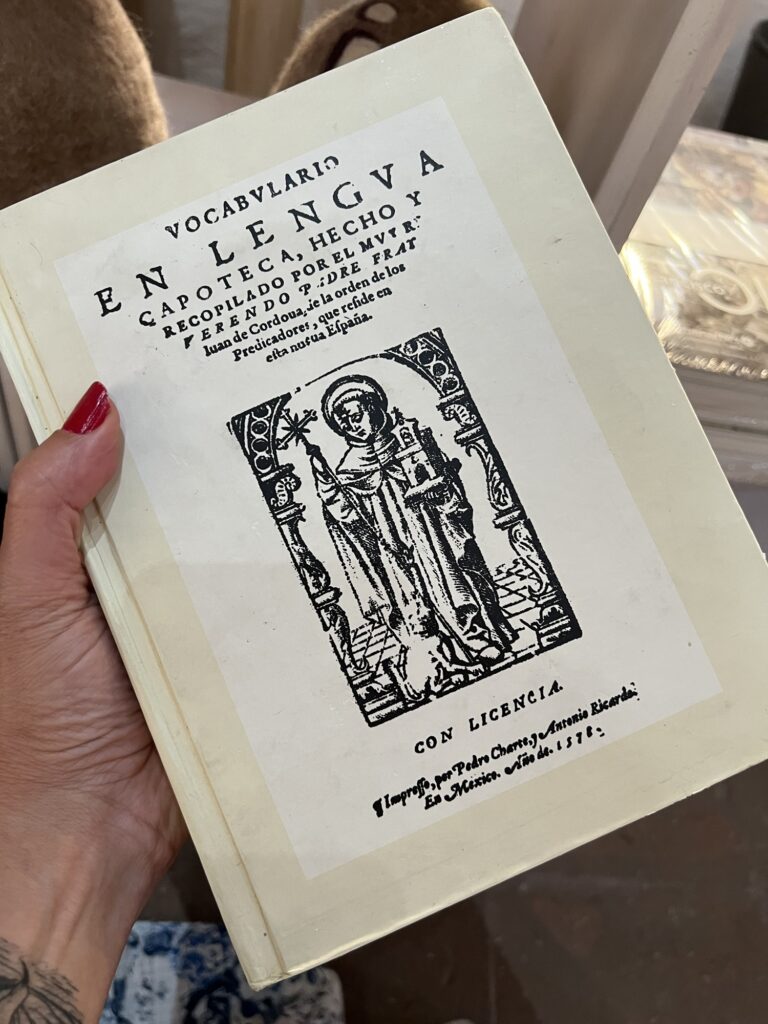
En 1558 se establecieron la iglesia y el convento de San Jerónimo, como un lugar de contemplación y sosiego para los frailes, fue allí donde Fray Juan de Córdova escribió posteriormente importantes obras sobre la lengua zapoteca, entre ellas una gramática y un vocabulario que siguen siendo fuentes fundamentales para el estudio de la cultura y el idioma zapotecos.
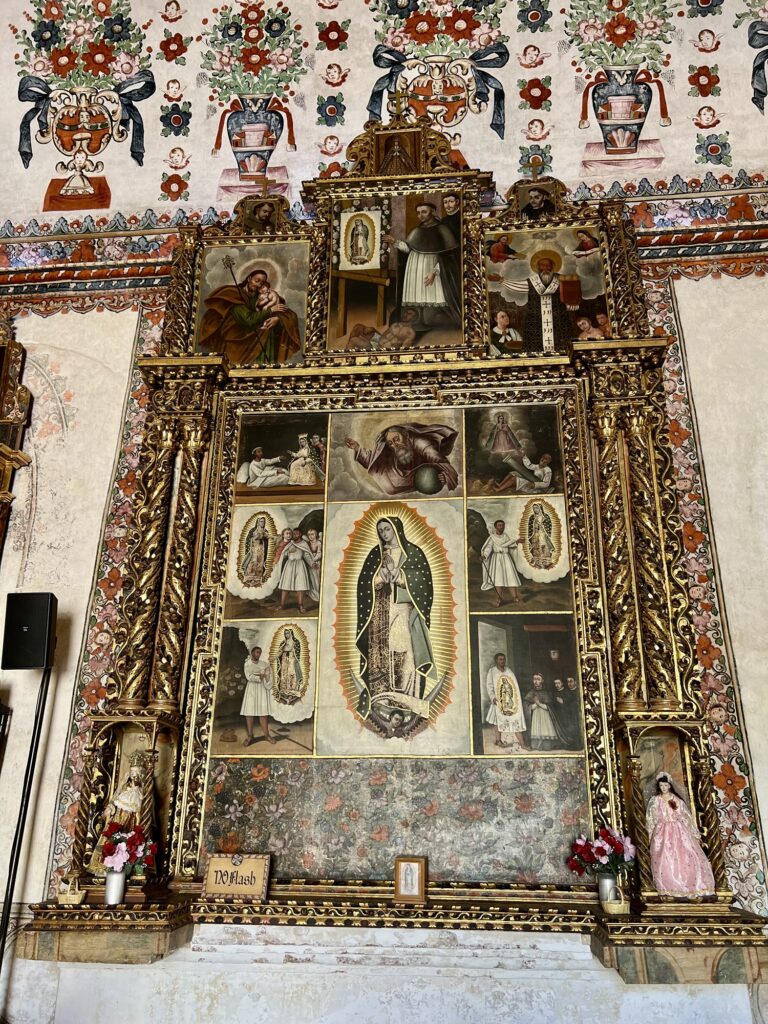
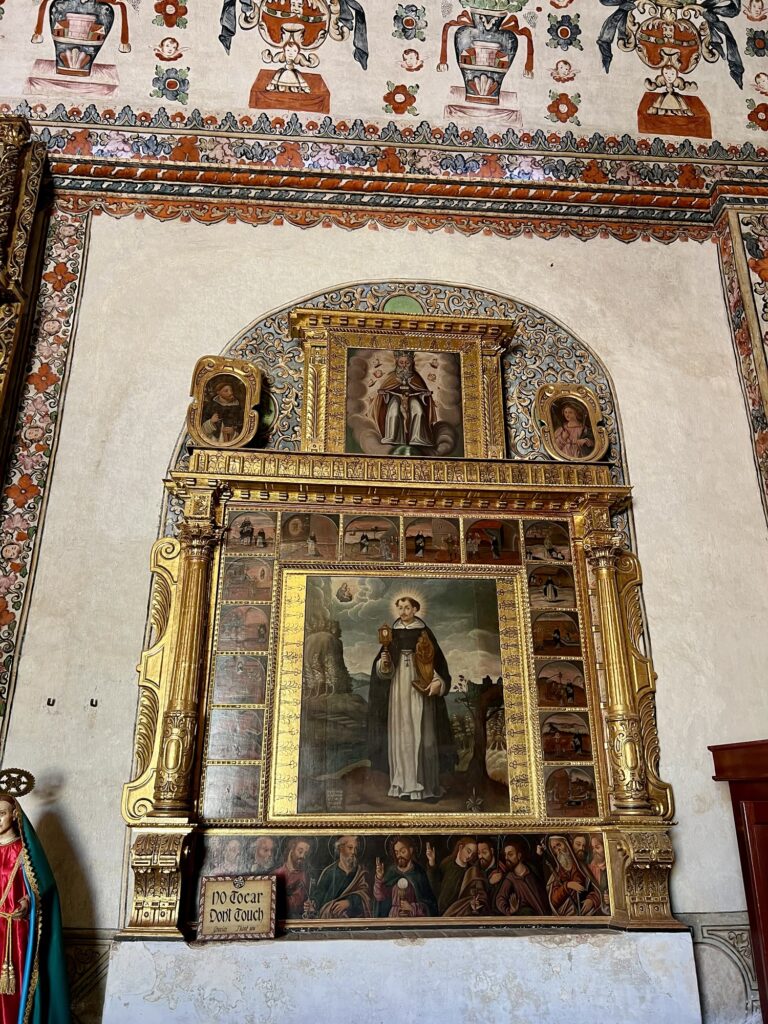
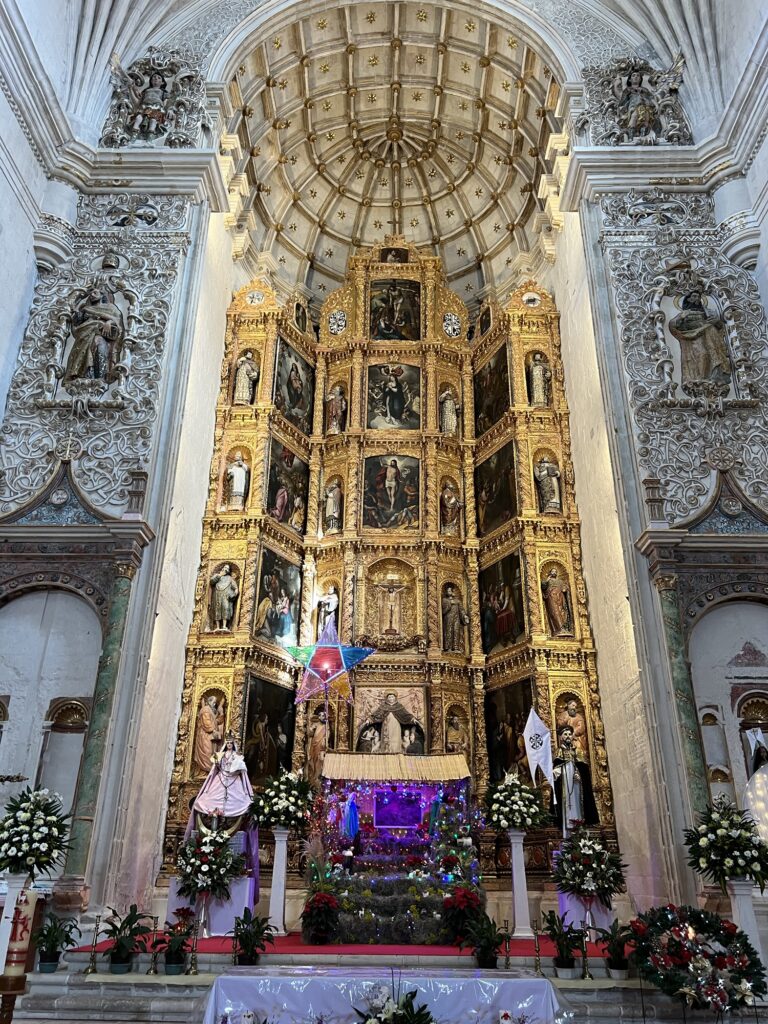
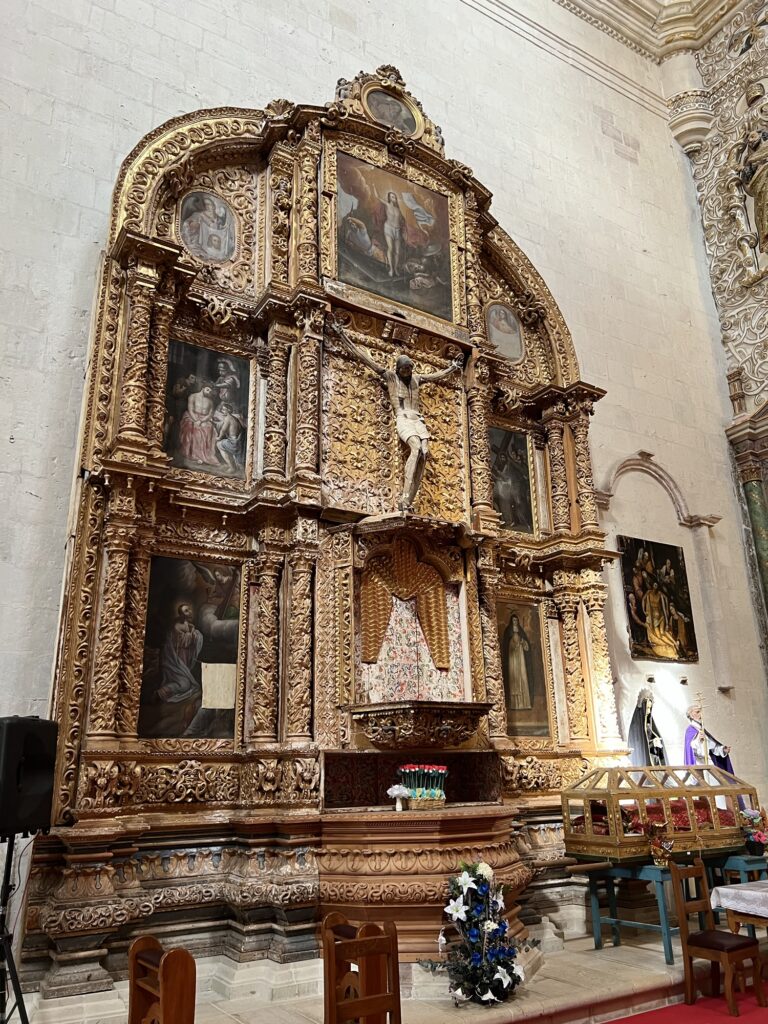
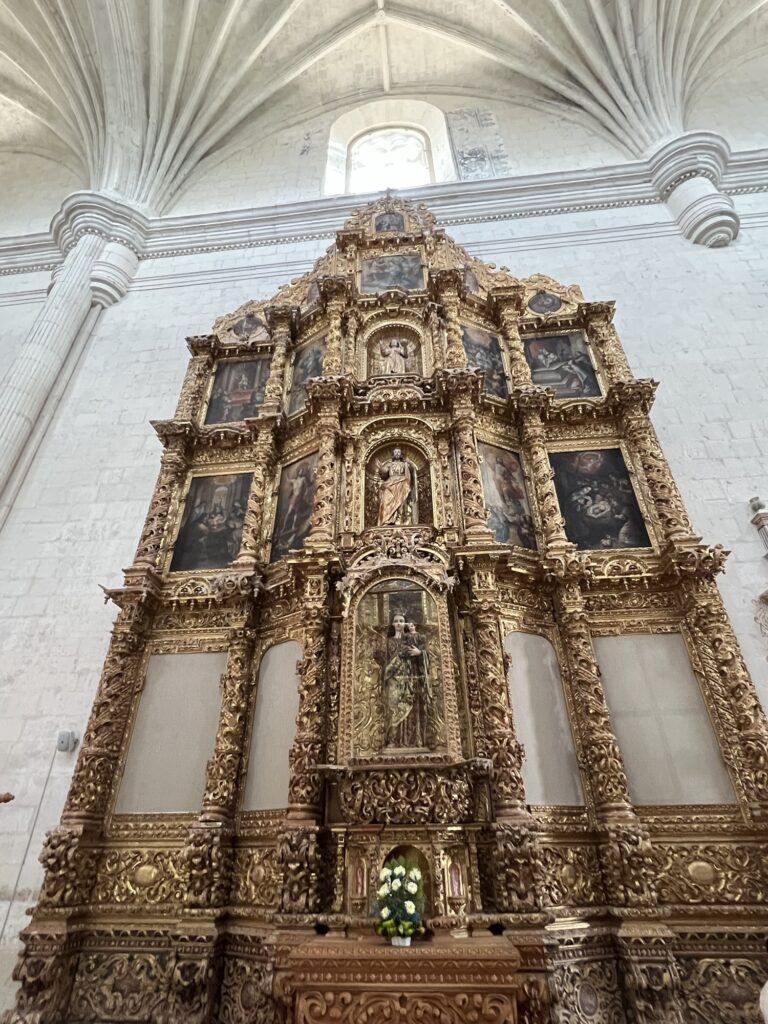
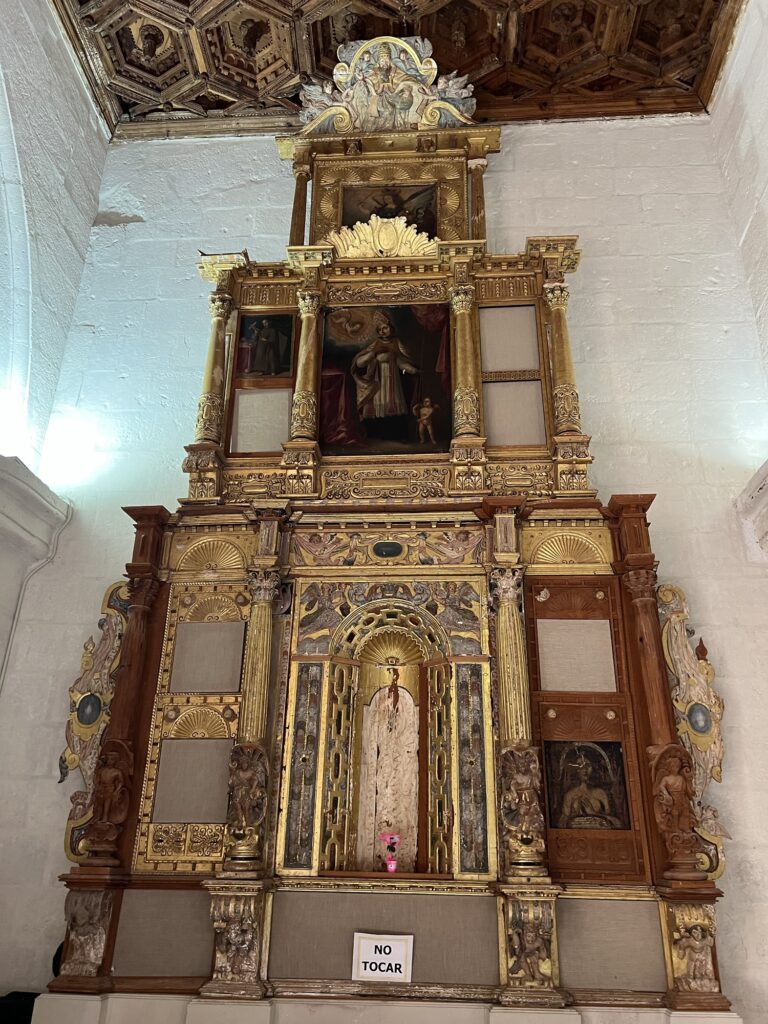
Retablo de la Virgen de Guadalupe que está sentada, en la aparición a Juan Bernardino, tío de Juan Diego. El retablo fué pintado por Joseph Nabarro, en el año de 1689, en el templo de San Jerónimo Tlacochahuaya. Retablos de Tlacochahuaya, con obras de manos indígenas y mulatos que el mismo Fray Francisco de Burgoa comparó con la de los grandes artistas Europeos. Fray Juan de Córdova (1503–1595) fue un fraile dominico español que desempeñó un papel fundamental en el estudio y la preservación de la lengua zapoteca durante el siglo XVI. Es considerado uno de los primeros lingüistas de la Nueva España.
Fray Juan de Córdova es reconocido por sus trabajos pioneros, especialmente el Arte en lengua zapoteca y el Vocabulario en lengua zapoteca, publicados en 1578.
El Templo y su magnífico órgano
Una característica que distingue particularmente a los órganos históricos de Oaxaca son las protuberancias redondeadas en los laterales de la caja inferior, se conocen como “caderas”.
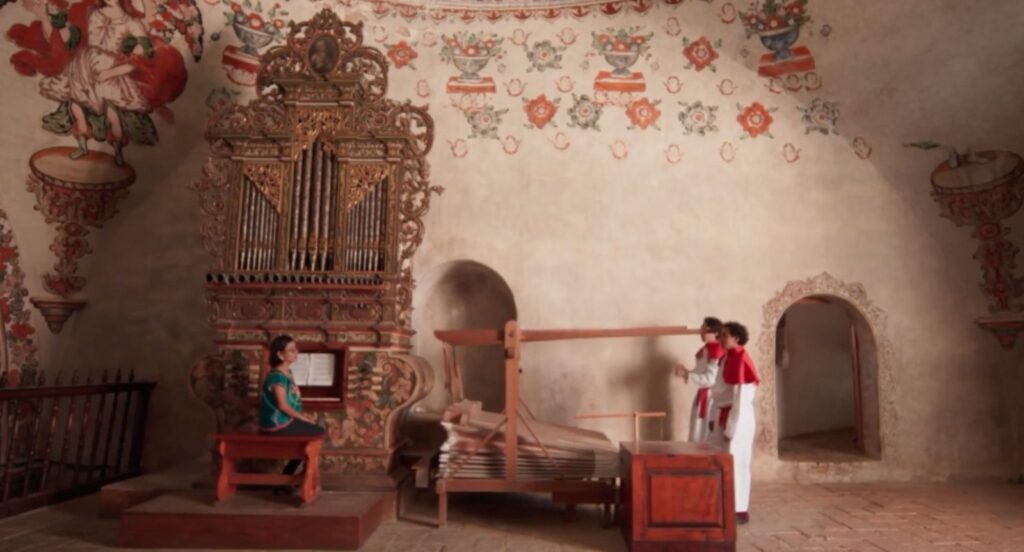
Construido en 1558, es uno de los más hermosos y también uno de las más enigmáticos en el arte y la historia de la música barroca de Oaxaca, con su magnífico órgano construido alrededor de 1735, el cual sigue siendo ejecutado bajo la tutela de la organista: Dra Soledad Hernández, hija de Tlacochahuaya.
Las protuberancias redondeadas en los laterales de la caja inferior del órgano se conocen como “caderas”, esta es una característica particular de los órganos históricos de Oaxaca.
Foto cortesía de la Dra Soledad Hernández, orgullosamente nacida en Tlacochahuaya, custodia del órgano y cofundadora del Festival Oaxaca Barroca. Los mascarones custodios adornan los tubos del magnífico órgano de Tlacochahuaya, cada vez que el órgano suena ellos nos cuentan una historia, un secreto.Un ángel músico forma parte de la serie de óleos originales en el órgano de Tlacochahuaya, es también la imagen del Festival Oaxaca Barroca.Con los Maestros Tonatihu y Maricarmen González, ambos docentes del Cecam y fundadores junto a la Dra Soledad Hernández, del Festival Oaxaca Barroca.
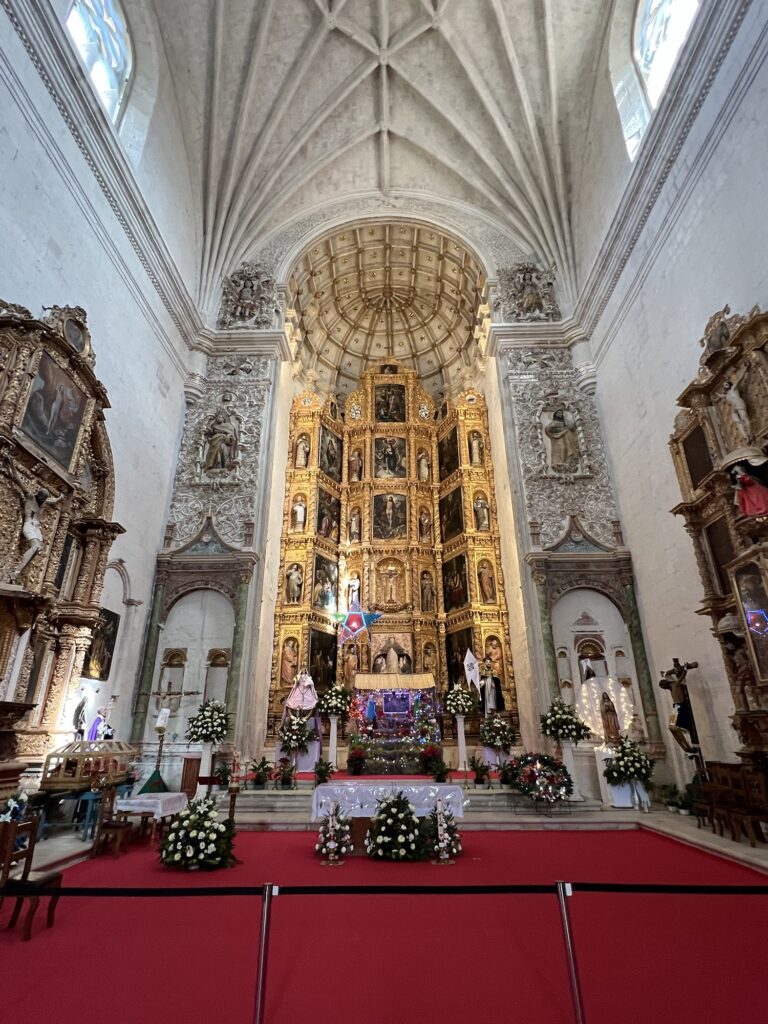
En 1999 los trabajos de restauración fueron apoyados por la Fundación Alfredo Harp Helú, con la cual se ha logrado restaurar 7 retablos, 81 pinturas, 7 esculturas, las fachadas principal y lateral, la iluminación del templo y el atrio.
Experiencias Gastronómicas y Textiles
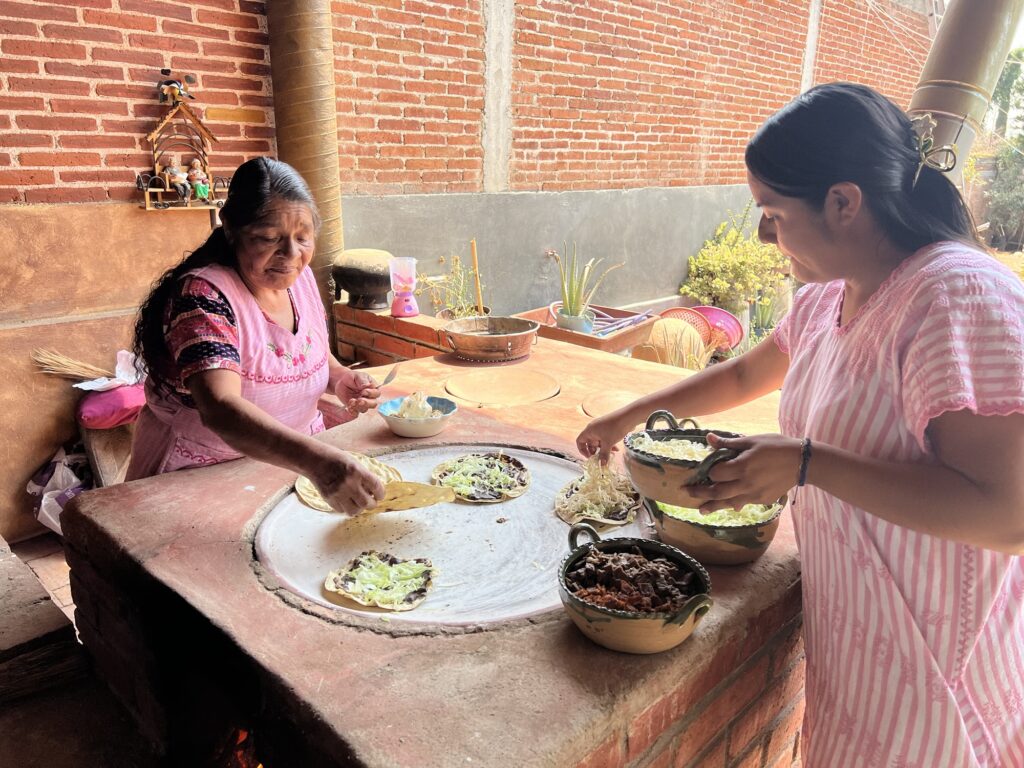
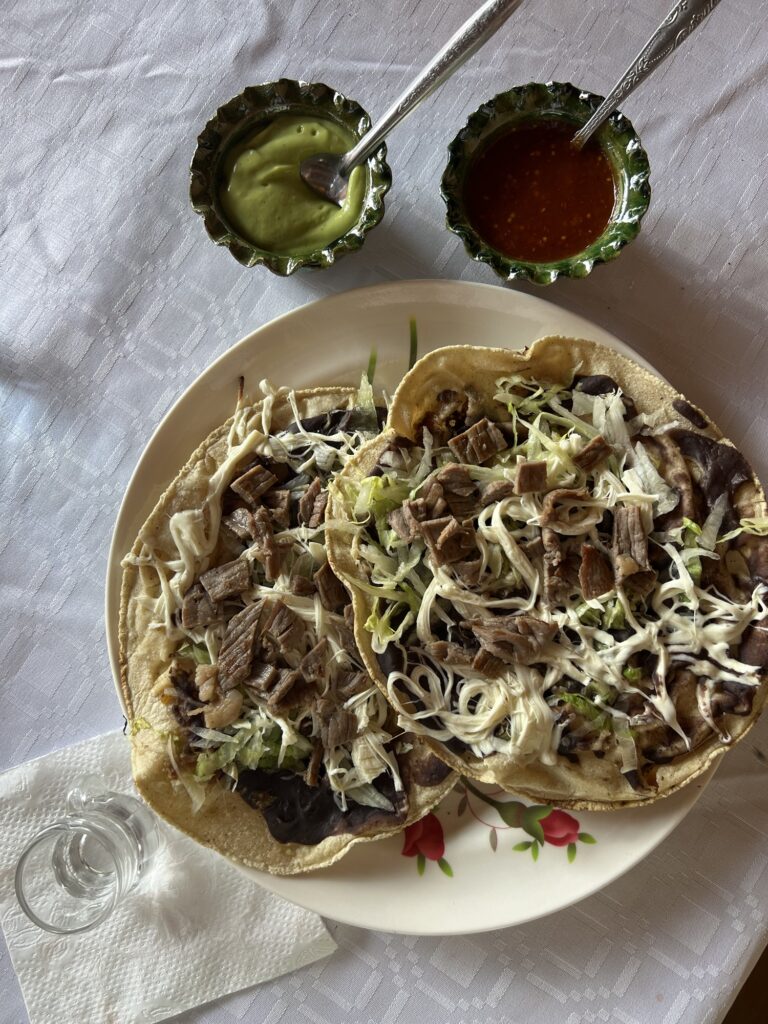
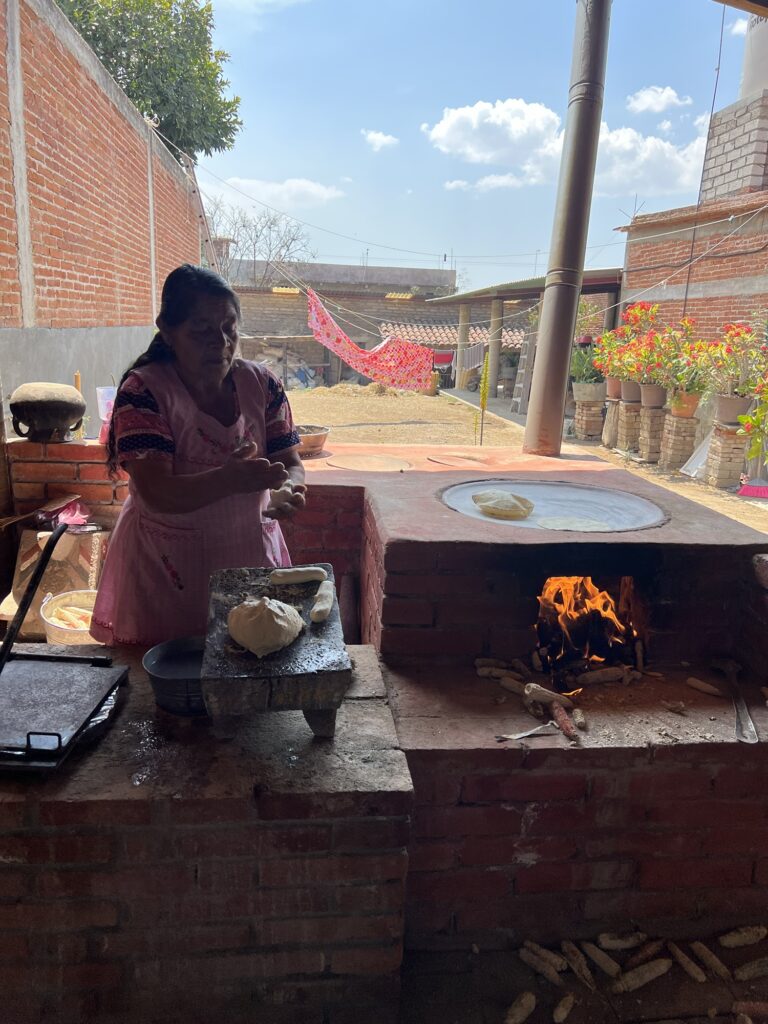
Cuando visites Tlacochahuaya, no dudes en agendar con tiempo una experiencia familiar y gastronómica en la cocina Bel Cuan de Jess Guzmán, a solo pasos de la Iglesia, Jess y su madre nos preparan en su cocina de humo: memelitas, tlayudas, quesadillas de flor de calabaza y otros antojitos Oaxaqueños deliciosos, chocolate caliente con panecillos de yema y no puede faltar un Mezcal Tobala para terminar un día maravilloso.
Jess también promueve los textiles Oaxaqueños desde su proyecto Rilarte y puedes adquirir con ella piezas únicas como huipiles en telar de cintura de San Juan Colorado y los famosos vestidos Sirena de San Juan del Río, los cuales tienen una historia muy interesante:
Cuando llegan los españoles al valle de Tlacolula, los nativos Zapotecas se fijaron en las camisas holgadas que estos llevaban, con mangas abultadas y cuellos que se podían cerrar con dos lazos o dejar abiertos. Ellos recrearon estas blusas y con el tiempo las hicieron propias, tejiendo vestidos que luego fueron popularmente llamados “Sirena” una de sus artesanas más reconocidas es la Maestra Vicky Martínez, quien a través de su colectivo de artesanas continúa creando para diseñadoras locales e internacionales.
Los vestidos Sirena, se caracterizan por la unión de crochet entre las mangas, cuello y pliegues.
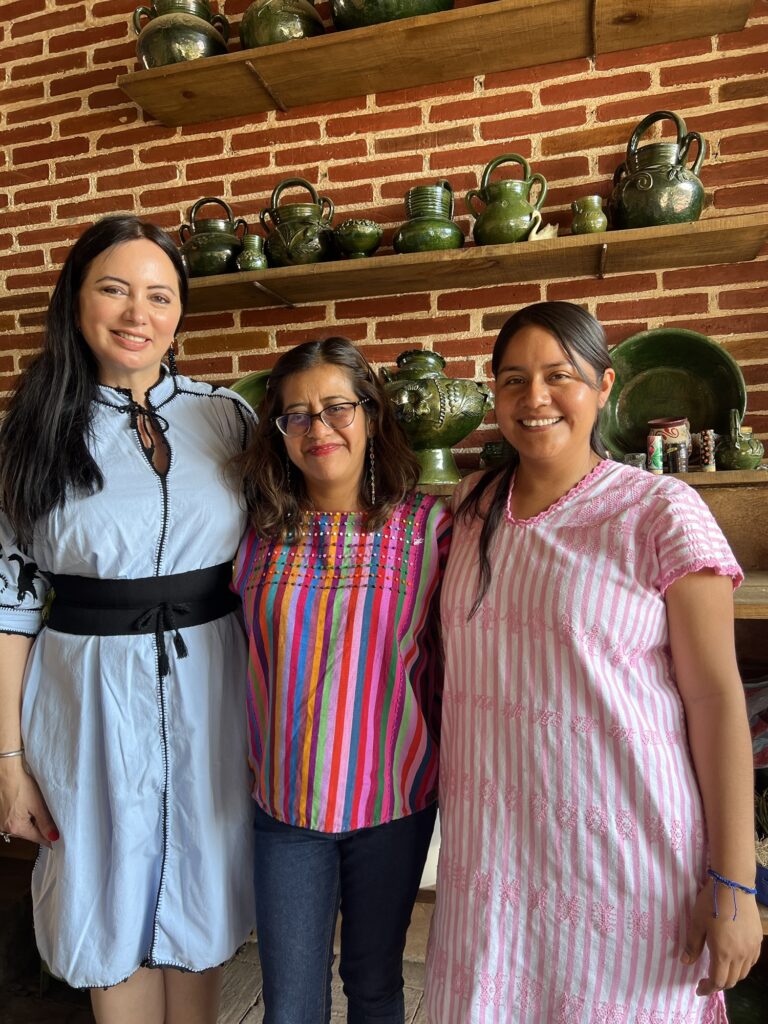
Jess y su madre preparan tlayudas en su cocina familiar Bel Cuan.Tlayudas recién hechas en Bel Cuan, acompañadas de salsitas y mezcal En la cocina de humo de Bel Cuan, todos los ingredientes se preparan al momento, las tortillas se amasan y se ponen al comal.Montserrat Franco con vestido Sirena de San Juan del Río, la Dra Soledad y Jess Guzmán con un huipil de la colección Rilarte.
Puedes ver el video completo de “Adorote Devote” de Santo Tomás de Aquino con la composición musical de mi padre José N. Franco Alderete, interpretado por su servidora, Montserrat Franco filmado en San Jerónimo Tlacochahuaya por mi gran amigo Manuel Torres Vargas, miembro fundador de la Unión de Periodistas Oaxaqueños (Stir Televisión) y Jesús David Franco Riquelme aqui
Agradecimientos especiales al pueblo de Tlacochahuaya, a los sacristanes y custodios del templo, a la Dra Soledad Hernández, organista y co-fundadora de Oaxaca Barroca, por estos años de amistad y sueños, mi admiración siempre por todo lo que representa esta historia, la resiliencia de su pueblo y sus antepasados, su legado y su preservación.
Bibliografía:
Flowers and Floral Imagery in New Spain’s Visual Production and Religious Spaces. James Cordova. Presented at The 84th Annual Meeting of the Society for American Archaeology, Albuquerque, NM. 2019 ( tDAR id: 450456)
Miller, Arthur. 1995. The Painted Tombs of Oaxaca, Mexico: Living with the Dead. Cambridge University Press, Cambridge.
Montiel Ángeles, Alma Zaraí, López, Víctor Manuel Zapien, and Winter, Marcus. 2014. La arqueología del istmo oaxaqueño: Patrones de asentamiento, comunidades y residencias. En Panorama Arqueológico: Dos Oaxaca, editado por Winter, Marcus y Santiago, Gonzalo Sánchez, pp. 197–244. Instituto Nacional de Antropología e Historia, CONACULTA, Oaxaca de Juárez, México.
Un viaje al país de las nubes, entre bandas filarmónicas, compositores, fiestas y mezcal
Adentrarse en la sierra Norte de Oaxaca es vivir una experiencia cultural única, más aún si es posible visitar sus pueblos mancomunados y villas, durante sus festividades religiosas, muy arraigadas a la vida comunitaria, así como el desfile de sus bandas filarmónicas, en audiciones que nada tienen que envidiar en nivel compositivo e interpretativo a las mejores orquestas Europeas.
En la cosmovisión Zapoteca de la Sierra “Bene Xhon” se reconoce su fuerte sentido de comunidad, su riqueza lingüística, su tradición musical y su profunda conexión con las montañas de la Sierra Norte de Oaxaca.
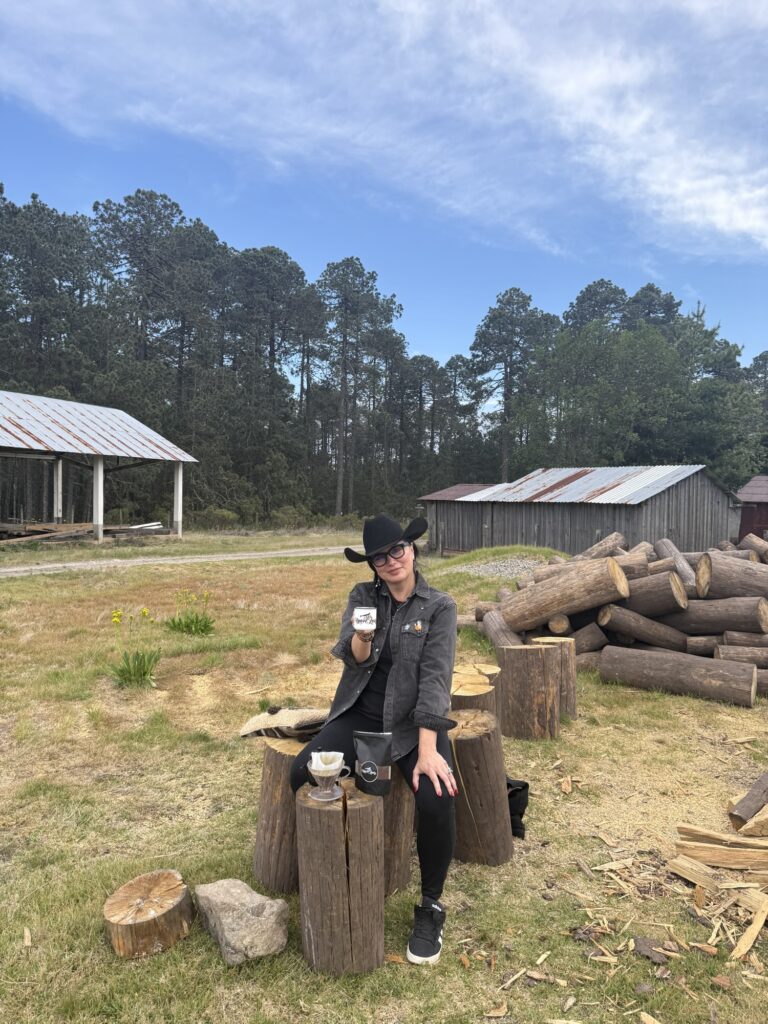
Y así entre profundos bosques de pino y encino, y sinuosos caminos llegando alrededor de 3,200 metros sobre el nivel del mar, empezamos la ruta desde las Cuajimoloyas.
San Antonio Cuajimoloyas:
Según la tradición local, el nombre Cuajimoloyas significa “mole cuajado en ollas”. Los primeros pobladores prepararon mole para las festividades de Día de Muertos, pero el intenso frío de la montaña hizo que se cuajara, dando origen al nombre del pueblo.
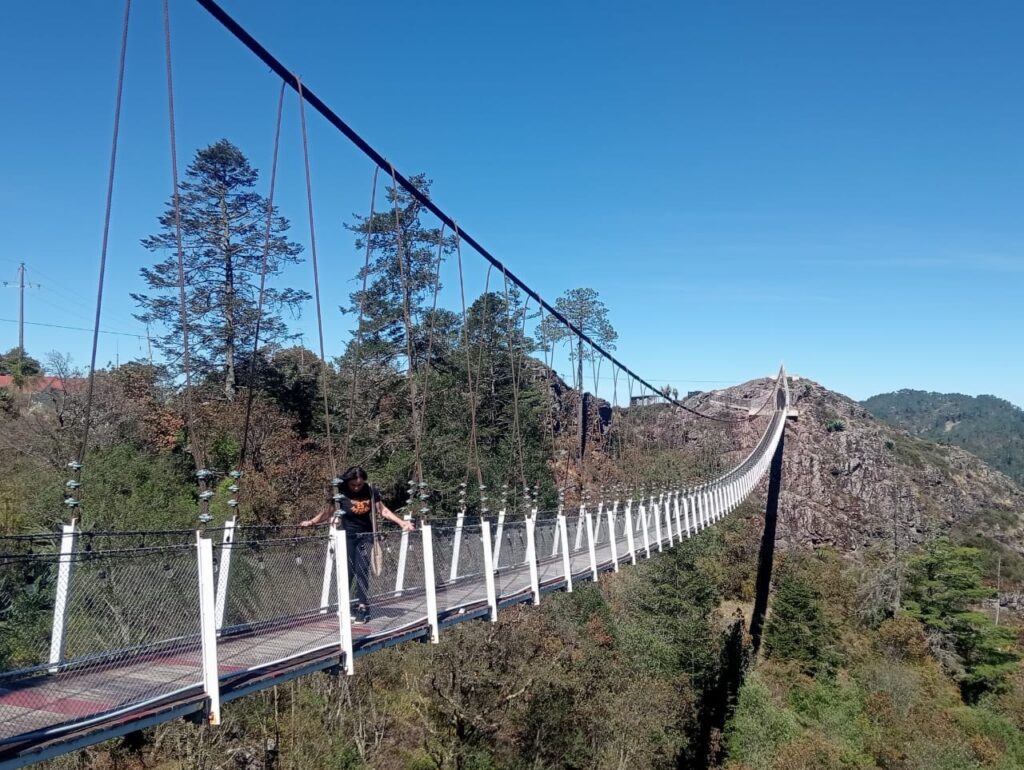
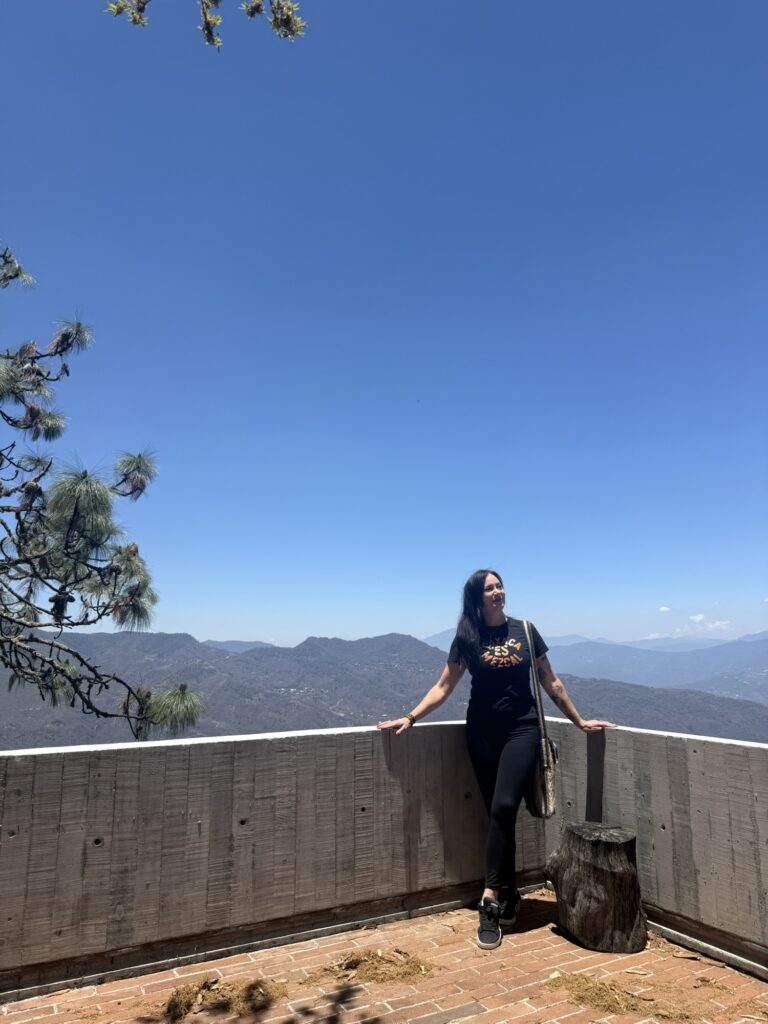
Entre sus atractivos principales, se encuentra el complejo turístico comunitario yEl mirador Yaa-Cuetzicuyo nombre en zapoteco suele interpretarse como “cerro de observación” o “lugar para mirar a lo lejos”.
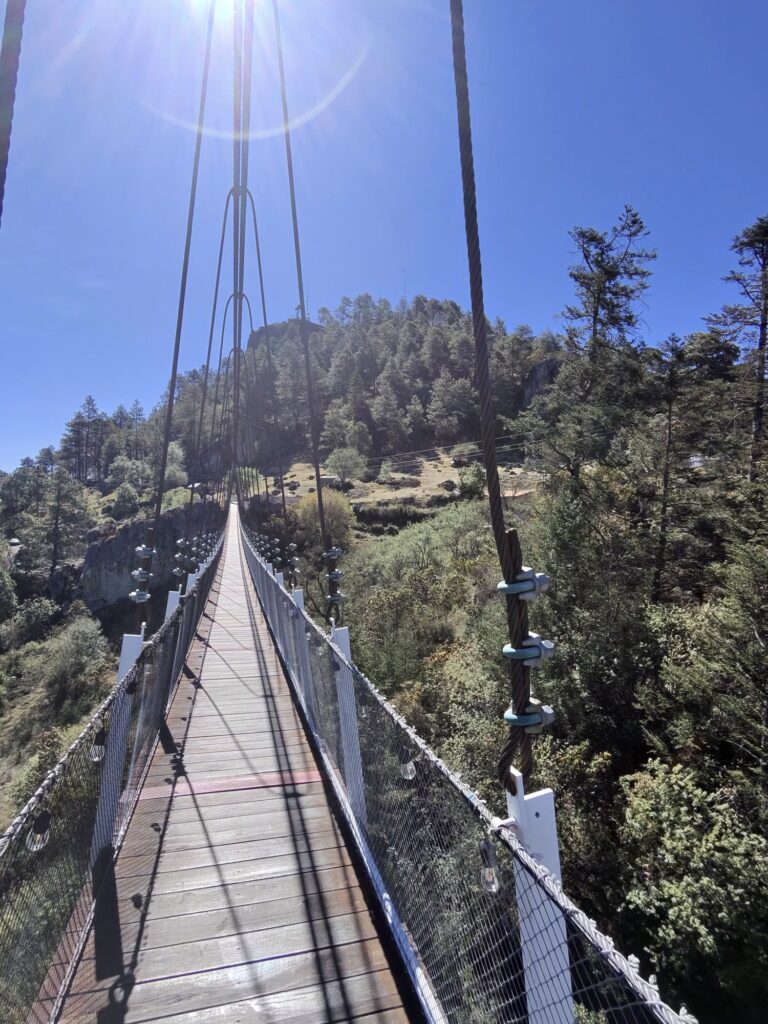
El puente colgante tiene aproximadamente 137 metros de longitud y está suspendido sobre una cañada rodeada de bosques de pino y encino.
Cabe destacar también la inmensa riqueza micológica de los Cuajimoloyas, la cual está ligada al cuidado del bosque. Para sus habitantes, los hongos son esenciales para la salud de los ecosistemas, ya que ayudan a descomponer materia orgánica y mantienen el equilibrio natural. Por ello, la recolección suele realizarse de manera responsable para proteger la biodiversidad.
Con más de un centenar de especies, estos hongos pueden tener usos gastronómicos y medicinales, muchas especies aún por clasificar.
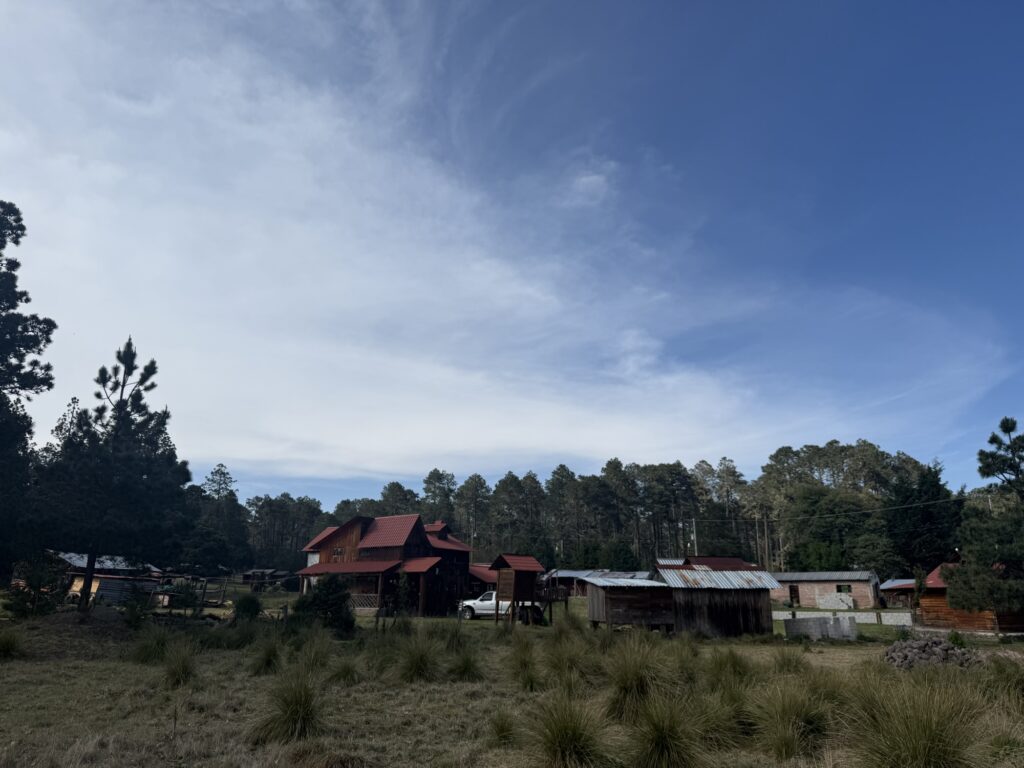
Parada en Rally Cafe, Llano Grande para degustar un café serrano de altura Cuajimoloyas: Puente colgante Yaa-Cuetzi Cabañas en Llano Grande, Sierra Norte, Oaxaca A más de 3,200 metros de altitud sobre el nivel del mar, Cuajimoloyas es uno de los puntos más altos accesibles para el ecoturismo en Oaxaca. El puente colgante y mirador Yaa-Cuetzi, permite contemplar por las mañanas vistas panorámicas espectaculares, mientras que por la tarde la neblina convierte el lugar en un paisaje casi mágico entre las nubes.
San Pedro Cajonos
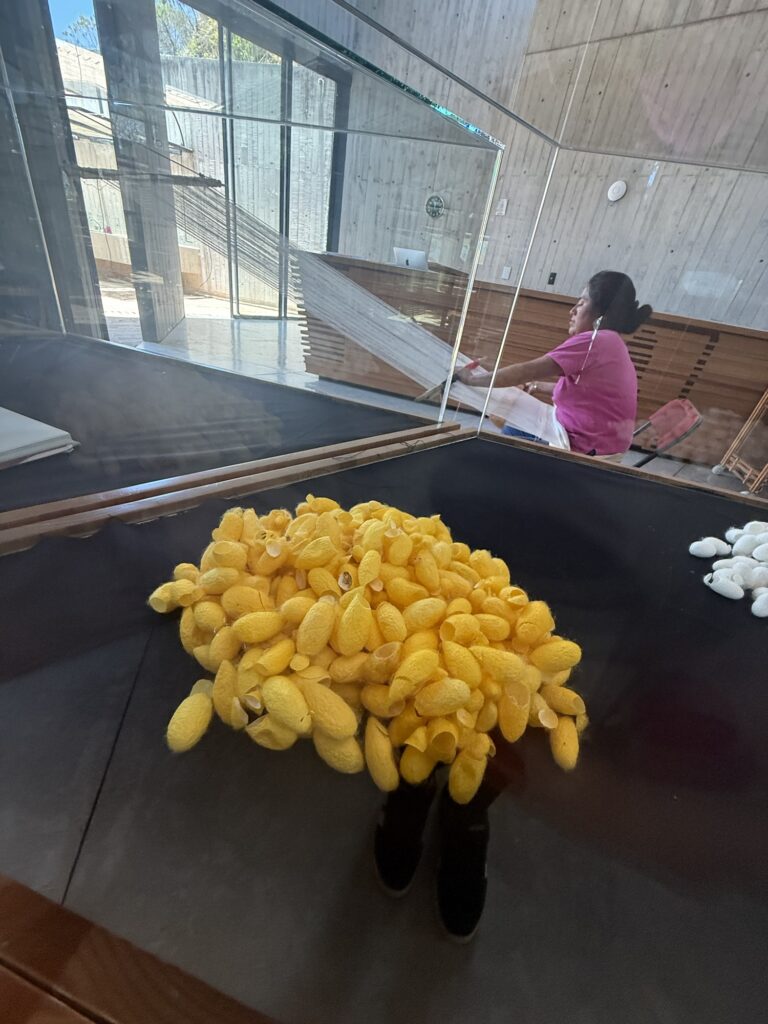
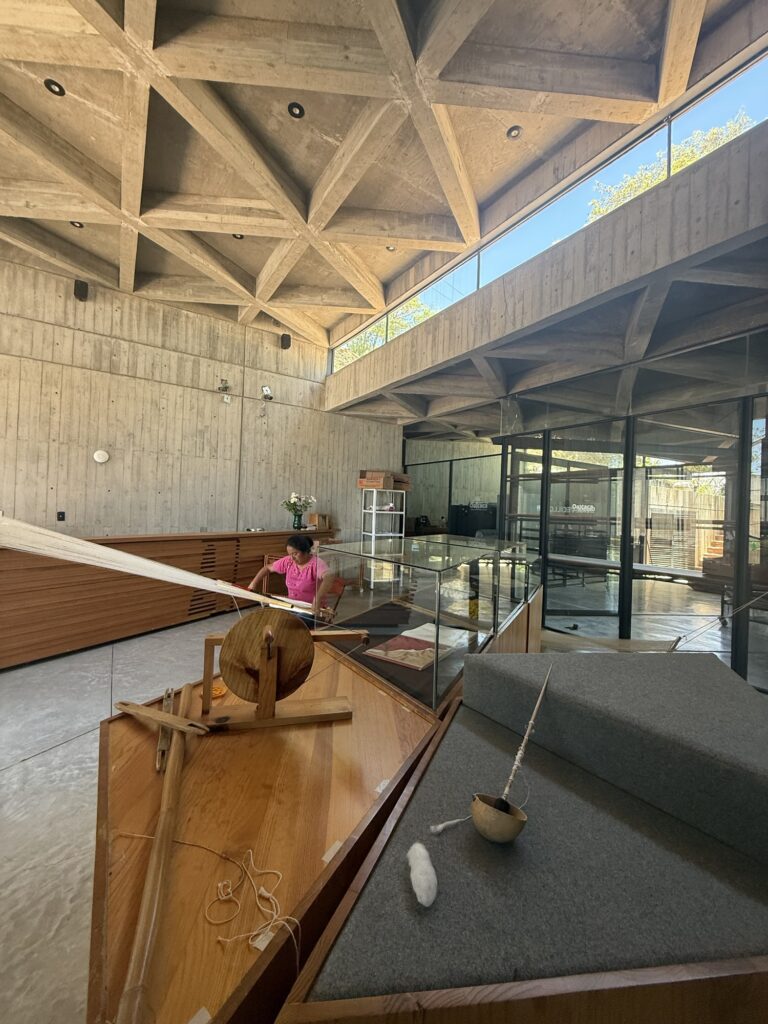
Uno de los atractivos imperdibles en San Pedro Cajonos es El Santuario del Gusano de Seda, uno de los proyectos culturales y artesanales más singulares de Oaxaca. Fue creado para preservar la antigua tradición de la “sericultura”; la crianza del gusano de seda y la producción artesanal de hilo y textiles.
La “Seda de Cajonos”
La importancia cultural de esta tradición es tan grande que en 2022 el gobierno Mexicano reconoció oficialmente la Indicación Geográfica “Seda de Cajonos”, similar a una denominación de origen.
Esta tradición se remonta al siglo XVI cuando los Dominicos introducen el gusano de seda “Bombyx mori”, los árboles de morera (su alimento), y técnicas Europeas de producción de seda.
Con el tiempo, los pueblos zapotecos de la Sierra Norte adaptaron esas técnicas a sus propias tradiciones textiles y desarrollaron una forma única de trabajar la seda.
El proyecto estuvo a cargo del despacho oaxaqueño LAMZ Arquitectura.
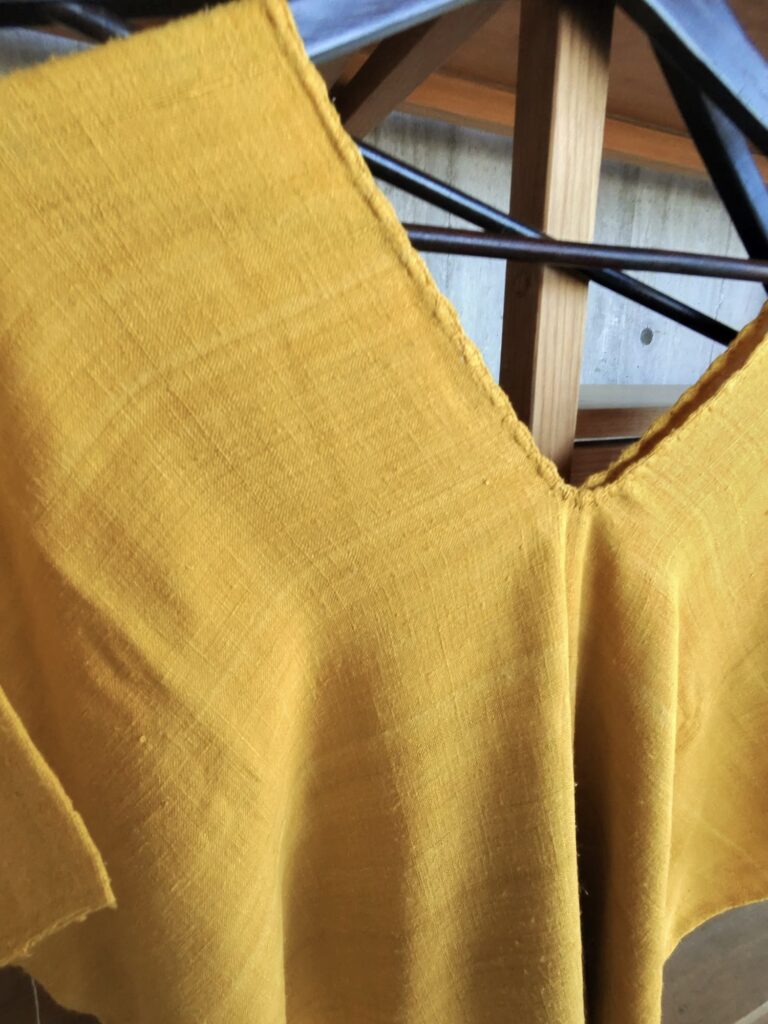
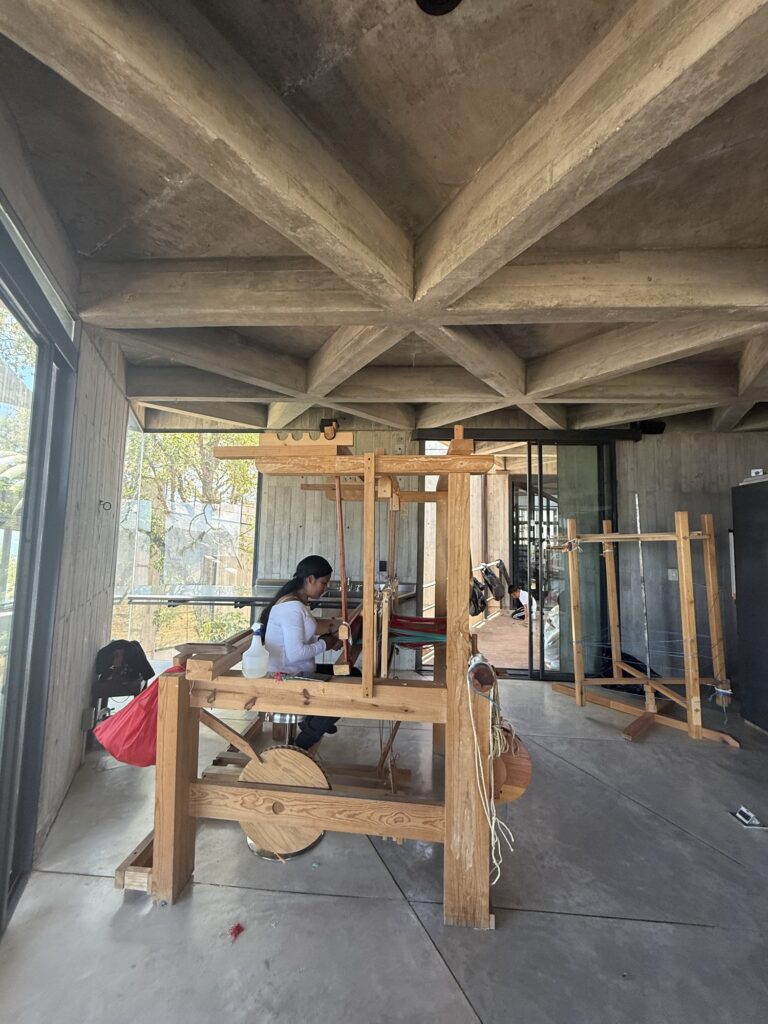
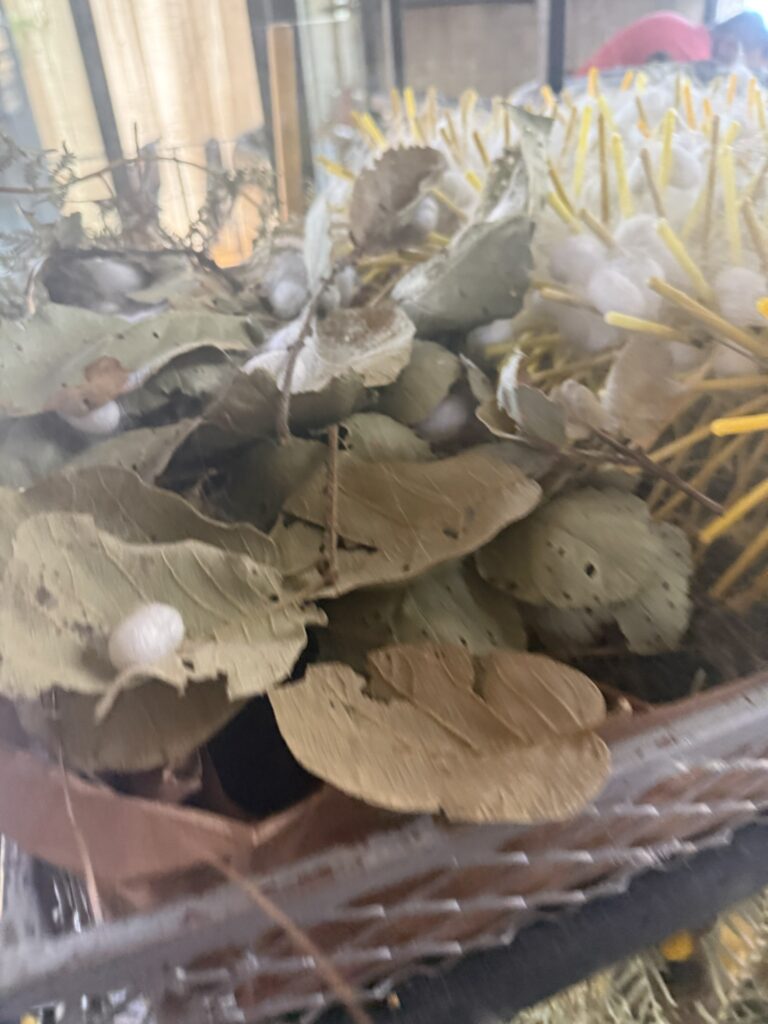
Montserrat Franco en el Santuario del Gusano de Seda, San Pedro Cajonos Capullos de seda criolla en el Santuario del Gusano de Seda, San Pedro Cajonos En el Santuario del Gusano de Seda puedes encontrar piezas únicas en venta, tejidas en telar de cintura y teñidas con tintes naturales Telar de pedal en los talleres del santuario del gusano de sedaCriadero y protección de la seda de Cajonos, este complejo comunitario congrega a los artesanos de Cajonos que perpetúan esta tradición por generacionesTelar de cintura en los talleres del santuario del gusano de seda
San Francisco Cajonos
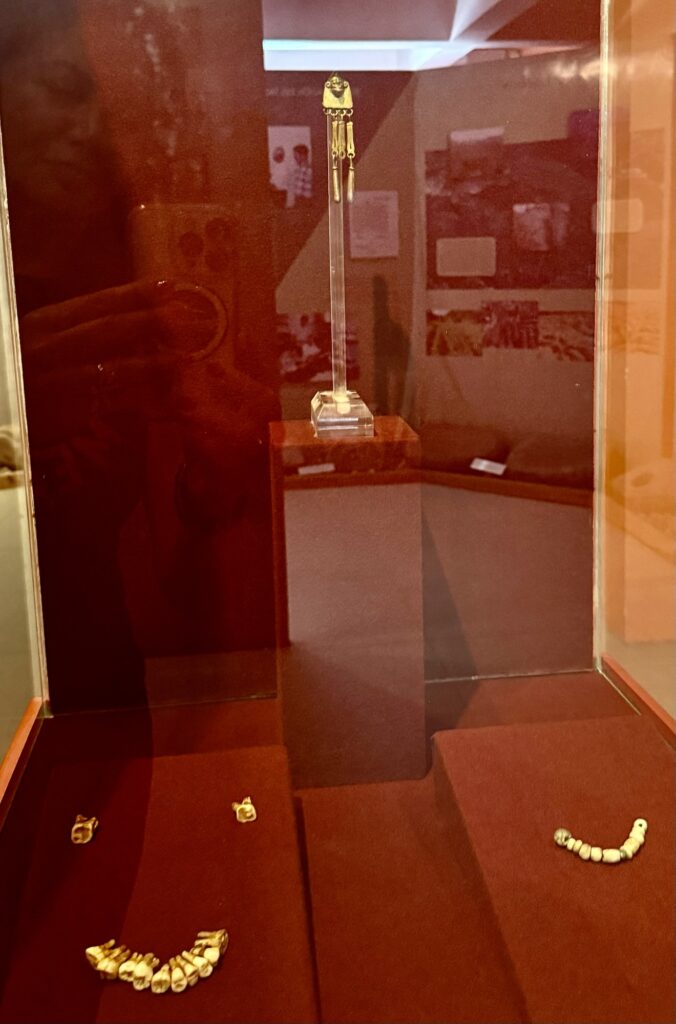
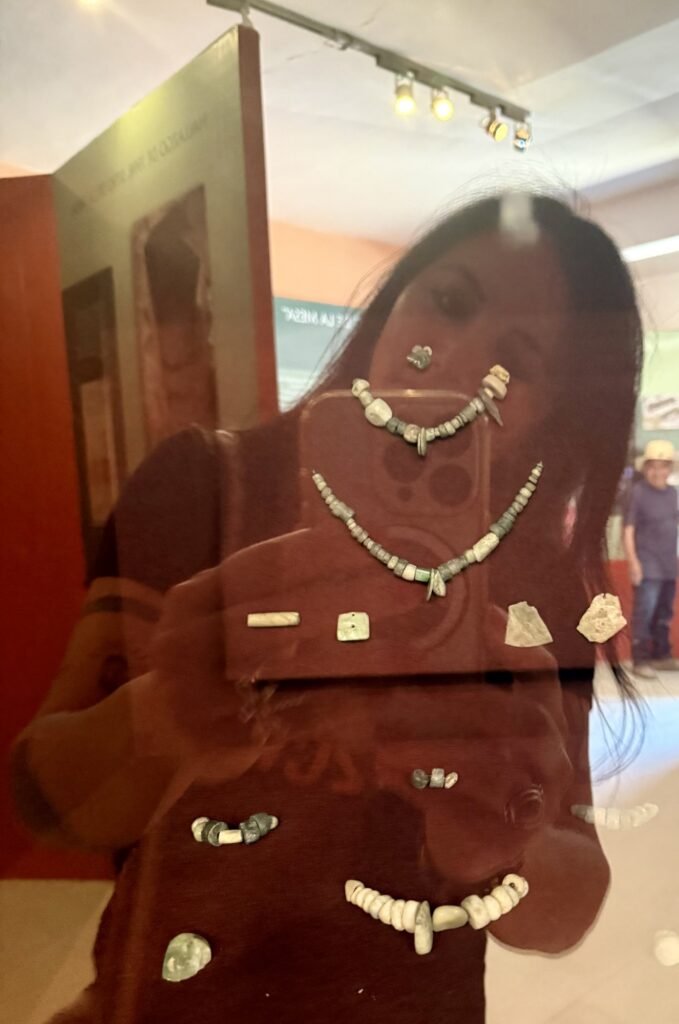
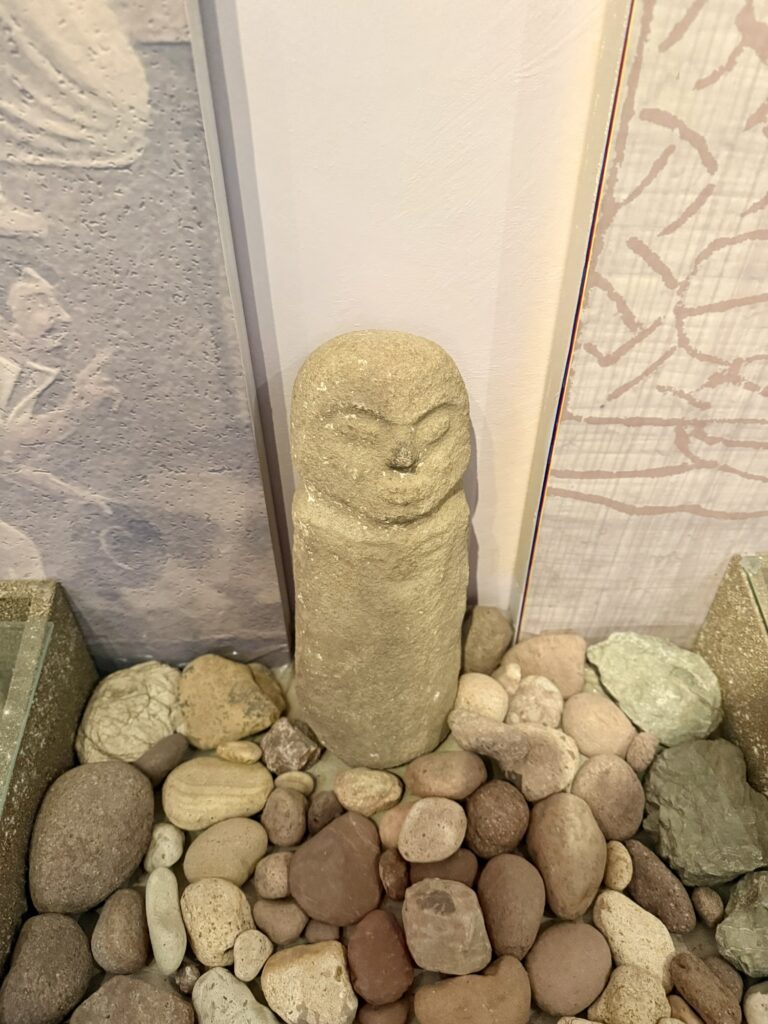
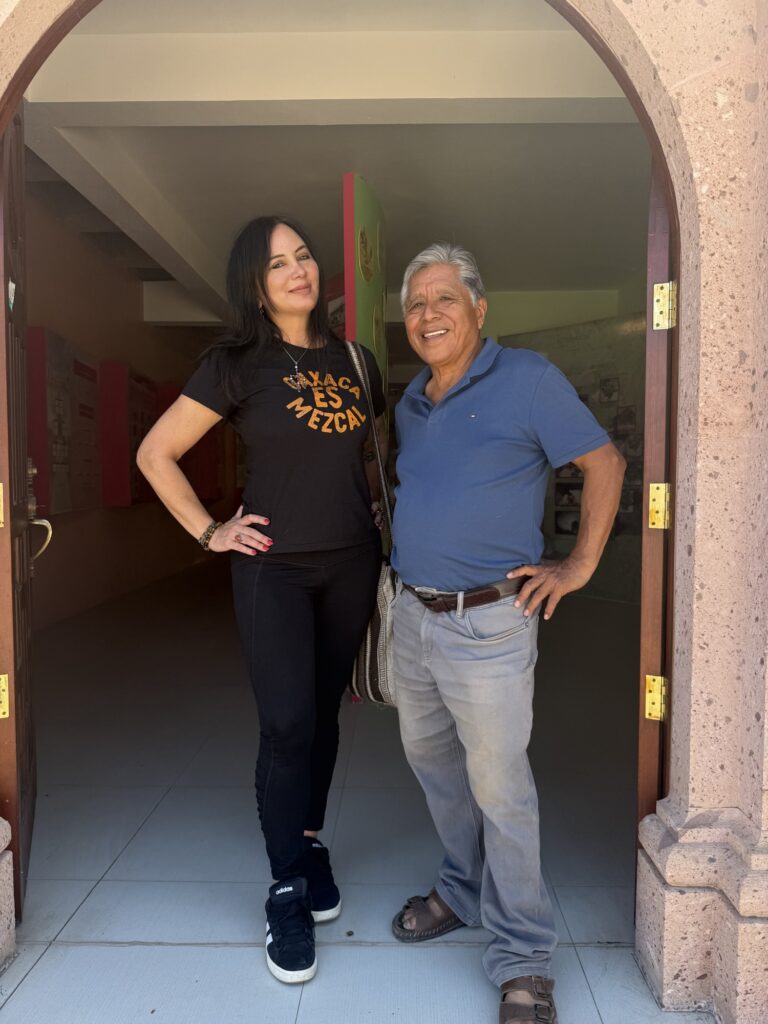
La comunidad tiene raíces prehispánicas muy antiguas. En el cerro llamado “La Mesa” se han encontrado vestigios arqueológicos y piezas antiguas que muestran que el área ya estaba habitada desde tiempos precolombinos. Parte de esos hallazgos hoy se resguardan en el museo comunitario del pueblo presidido por el Mtro Adrian, quien gentilmente brinda visitas guiadas del acervo histórico.
El nombre del pueblo honra a San Francisco de Asís. El término “Cajonos” tiene varias interpretaciones históricas; una de las más conocidas lo relaciona con los acontecimientos ocurridos alrededor de 1700, cuando sucedió el martirio de dos fiscales indígenas cristianos en la región, quienes fueron beatificados por el Papa Juan Pablo II.
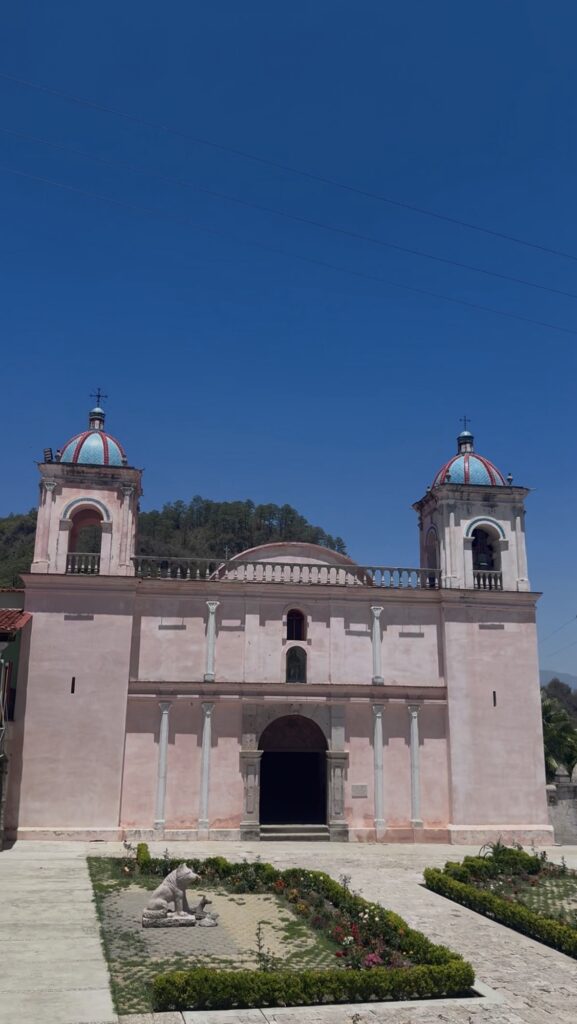
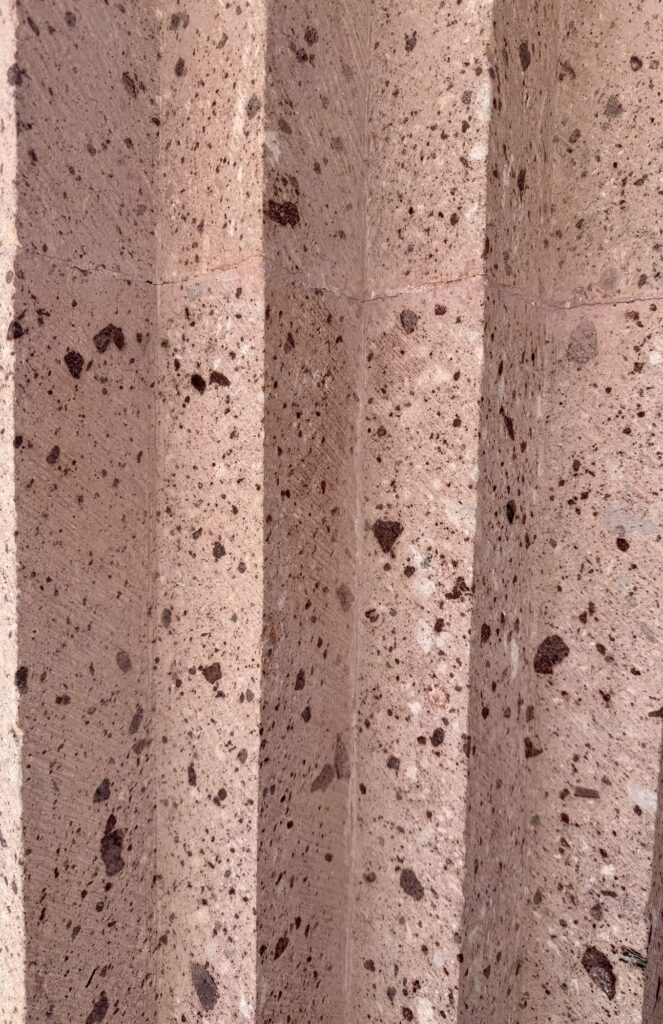
Cabe destacar la arquitectura y construcción en cantera rosa del templo y palacio municipal de San Francisco Cajonos, dando la bienvenida al visitante y brillando imponente al ocaso.
El templo reestructurado de San Francisco Cajonos, brilla en su fachada de cantera rosa Texturas de cantera rosa en la fachada del palacio municipal y el museo comunitario de San Francisco Cajonos Pectoral de oro hallado en 1998 en la tumba 2 del Cerro de La Mesa, probablemente fue del gobernante de San Francisco Cajonos circa 1550 DCColgantes y accesorios de ofrendas halladas en las tumbas del cerro de la Mesa hoy expuestas en San Francisco Cajonos Hallazgos en el cerro de La Mesa, hoy conservados en el museo comunitario de San Francisco Cajonos Montserrat Franco y el maestro Adrián en el Museo Comunitario de San Francisco Cajonos
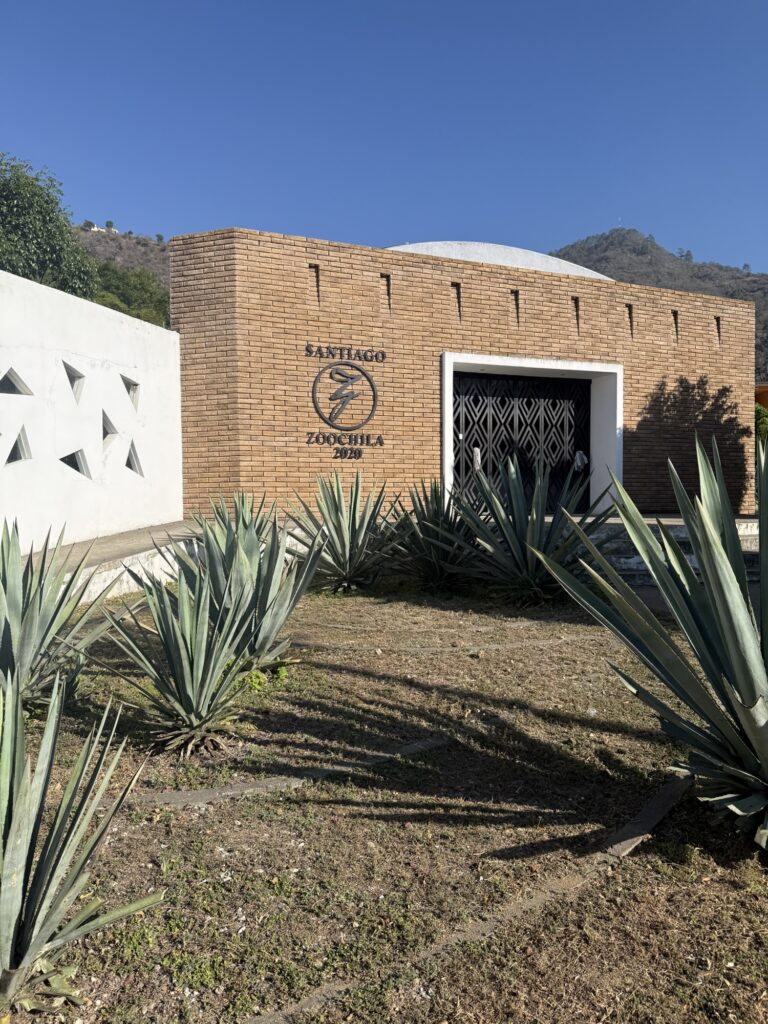
Santiago Zoochila
Un elemento que ha mantenido unidos a estos pueblos mancomunados, son las bandas filarmónicas. Durante generaciones, músicos de Zoochila, Cajonos, Yatzachi y otras comunidades viajaban para tocar en fiestas patronales y celebraciones. A través de la música surgieron amistades, compadrazgos y matrimonios entre familias de distintos pueblos.
Las montañas de la Sierra Norte y los Valles Centrales estuvieron conectados durante siglos por caminos, comercio, música, matrimonios y fiestas religiosas, esto hizo también que el intercambio y las tradiciones tales como el “Padiux” (en zapoteco es dar posada, alimento o cobijo al viajero o quien necesite sin esperar nada a cambio) fuera un símbolo de fraternidad entre los pueblos serranos.
La Música y la reciprocidad como ethos en Zoochila
Esto también se ve reflejado en la tradición de la “Gozona” que en zapoteco es devolver recíprocamente la visita de una banda filarmónica del pueblo huésped al pueblo visitante y viceversa, durante las fiestas patronales.
A diferencia de los demás pueblos, la banda filarmónica de Zoochila no pide Gozona, demostrando así un acto de generosidad absoluto, del mismo modo se reserva en sus presentaciones solo a 4 festividades anuales.
La identidad cultural de Santiago Zoochila está profundamente ligada a las tradiciones zapotecas de la Sierra Norte.
La música comunitaria tiene un papel importantísimo; la formación musical forma parte de la vida social del pueblo y de la transmisión cultural entre generaciones. Entre sus compositores destacados se encuentran Fernando Sandoval Luna, autor de obras extensamente difundidas entre las bandas filarmónicas de México y en plataformas digitales, y Francisco Javier Vargas Luna, primer Mexicano en especializarse en dirección de vientos y percusión en la prestigiosa Academia de Música Rainier III del Principado de Mónaco y el Conservatorio de Estrasburgo, Francia.
Como en otros pueblos de la sierra norte, las bandas de viento, las mayordomías y el tequio son pilares de la vida colectiva.
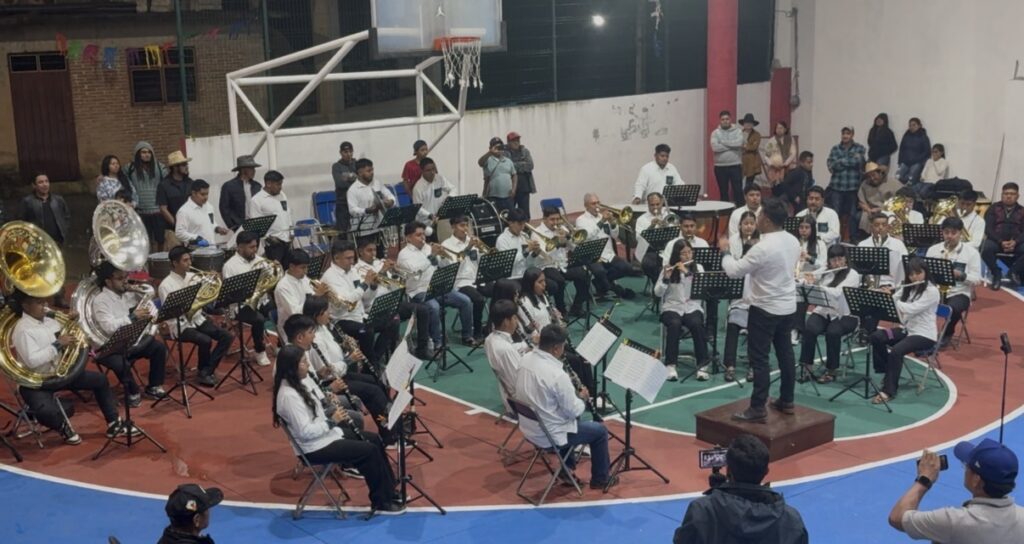
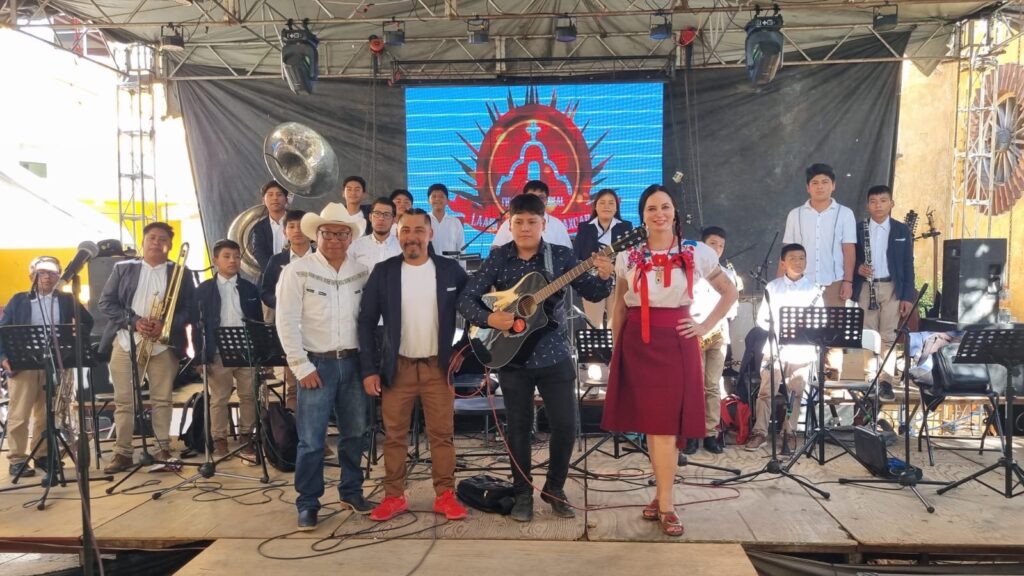
La Banda Filarmónica Nueva Generación De Santiago Zoochila dirigida por el compositor y director Francisco Javier Vargas Luna
El mezcal como legado comunitario
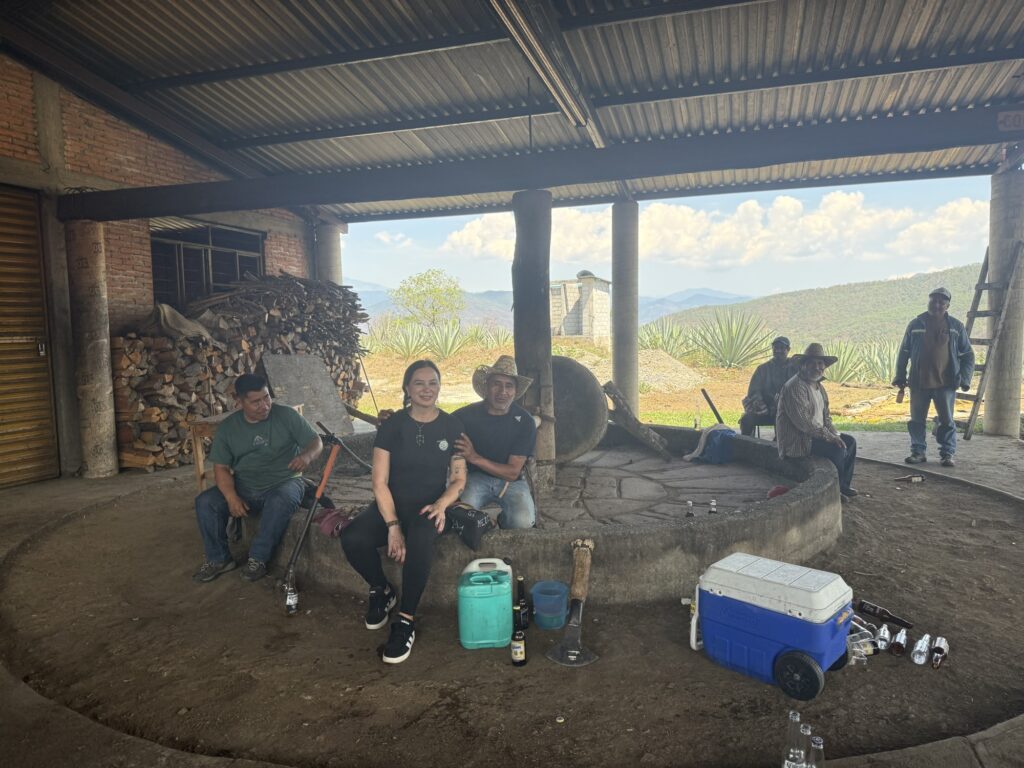
Zoochila, un poblado de alrededor de 423 habitantes, de los cuales más de un centenar son músicos y alrededor de 20 mezcaleros de profesión.
Los primeros registros parroquiales de familias De Santiago Zoochila datan desde 1688.
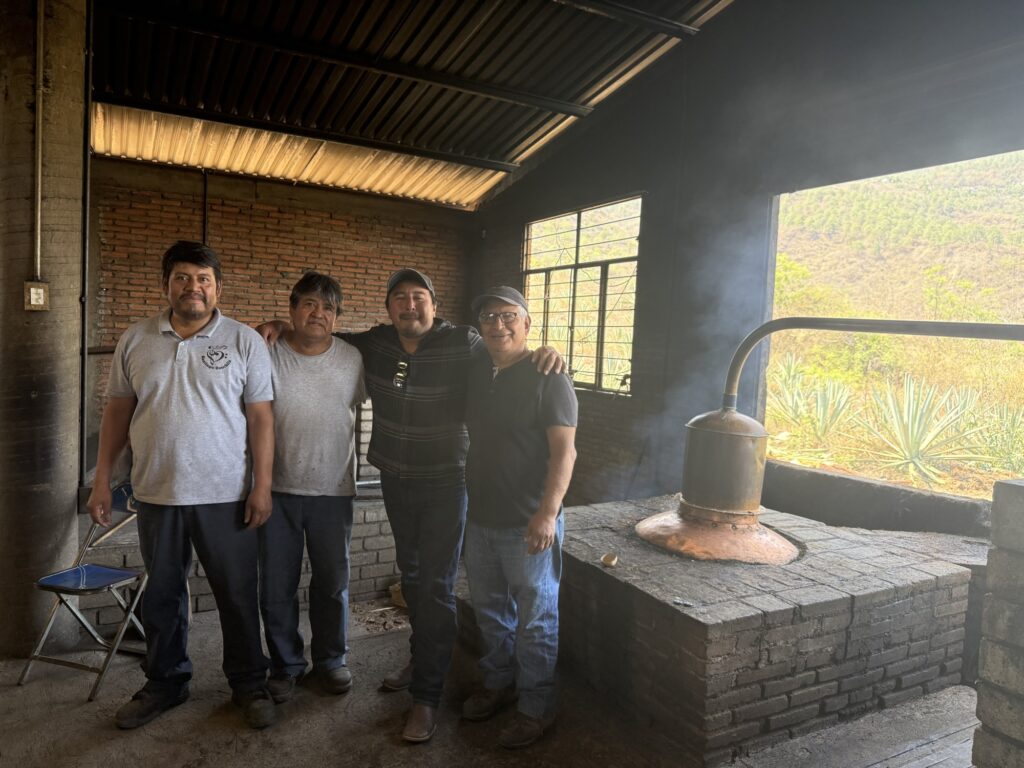
La producción de mezcal en Zoochila se ha mantenido como una gema del pueblo, para consumo comunitario, mayordomías y festividades, entre sus destacados maestros se encuentran los hermanos Víctor y Alfredo Cruz, Pastor Luna y Oscar Sandoval Luna.
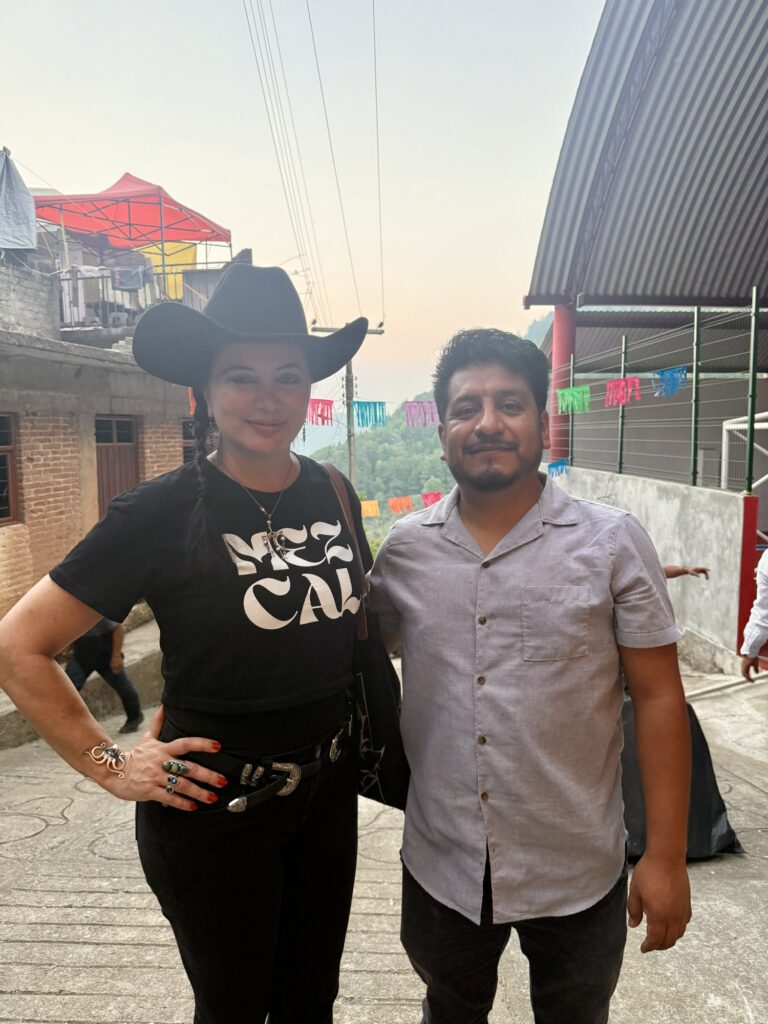
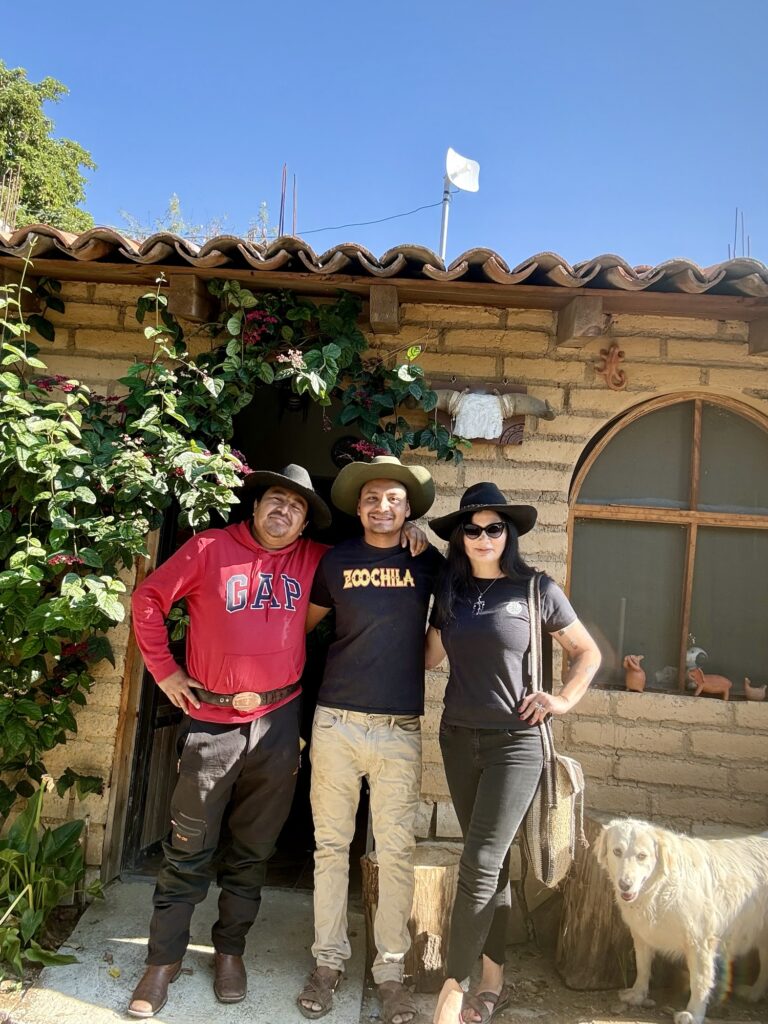
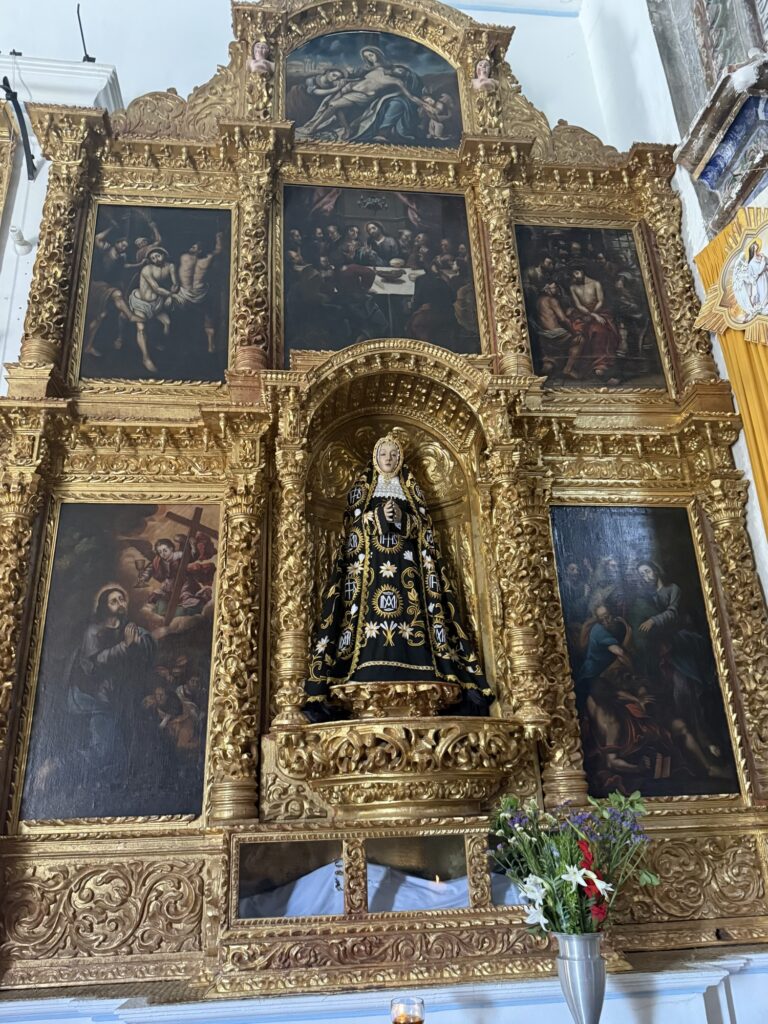
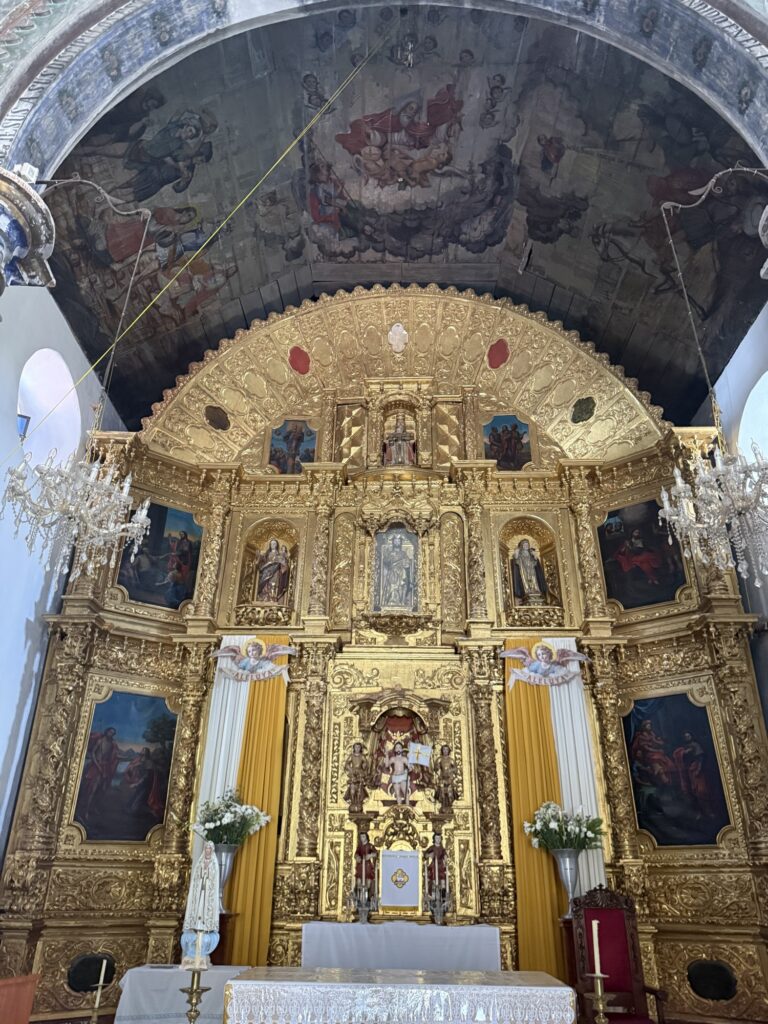
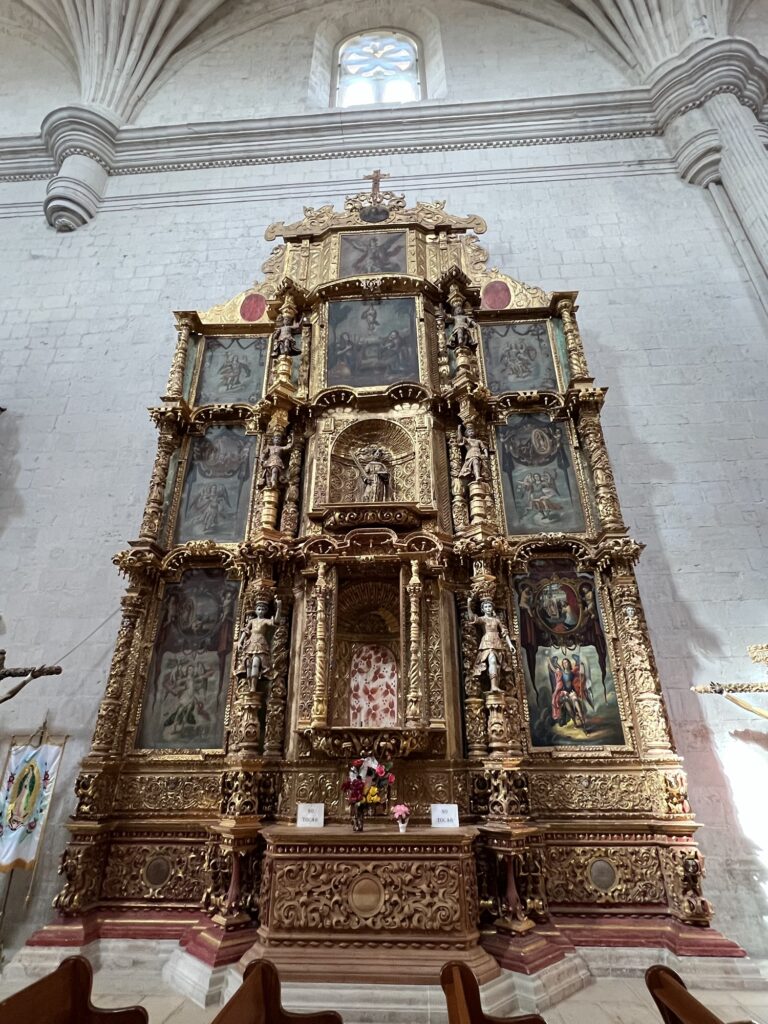
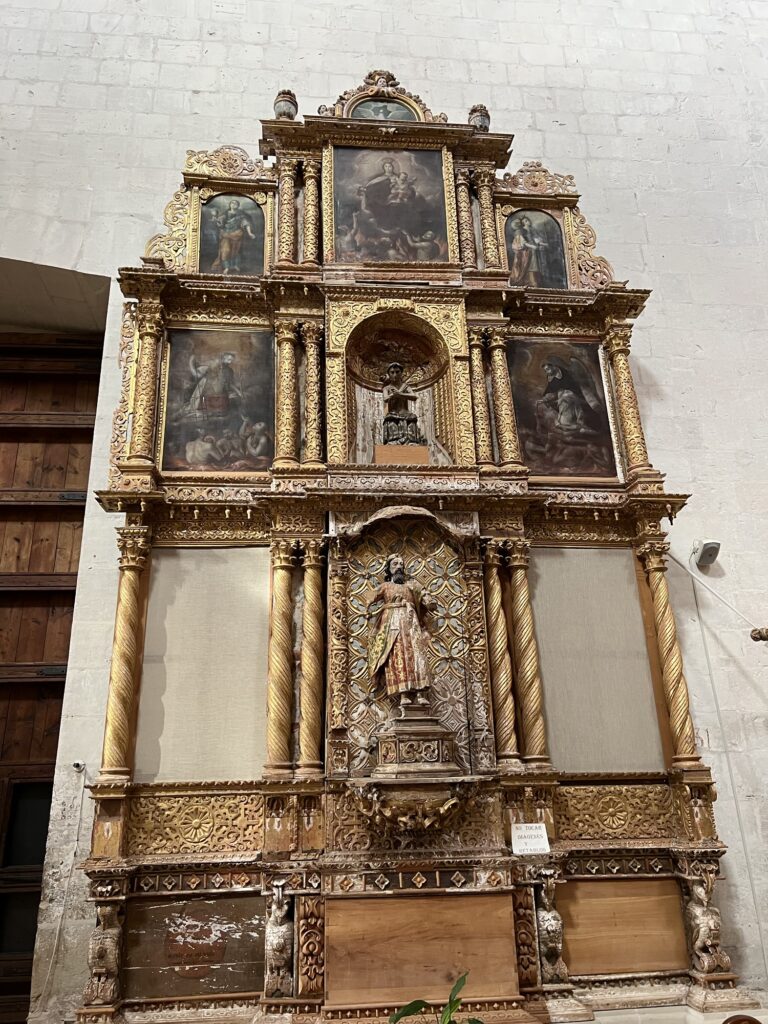
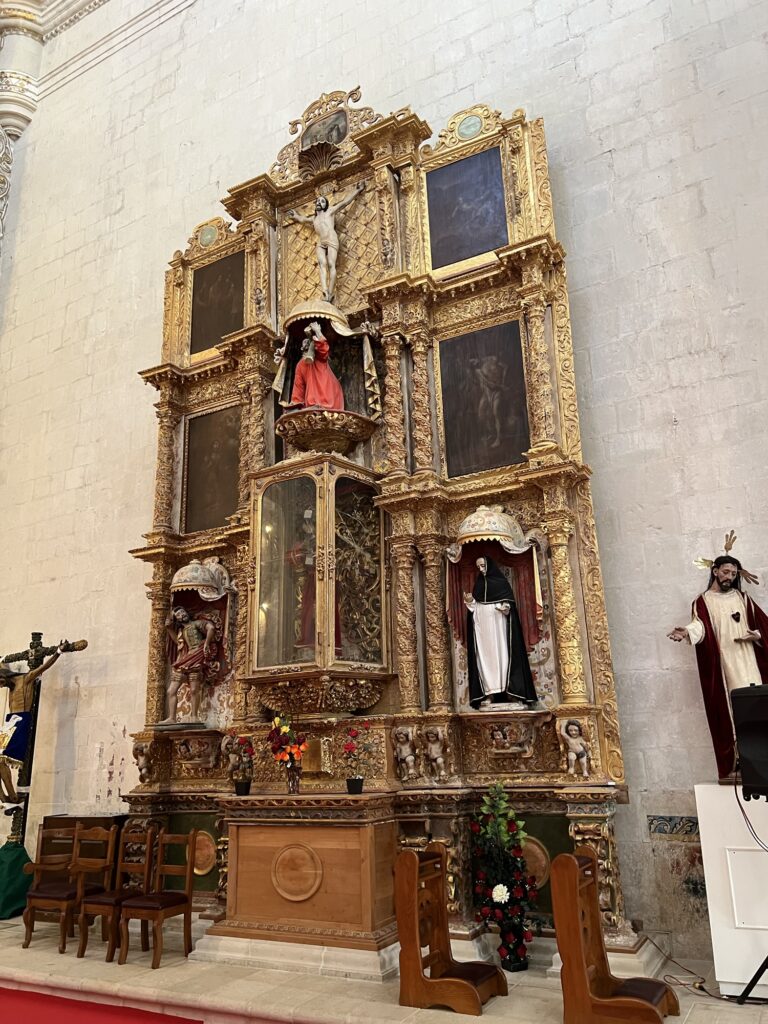
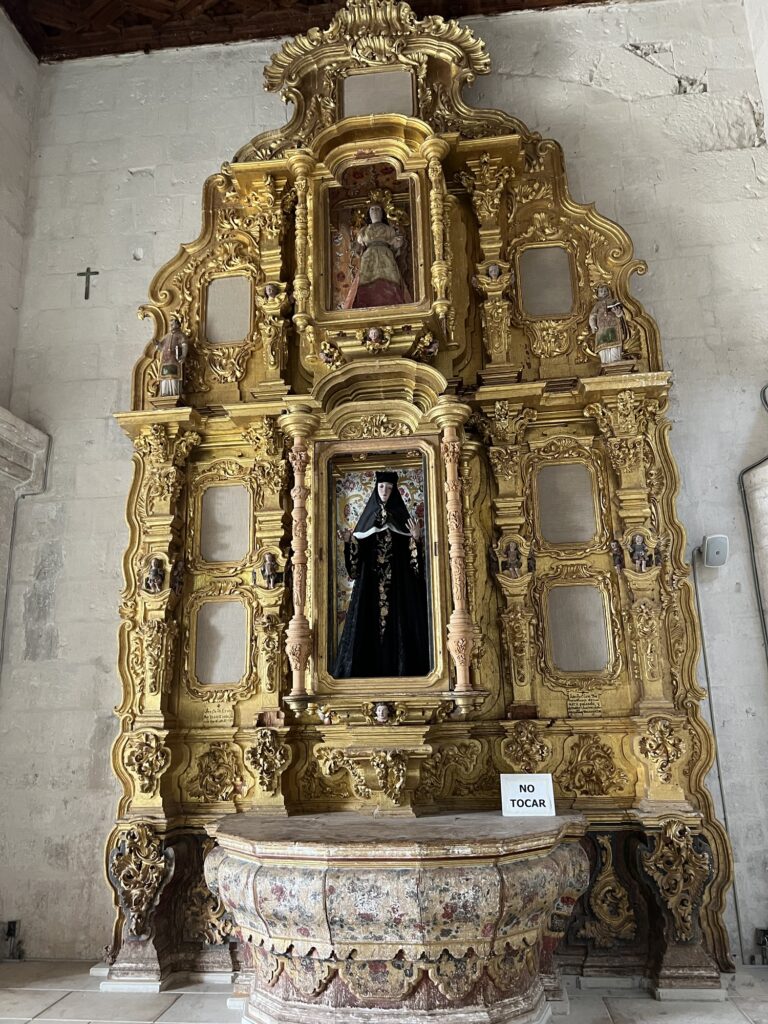
Centro comunitario en Santiago Zoochila, donde ensaya la Banda Filarmónica Nueva Generación de Zoochila Montserrat Franco y el compositor Zoochileño Fernando Sandoval Luna Los Maestros mezcaleros y productores Zoochileños Víctor y Alfredo Cruz, Alberto LC junto al Maestro y compositor Eduardo Díaz Méndez El compositor Eduardo Díaz Méndez, Maestro Óscar Sandoval Luna y Montserrat Franco en Zoochila Palenque comunitario en Santiago Zoochila Uno de los magníficos retablos dedicados a la Virgen de La Soledad en el templo de Zoochila El retablo mayor en el templo De Santiago Zoochila
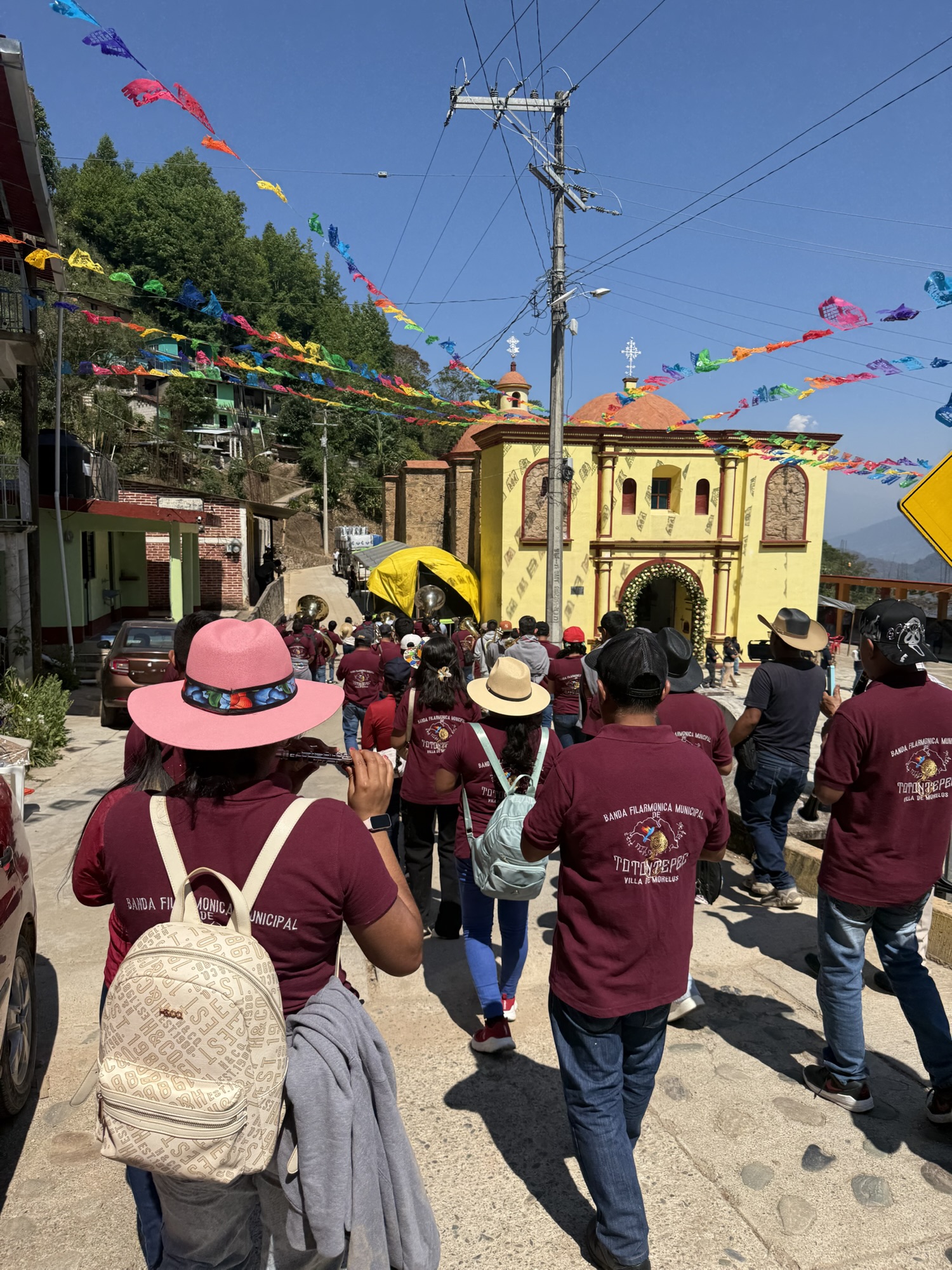
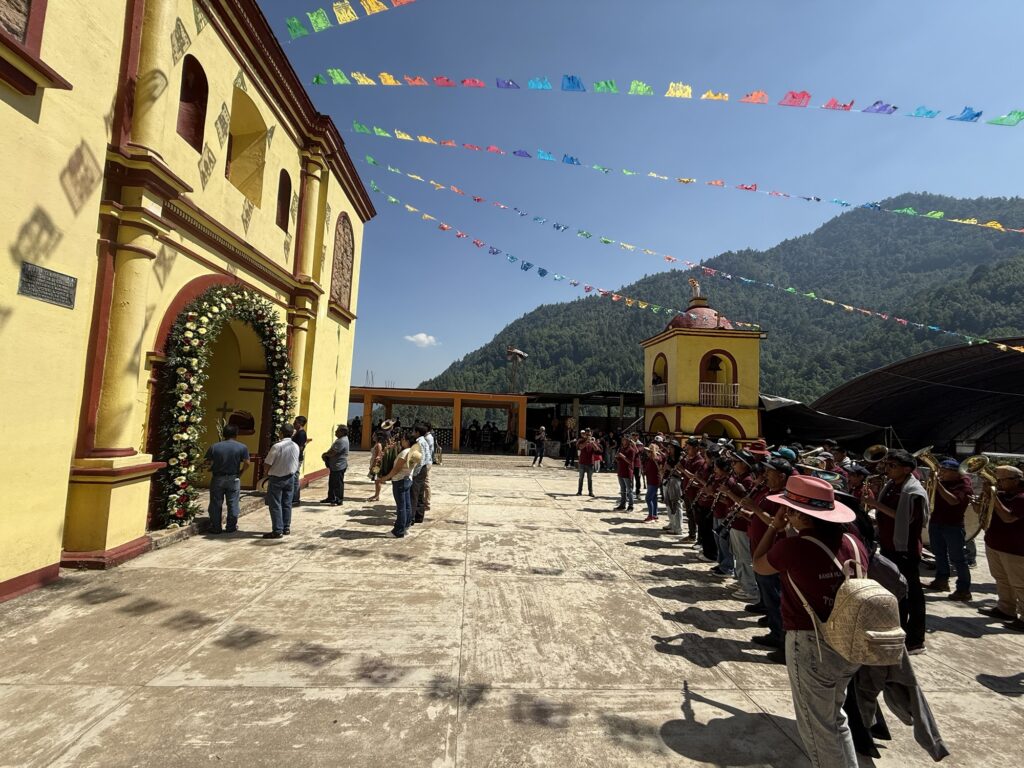
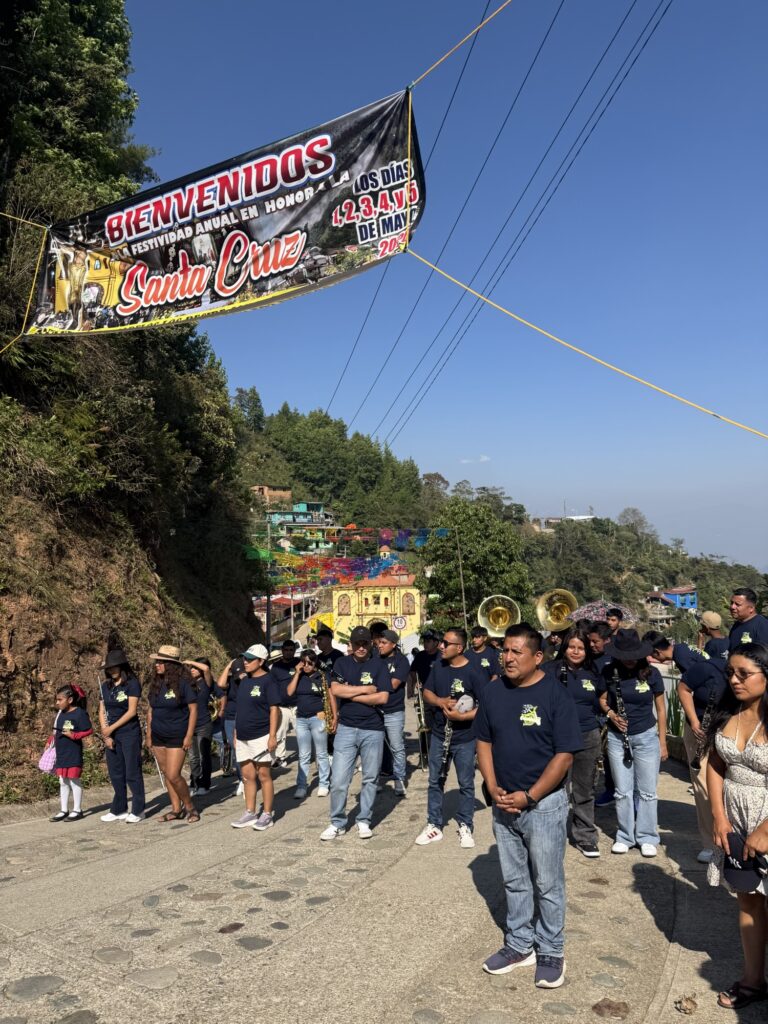
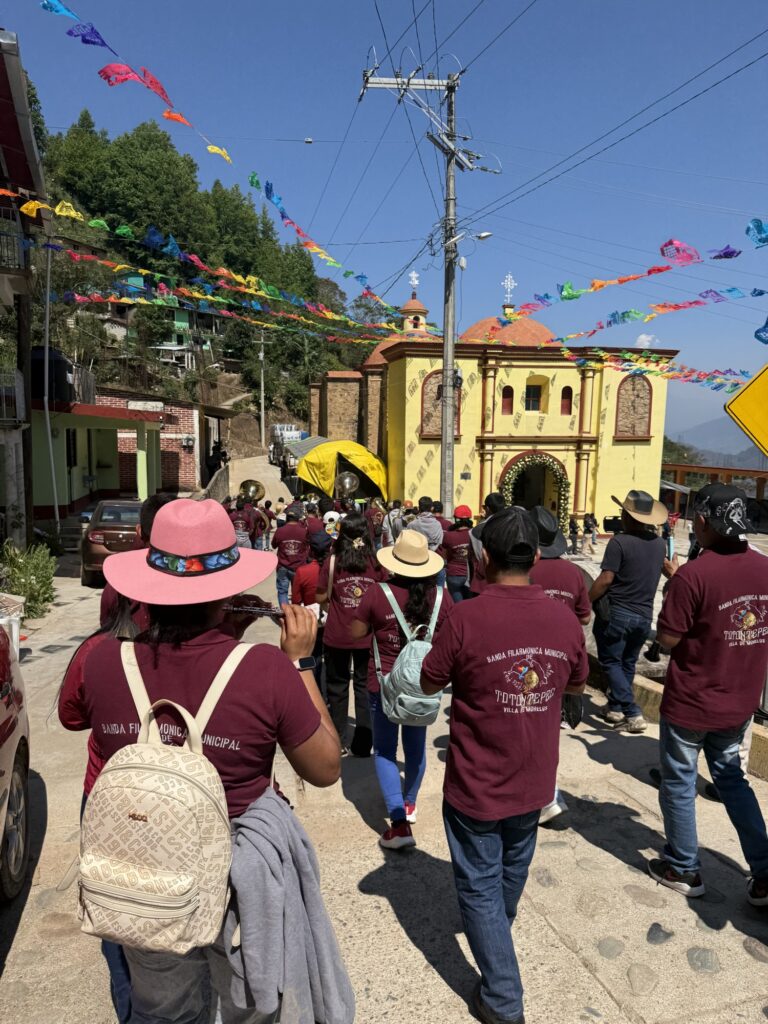
Estas fiestas que por lo general duran 5 días tienen un gran simbolismo religioso muy arraigado a la comunidad donde el intercambio de las bandas filarmónicas huéspedes (Banda Filarmonica Municipal de Otatitlan de Morelos) y visitantes; en este año estuvieron presentes: la Banda Filarmónica Nueva Generación de Zoochila, la Banda Filarmónica Aires de Primavera, la Banda Filarmonica de Totontepec Villa de Morelos Mixe donan su tiempo como un servicio comunitario y social.
Las actividades de estas fiestas patronales se desarrollan desde el momento de las donaciones del novillo a cargo de las familias anfitrionas o mayordomos, en esta oportunidad: la familia Martínez Zavala y como mis anfitriones a quienes agradezco infinitamente su generosidad: Wilver Aquino y Mary Ramírez.
La donación va acompañada de la banda municipal anfitriona la cual ameniza la tarde entera, se ofrece una comida de agasajo a todos los presentes y posteriormente se dirigen al templo a entregar las ofrendas al Señor de La Santa Cruz, el cual se adorna con flores naturales y palmas.
Al día siguiente, se da la bienvenida a las bandas visitantes, el representante de la comunidad preside junto a la banda anfitriona, mientras una fanfarria contesta de cada lado, tal y cual lo hubieran hecho en Europa, en tiempos medievales las visitas protocolares de aldeas vecinas durante el palio o festividades principales.
Al ritmo de marchas, y con un repertorio que dominan de memoria, se dirigen los músicos visitantes y huéspedes hasta el templo a entregar sus ofrendas mientras que la comunidad canta con salmos responsoriales.
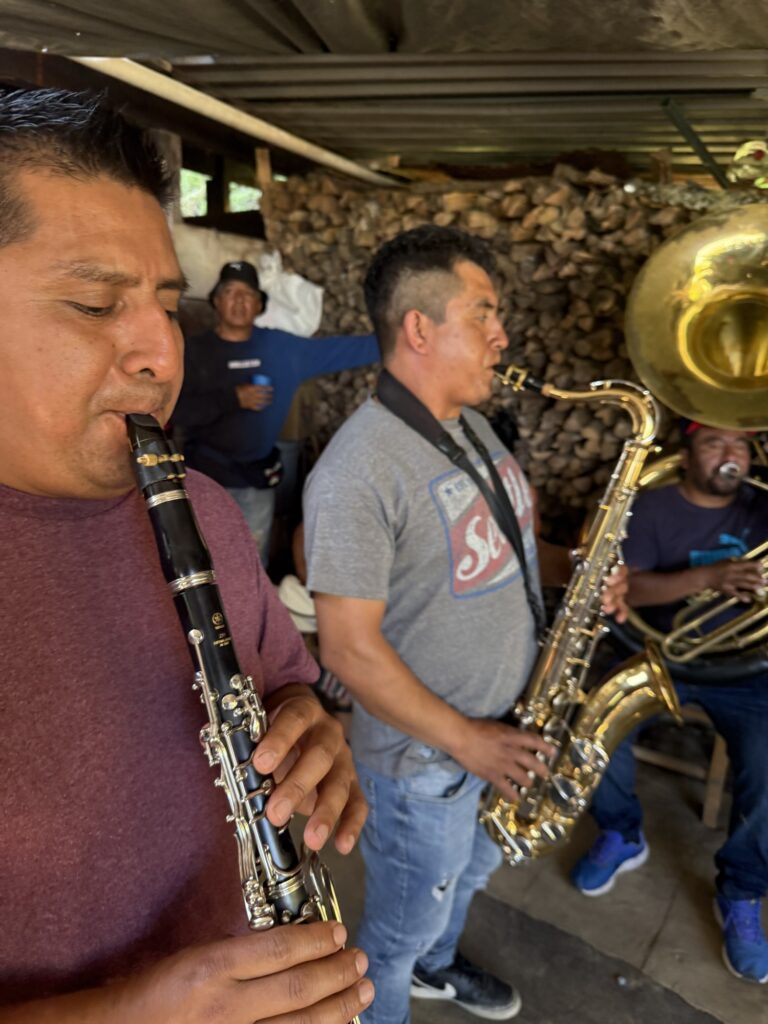
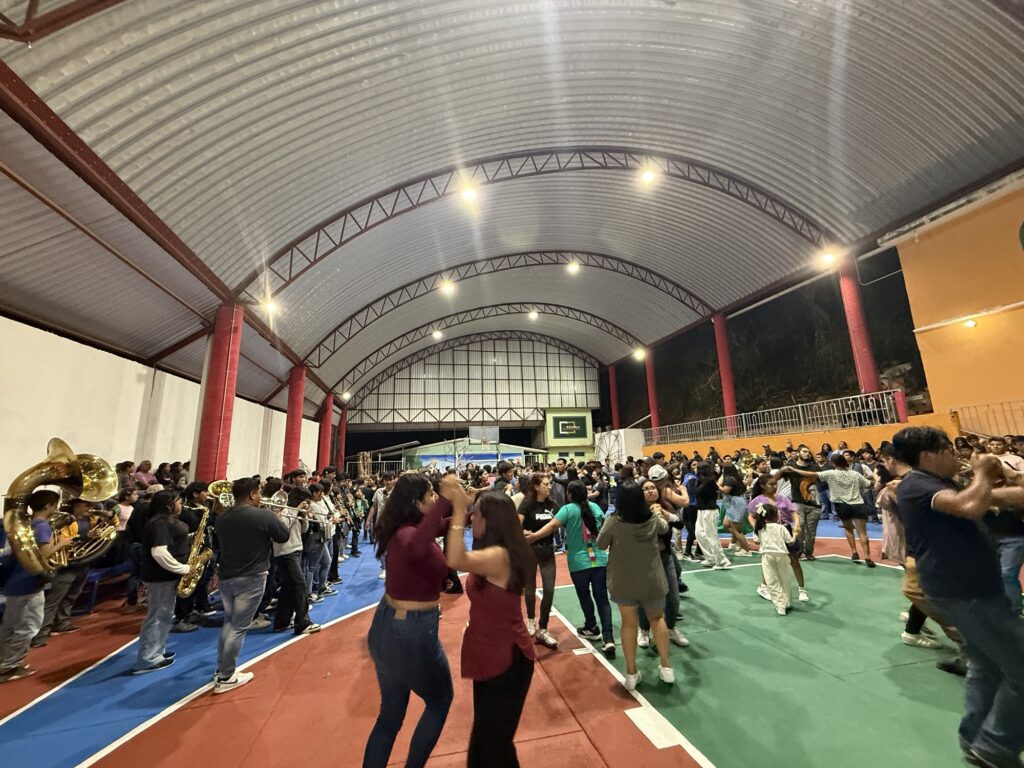
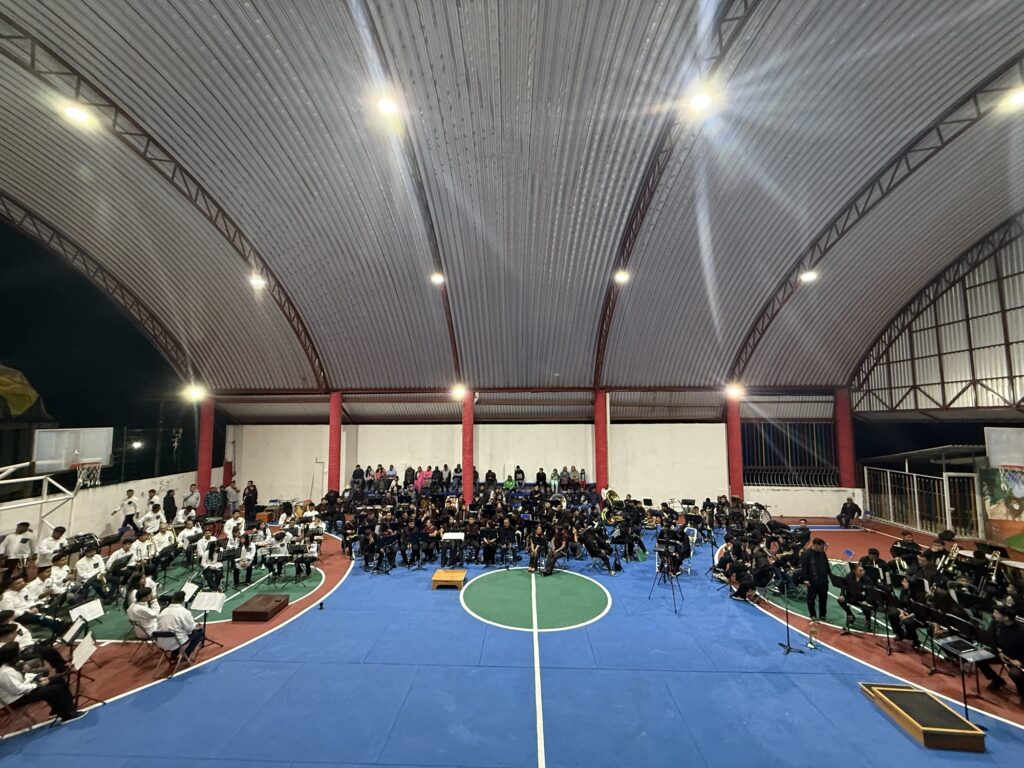
De allí proceden a un salón comunitario junto con chirimías que también les dan la bienvenida y donde cada banda visitante interpreta obras selectas de su repertorio, hasta que la siguiente banda se hace presente y así sucesivamente continúa la tarde entre sones, jarabes, fandangos, chotis, pasacalles, danzones y otros géneros musicales todos de compositores locales.
Los músicos de cada banda reciben refrigerio, alimentos y alojamiento durante este maratón musical de 5 días, cada banda ameniza el día completo por turnos, desde el amanecer en procesiones solemnes (calendas) hasta las horas de las comidas diarias, misas, y en la tarde y noche audiciones y bailes.
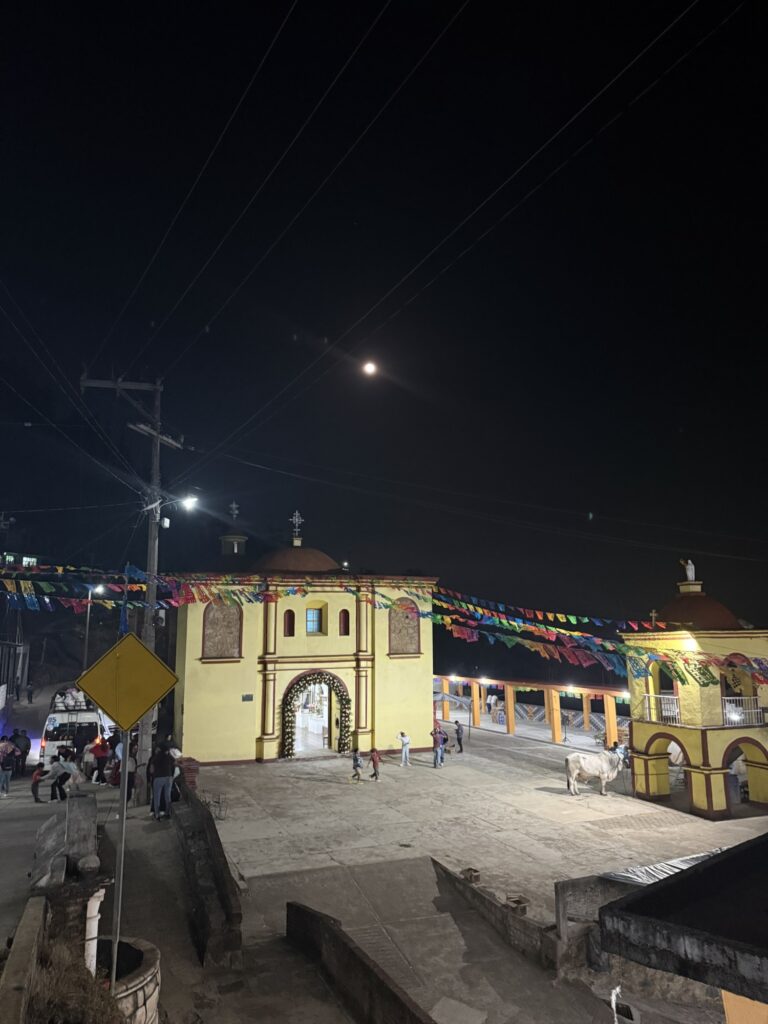
En la víspera de la fiesta del Señor de La Santa Cruz es la quema del castillo (fuegos pirotécnicos espectaculares) frente a la Iglesia, en la plaza principal, donde llueve o truene cada banda debe continuar por turnos amenizando el baile, sones tras sones.
Lo que para estas comunidades representa algo cotidiano, visto y oído desde la perspectiva externa, es simplemente loable y un verdadero deleite para los sentidos al tener el privilegio de despertar por las mañanas con sones interpretados por las bandas filarmónicas en vivo mientras se dirigen al desayuno en la casa comunitaria. Además de esto, el mismo entorno, el paisaje de montañas y niebla, sumados a los sonidos de la naturaleza, contribuyen a que la experiencia sea aún más surrealista.
Para mí que como artista de origen, me crié en medio de músicos de todos géneros desde tradicionales hasta clásicos, no puedo dejar de admirar el sistema musical de la Sierra Norte y seguiré siendo una fiel difusora de su música y tradiciones.
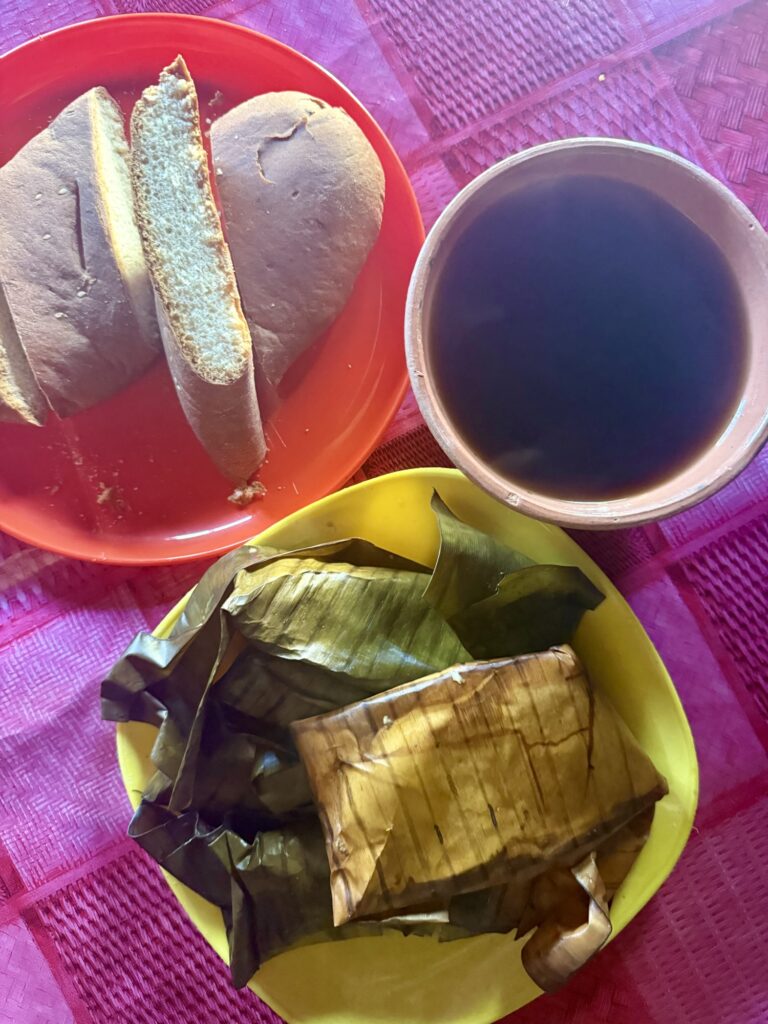
La Banda Filarmónica de Totontepec frente al templo de Otatitlan de Morelos Vista de la parte lateral del templo de Otatitlan de Morelos Autoridades y músicos de la Banda Filarmónica de Otatitlan El templo de Otatitlan al anochecer con los novillos ofrendados en su plaza principal Recibimiento de Otatitlan a las bandas visitantes Procesión de la Banda Filarmónica de Totontepec hasta la Iglesia Sones serranos acompañados acompañados en vivo por las bandas filarmónicasUn típico desayuno serrano, café de la Sierra, panecillos y tamales Audición magna de la bandas filarmónicas presentando obras de concierto de autores contemporáneos con solistas
La música como modus vivendi y hegemonía en las comunidades de la sierra norte
El “ser músico” en las comunidades de “usos y costumbres” de la Sierra Norte y formar parte de la banda filarmónica representa así una forma de servir o “tequio” el cual para otros habitantes del pueblo que no cuenten con la vocación musical deberá ser reemplazado por otro tipo de servicio como “topil” (en zapoteco los topiles se encargan de servir anualmente en las actividades comunitarias haciendo labores que pueden ir desde el orden público a la limpieza de calles).
En estas comunidades, el ser músico es todo un honor, así como en las cortes Europeas, el músico fue una figura esencial para el deleite de sus miembros. Para las comunidades de la Sierra Norte, las bandas filarmónicas constituyen el pilar de la identidad cultural, en estos pueblos es común que los niños aprendan a leer música mucho antes que a leer y escribir.
Dotados de una disciplina para el estudio, los músicos de la sierra norte perfeccionan su ejecución, afinación, destreza e interpretación y reviven movimientos estilísticos que aunque se hubieran originado en Europa y por herencia dejaron su huella hace 5 siglos, a través de la evangelización en estas tierras, han trascendido a un nivel de asimilación e identidad propia desde sus grandes compositores locales como Otilio Contreras, Lico Carrillo, hasta los contemporáneos tales como Eduardo Díaz Méndez, Guzz Ojeda, Fernando Sandoval Luna, Francisco Javier Vargas Luna, Honorio Cano, Víctor Reyes, Cirilo Díaz, Silvestre Vázquez, Gil Ventura, solo por mencionar algunos de estos testimonios vivos del acervo musical de la Sierra de Oaxaca, con más de un centenar de obras por compositor.
Cabe destacar que en algunas comunidades Mixe de la Sierra Norte tales como Totontepec Villa de Morelos, son tantos compositores nacidos en Totontepec, que sus bandas sólo interpretan a compositores de Totontepec.
Al igual que en Santa María Tlahuitoltepec, sede del CECAM (Centro de Capacitación Musical y Desarrollo de la Cultura Mixe) y con quienes he tenido el honor de participar en audiciones de estreno mundial tales como Paz en el Alma y Magnificat en lengua Mazateca, el CECAM no nació como una escuela gubernamental, sino como un proyecto comunitario impulsado por los propios pueblos Mixes para garantizar la continuidad de su herencia musical.
Las Bandas Filarmónicas Tradicionales son patrimonio intangible del Estado de Oaxaca.
Mitchell, J. (2021). Community and Idolatry: San Francisco Cajonos, Yalalag, and Betaza through the Criminal Court of Villa Alta, 1700-1704
Marruffo Betancourt, I., Juárez López, I. I., & Pereyra Martínez, A. (2025). Conocimientos y prácticas tradicionales en la gastronomía de los hongos silvestres de mujeres cocineras de San Antonio Cuajimoloyas, Oaxaca. Enfoques Transdisciplinarios: Ciencia Y Sociedad, 3(1), 133-153.
Aquino, A. (2013a), “La comunalidad como epistemología del sur. Apuntes y retos”
Cuadernos del sur. Revista de ciencias sociales, Oaxaca, CIESAS-Pacífico Sur, UABJO, INAH, año 18, núm. 34, enero-junio, pp. 7-18.
Agradecimientos especiales al maestro Eduardo Díaz Méndez por el privilegio de este viaje musical al país de las nubes, sus conocimientos e introducción a los amigos y a los grandes maestros de la sierra y a todos los pueblos que visite y seguiré visitando mientras la vida me de fuerzas.
Visiting the vast agave landscape in Oaxaca is akin to exploring the plateau in Bordeaux, where the concept of “terroir” in French or “terruño” in Spanish takes on a profound significance.
Oaxaca, renowned for its unparalleled biodiversity, boasts a unique landscape characterized by its high desert mountain ranges, arid, expansive plains, and picturesque river valleys. These diverse habitats have provided the perfect environment for the largest array of wild agave species globally.
Santiago Matatlan, the world capital of Mezcal, is a town where the entire community lives and breathes for this divine elixir. Every house takes pride in crafting its unique style of Mezcal or claiming to produce the best. Generations of families have dedicated their lives to the tradition of mezcaleros, preserving the art of Mezcal production.
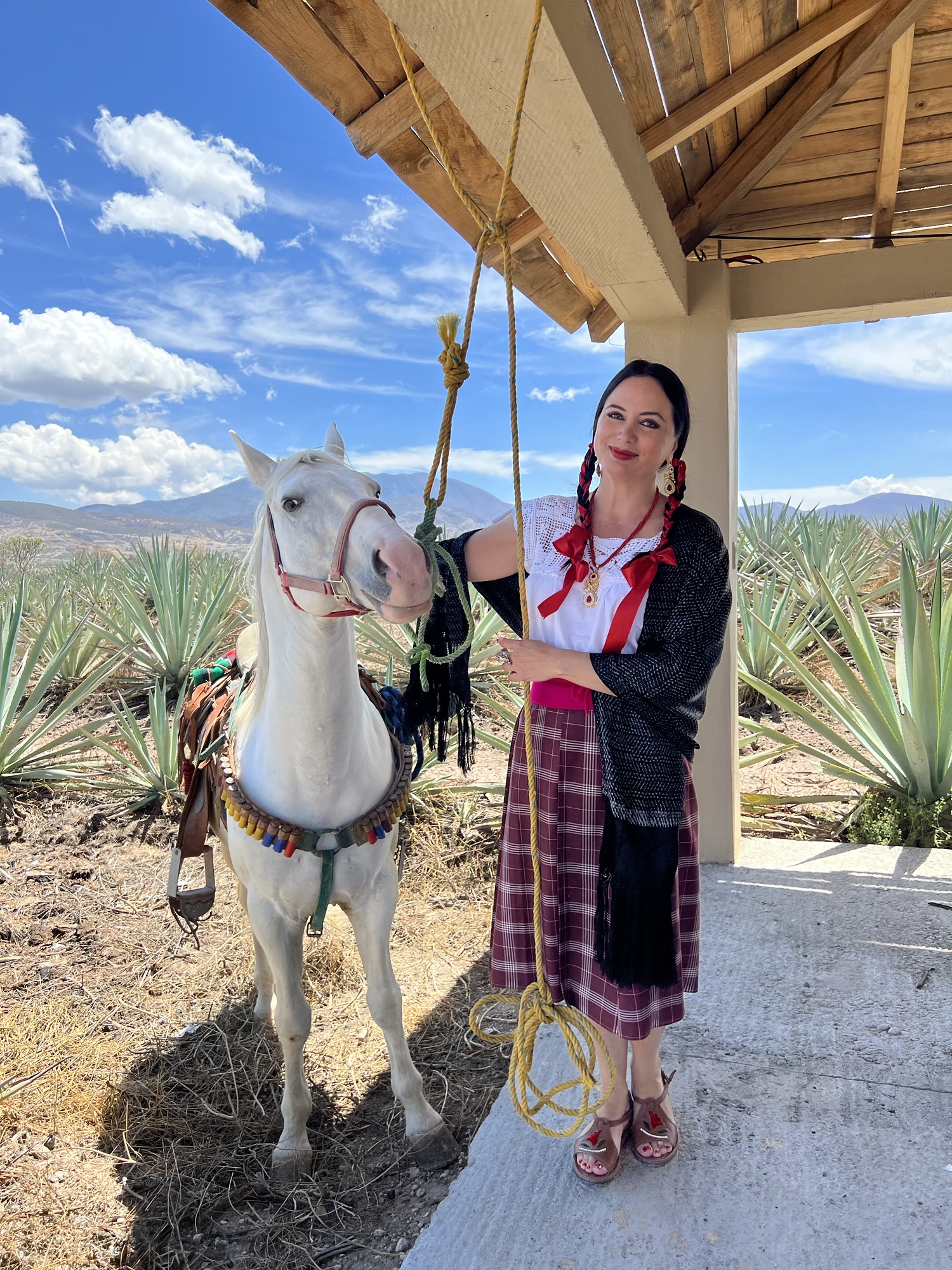
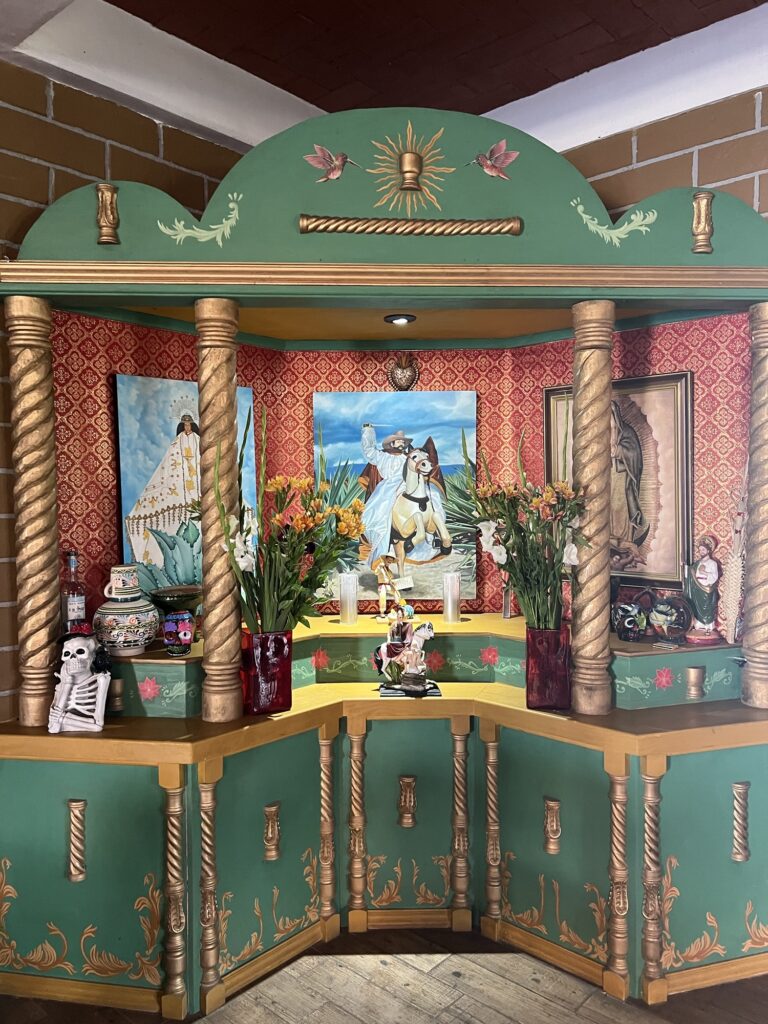
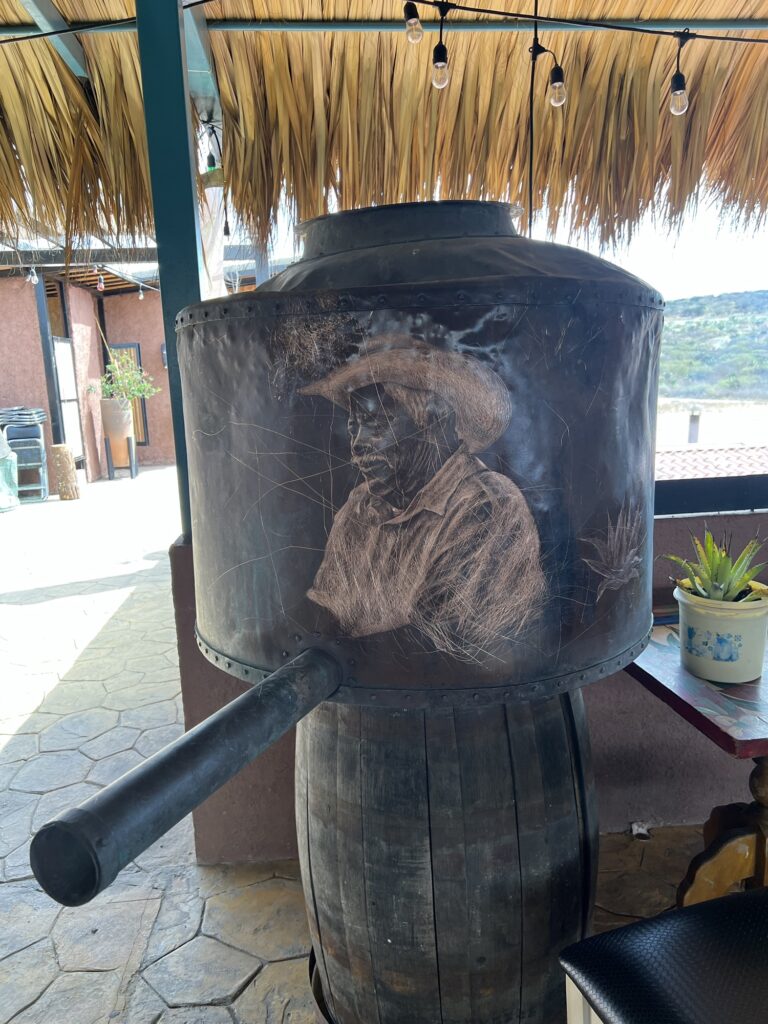
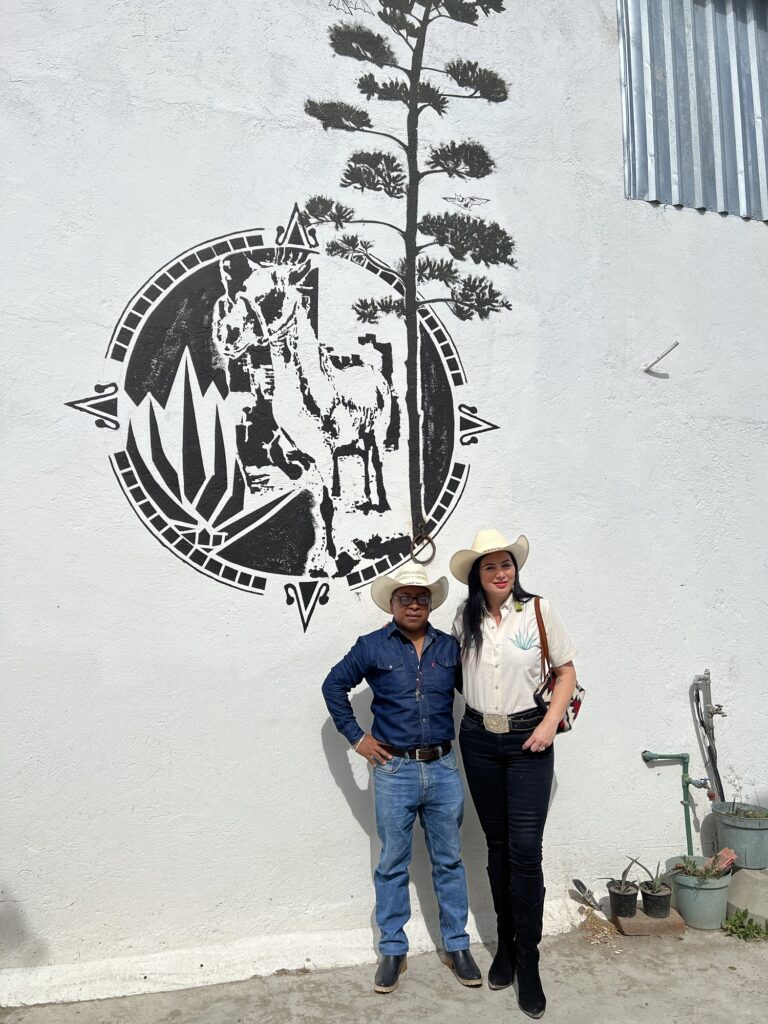
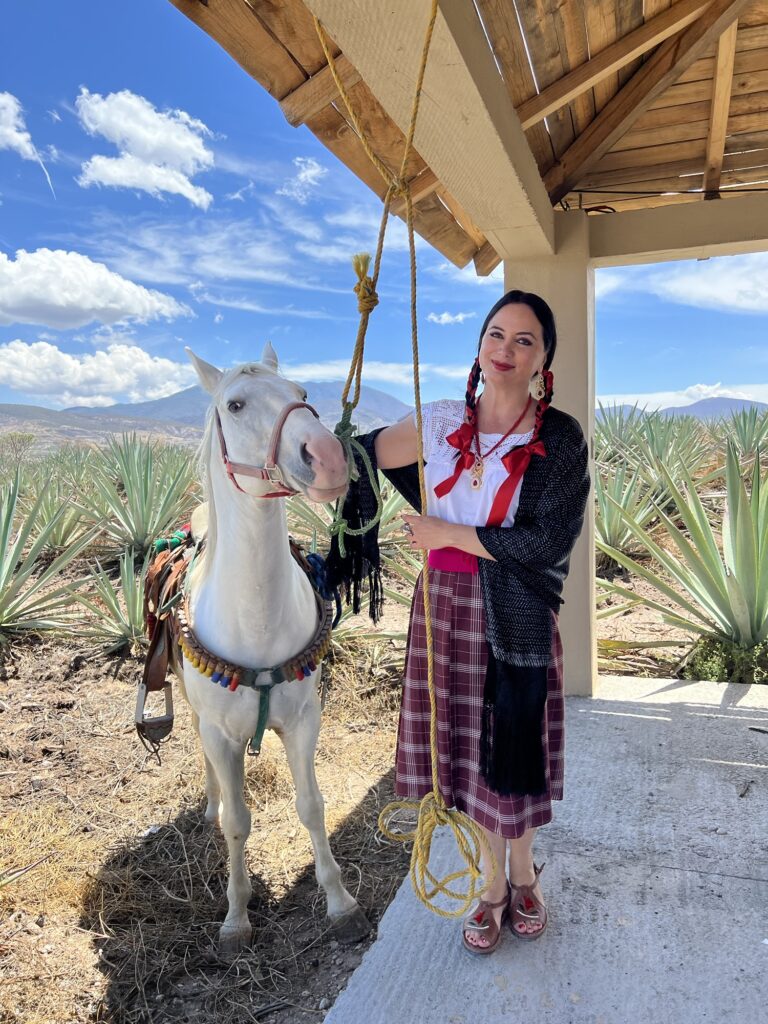
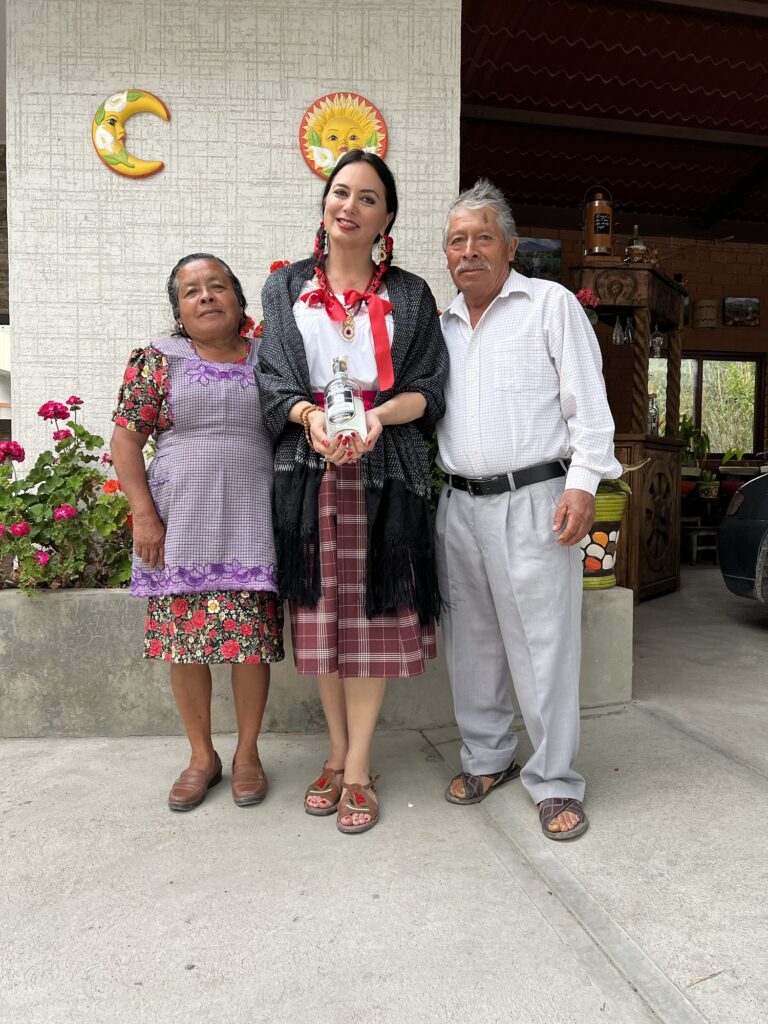
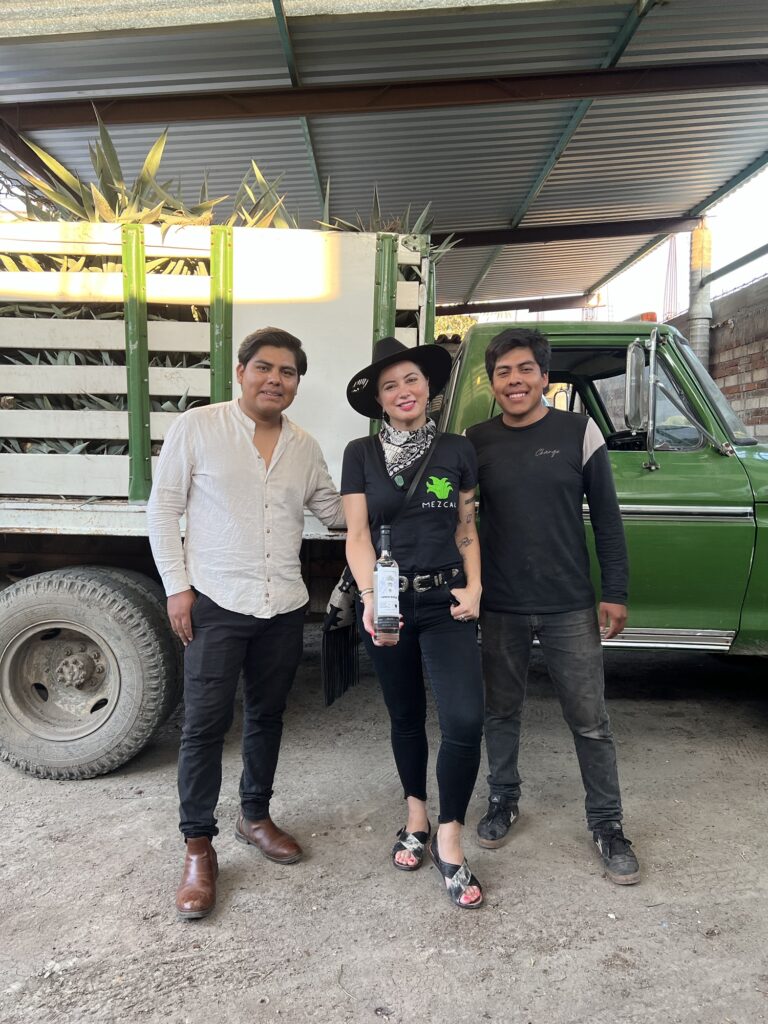
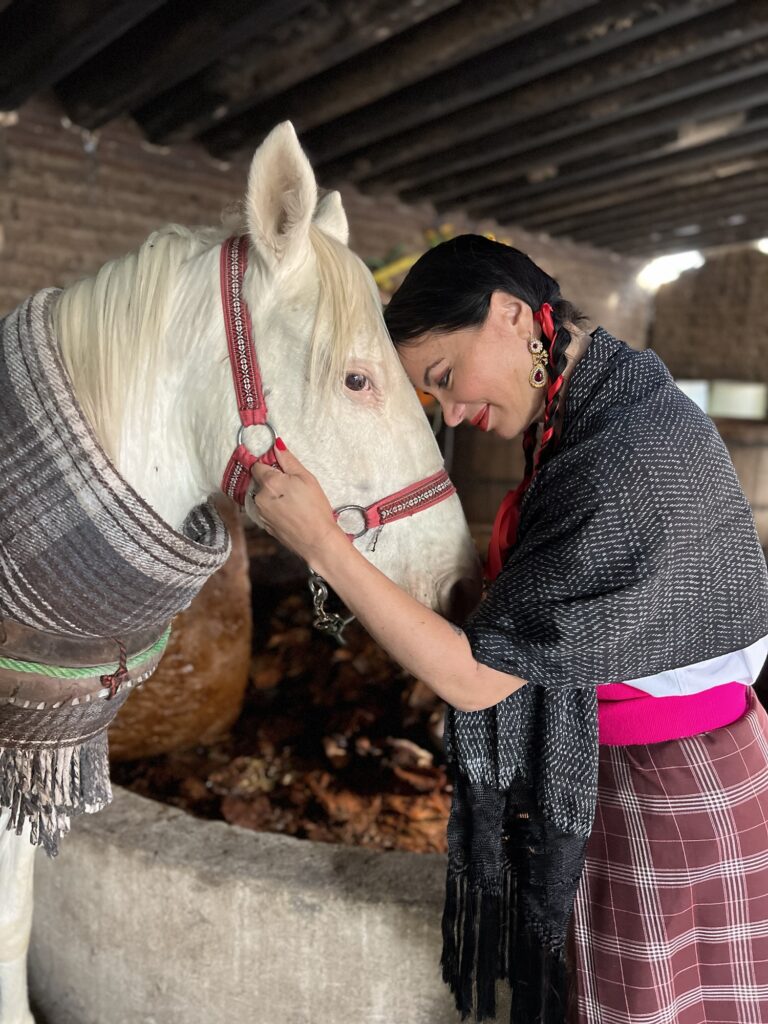
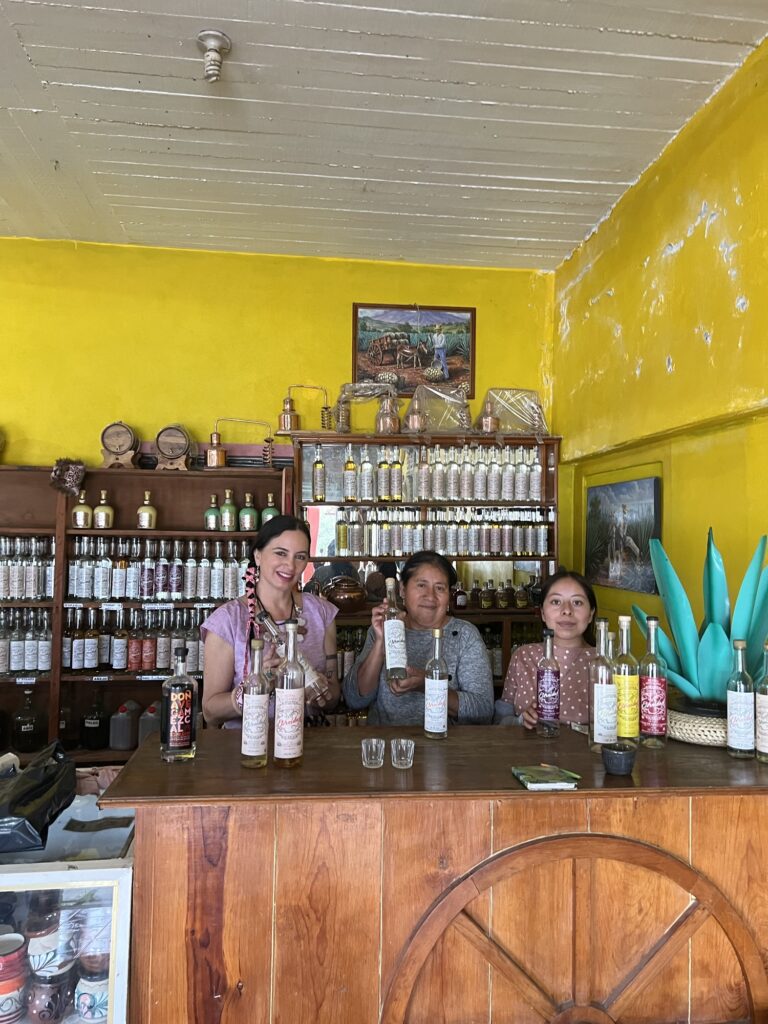
Santiago Caballero, Saint Patron of Matatlan. Real Matlatl distilleryAlambique with Don Tacho’s engrave at Real Matlatl distillery in Santiago Matatlan Maestro Israel Pérez Santiago of Son de la luna Palenque with Montserrat Franco in Santiago Matatlan Montserrat Franco dressed in Valles centrales traditional outfit with “Son the horse” at Campo Rosal fields in Santiago MatatlanThe Blas family, Mezcaleros family and Montserrat Franco in Santiago Matatlan The Santiago brothers Rodrigo and Omar of Campo Rosal and Montserrat Franco in Santiago MatatlanRubio the horse and Montserrat Franco at the Amado’s family palenque in Santiago MatatlanMom and daughter mezcaleras, The Hernandez of Mezcal “Desde La Eternidad” at their mezcal shop and distillery in Santiago Matatlan
Origins:
Santiago Matatlán is a name derived from Nahuatl words; Matlatl, which means net, and Tlan, which means place, so Matatlán means “place near nets.” It was established in 1575, with land titles issued in 1714.
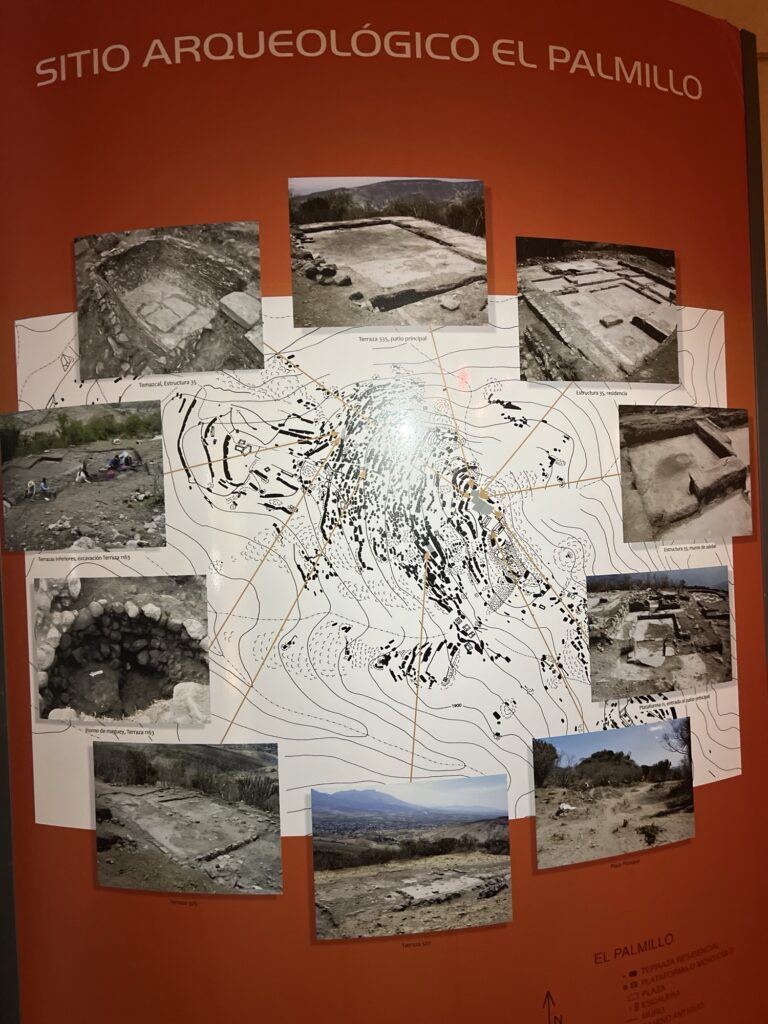
The ancient settlement of this Zapotec city, now an archaeological site that its own inhabitants buried again after the excavations as a way to safeguard the memory of their ancestors, “El Palmillo,” is located in the blood hill or “Ta Guiil Reiñ” in Zapotec.
The archaeologists led by Gary Feinman and Linda Nicholas discovered El Palmillo at the end of the 20th century. The Zapotec civilization, which flourished between 500 BC and 750 AD, built the site, which over time became an active urban center.
The Community Museum “Ta Guiil Reiñ” preserves pieces that were found at the archaeological site. This museum was inaugurated in 2012 to preserve its history, archaeology, and mezcal culture.
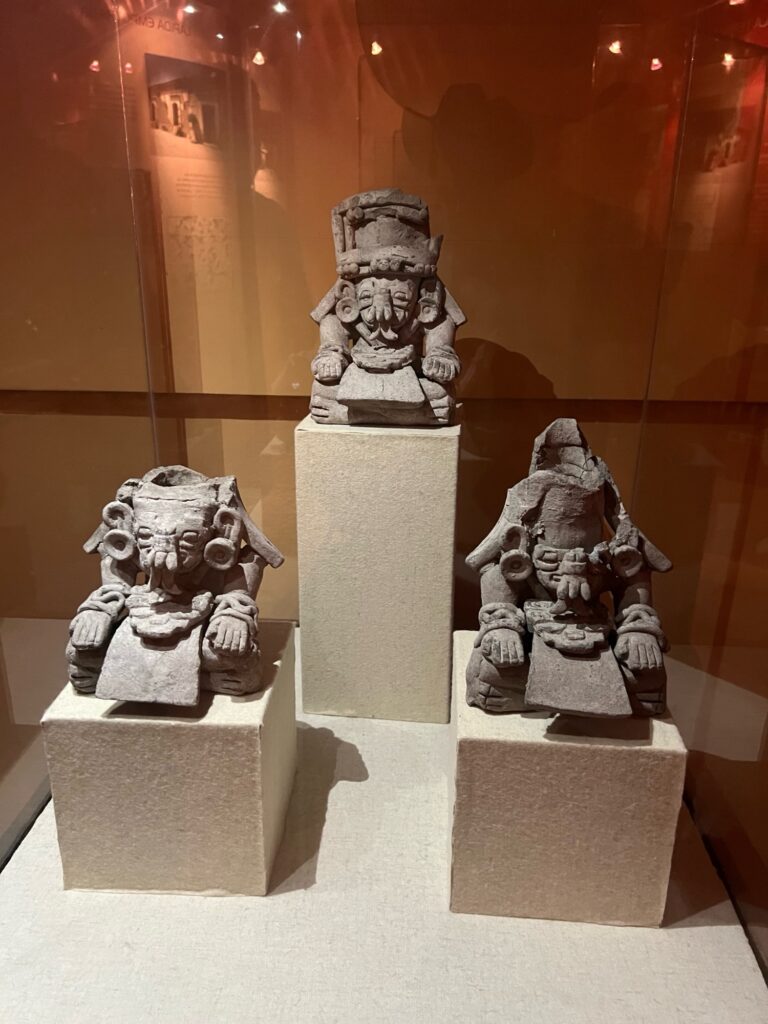
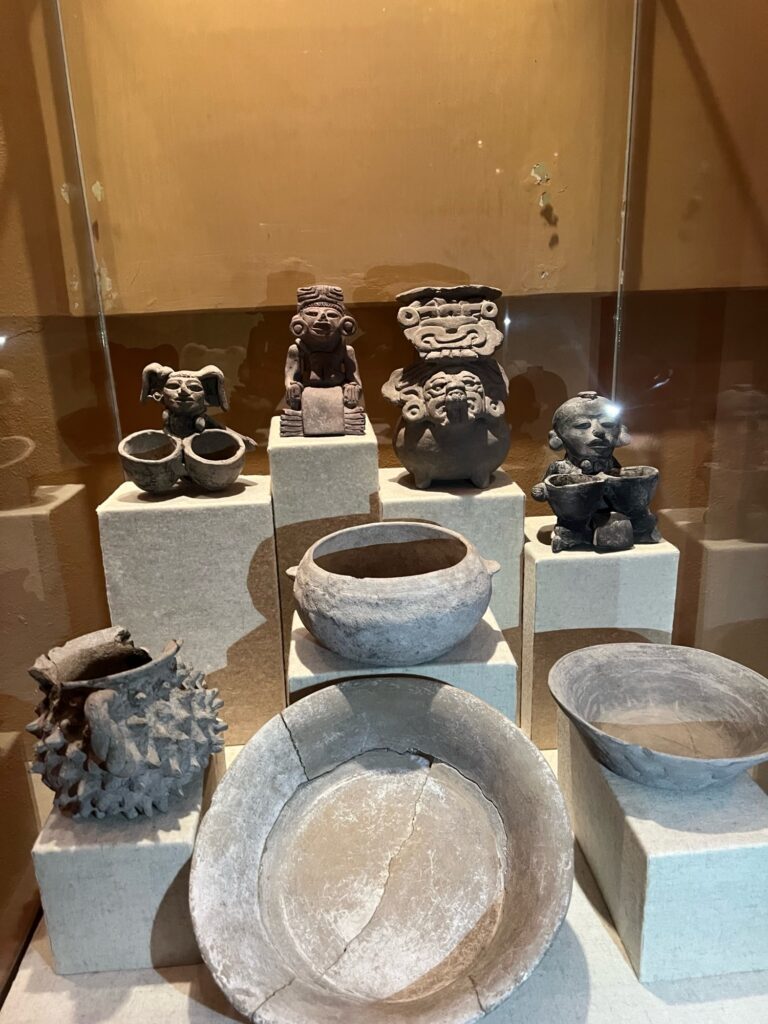
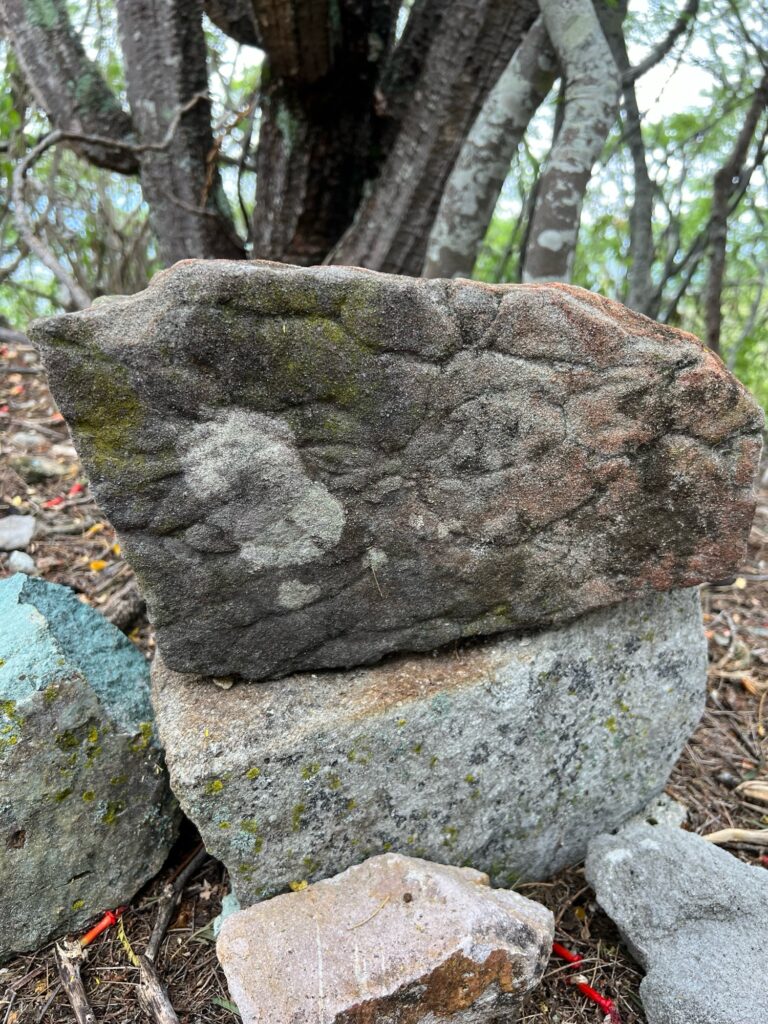
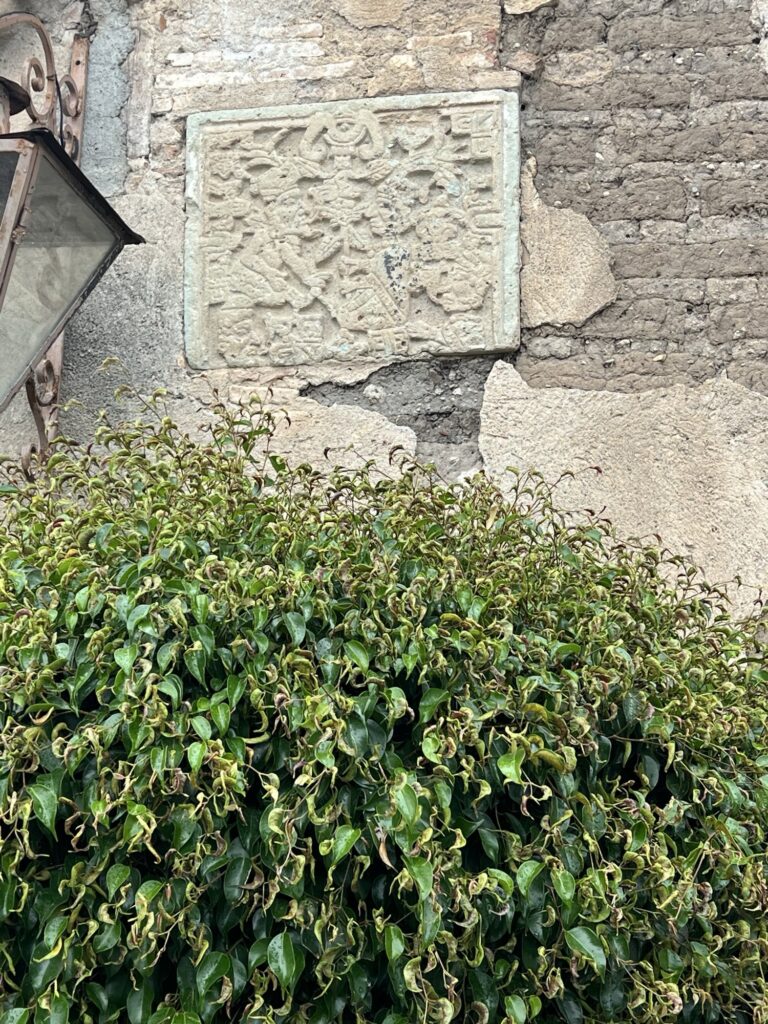
Cosijo shaped urns at the Community Museum “Ta Guiil Reiñ” of Santiago MatatlanDiverse pottery found at El Palmillo site in Santiago Matatlan, in permanent exhibit at the community museumMontserrat Franco at the top of the hill of blood “Ta Guiil Reiñ“ El Palmillo Santiago Matatlan One of the carved stones found at El Palmillo site The tombstone found at El Palmillo site at around 900 AD, lies at the facade of the Mendez Leon residence since 1750 in Santiago Matatlan. The original structure of the Zapotec settlement at the time of discovery by the archaeologists team.
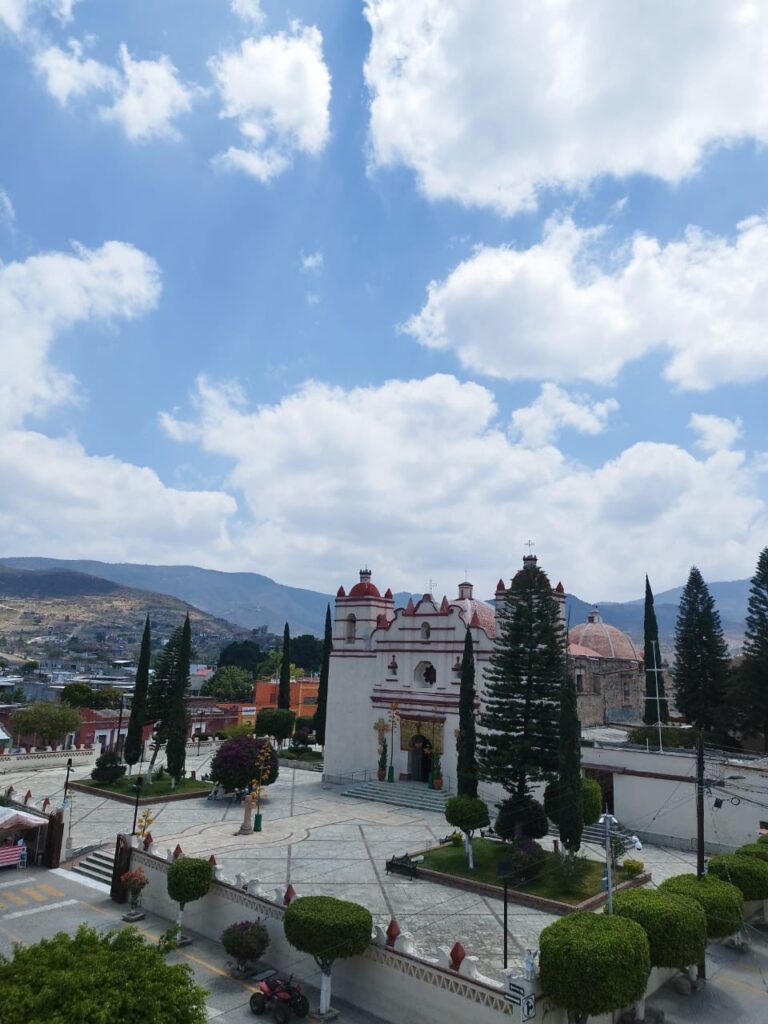
Temple of Santiago Apóstol: A 17th-century church with a baroque, Churrigueresque-style main altar.
Santiago Apostle Temple. Photo by Israel Perez Santiago The city hall bell. Photo by Israel Perez Santiago A view from the city hall. Photo: Israel Perez Santiago From the choir of the Santiago Apostle Temple. Photography: Israel Perez Santiago
Matatlan today
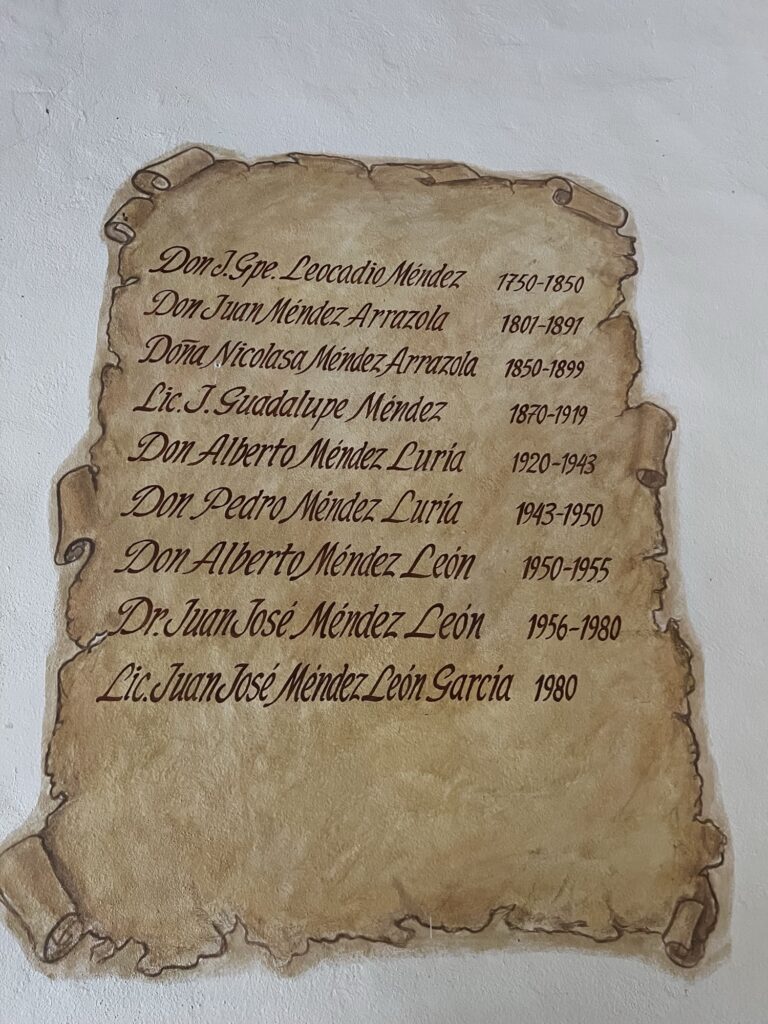
Santiago Matatlan’s Mayor Juan José Mendez León, comes from a long lineage of agave farmers, distillers and leaders in the world capital of mezcal.
With a 6th generation, Juan José’s family is one of the oldest producers. His father was one of COMERCAM’s (Mezcal regulatory council) founding members, who helped establish the DO (Denomination of Origin) and the NOM (Normas Oficiales Mexicanas) in 1994, laying the foundation for the modern mezcal industry as well of helping establish Matatlan as the World Capital of Mezcal.
COMERCAM (short for Consejo Mexicano Regulador de la Calidad del Mezcal) is the Mexican Regulatory Council for Mezcal. This organization surveys the quality, authenticity, and certification of mezcal under the Denomination of Origin (DO) guidelines.
The State of Oaxaca produces more than 80% of the Mezcal within the DO of which Santiago Matatlan is responsible for almost 65%.
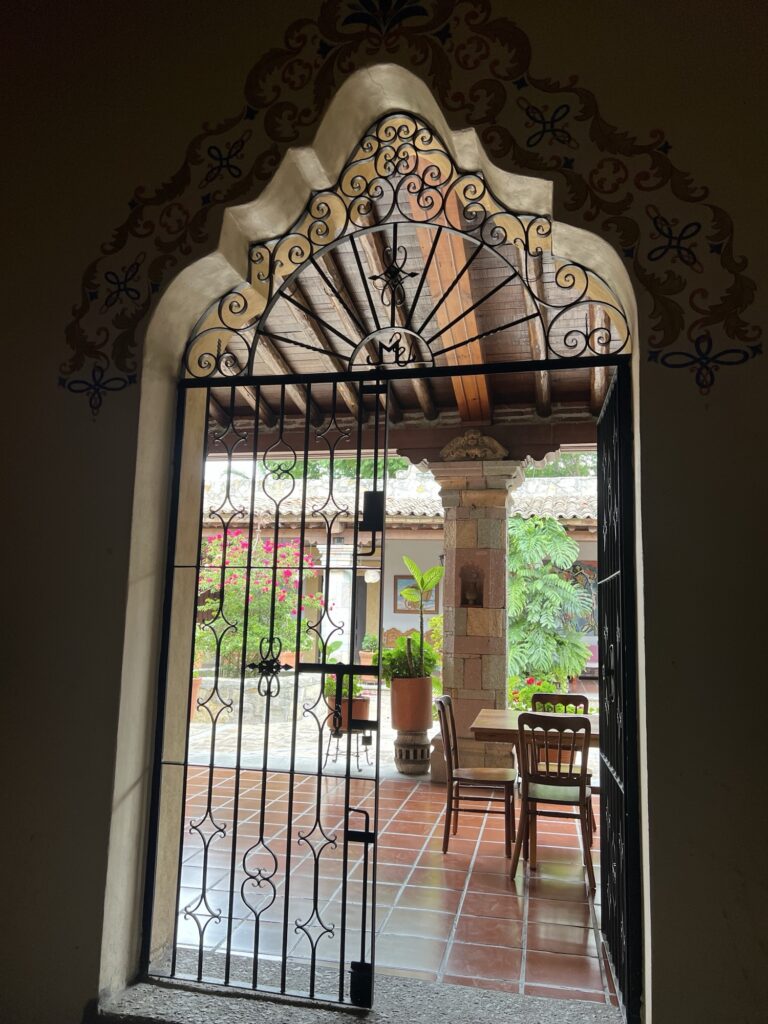
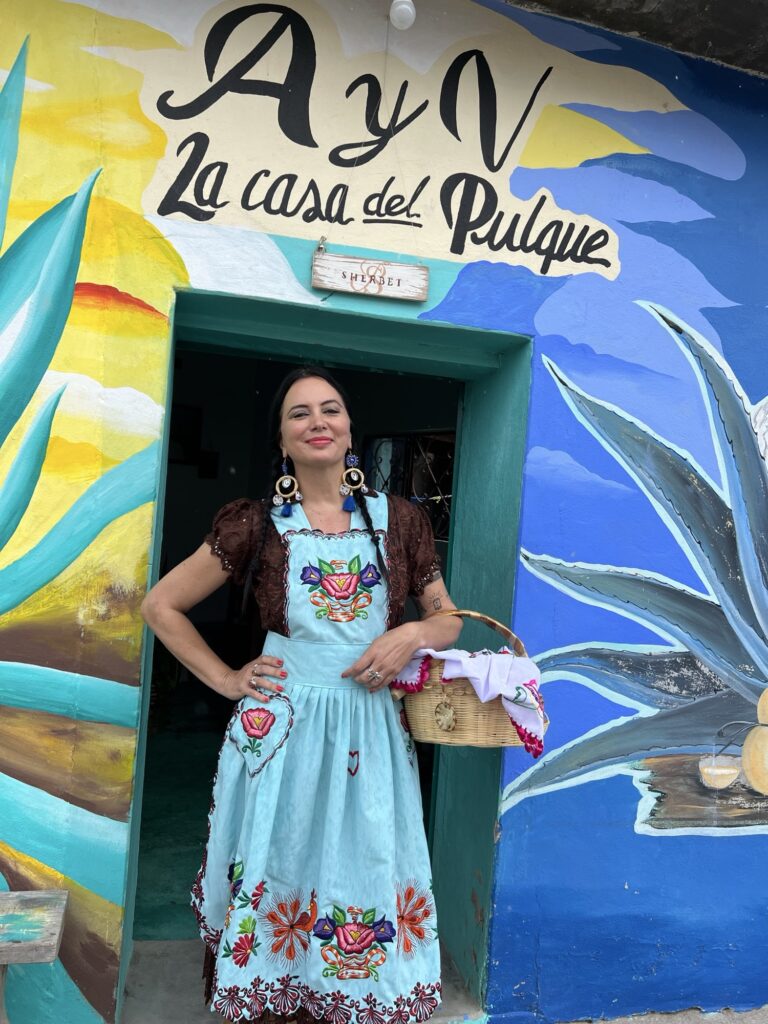
Santiago Matatlan’s Mayor Juan José Mendez Leon and Montserrat Franco at his 18th century family hacienda The Mendez Leon lineage started with Jose Guadalupe Leocadio Mendez who established the meson hacienda in the strategic location next to the temple.The entrance to the Mendez Leon iconic hacienda. The only residence in front of the Santiago Apostle templeMontserrat Franco in the Matatlan traditional outfit at the 18th century Mendez Leon hacienda The Tierra Matateca Band with director and agave farmer Carlos Hernandez, Mtro Israel Perez Santiago and Montserrat Franco performing at the Gran Fiesta del Mezcal Montserrat Franco at La Casa del Pulque in Matatlan. Pulque is the sap extracted and fermented from the maguey Pulquero (Agave Americana)
If you go:
Ta Guiil Reiñ Community Museum contact here for hours of operation
El Palmillo archeological site (not open to the public, independent hiking trails can be arranged)
Listen to Soy Espadin presented live at the Gran Fiesta del Mezcal of Matatlan in July 2023.
References:
Gibran Rivera: Caracterizando la producción y organización de los mezcaleros en Matatlan, México “Capital mundial del mezcal”
Javier Urcid: A Zapotec slab in Santiago Matatlan, Oaxaca.
Museo comunitario Taguil Reiñ
Interviews with:
Lic Juan José Mendez Leon, Mayor of Santiago Matatlan and producer at Mendez Leon.
Santo Domingo Yanhuitlán in the Mixtec region, one of the destinations on the Dominican Route of Oaxaca, holds special significance this year as we commemorate the 500th anniversary of the order of preachers in Mexico.
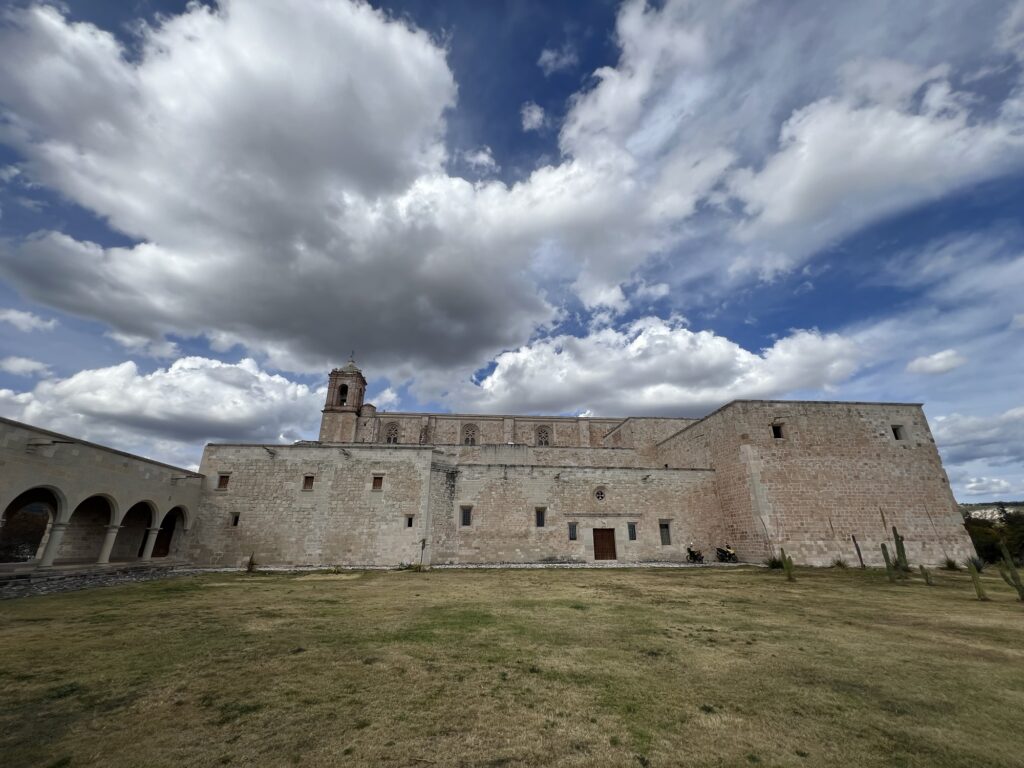
Montserrat Franco at the Santo Domingo Yanhuitlan temple and ex-convent Ex-convent of Santo Domingo Yanhuitlan
The enormous Plateresque church is roofed with lofty Gothic star vaults and lined with gilded altarpieces, including the huge main retablo by the noted XVI century Sevillian artist Andrés de la Concha.
Santo Domingo Yanhuitlan, retablo mayor The main retablo is one of the great masterpieces of Mexican artDe Concha painted in the Mannerist style of the Andalusian school, noted for its subtly mellow colors. Some of the 13 altarpieces across de temple are still in restoration process The paintings at Yanhuitlan are considered the earliest, the most complete, and the finest of De Concha’s Mexican art.The retablo of La Soledad The principal paintings have been identified as the work of Andrés de Concha, the celebrated painter, sculptor and designer from Seville who traveled to Mexico in 1568, under commission by the encomendero Gonzalo de Las CasasThe mix of colonial styles from Plateresque to Churrigueresque. A retablo still under restoration at the Santo Domingo Yanhuitlan temple
Painted stucco and stone reliefs decorate many sections of the church, whose broad underchoir is spanned by an intricately carved Moorish wooden ceiling.
Angeles Pasionarios
Among these treasures is a collection of painted wooden angels known as “Angeles Pasionarios,” belonging to the various colonial barrios of Yanhuitlan. As a tradition that has endured for centuries, the mayordomos (chiefs) of each cofradia take great honor and pride in dressing and displaying the angels during the procession.
Angeles Pasionarios de Santo Domingo Yanhuitlan Passionate angels are exhibit at the Temple’s museum during the year, dressed and carried in procession during lent.
On Good Friday these figures, adorned with wings and crowns and carrying the Instruments of the Passion, are borne in procession around the town.
Each archangel has a name of Mixtec origin, representing each of the eight neighborhoods:
Daná / Dequedaná (crazy head)
Attributes: Staff and title
Yuxacóyotl (edge of the marsh)
Attributes: Hammer
Yuyusa (riverbank)
Attributes: Spear
Xayujo / Xayuco (at the foot of the mountain)
Attributes: Crown
Ticoó (marshland)
Attributes: Cross, cincture, and radiance
Tindeé (land of thorns)
Attributes: Ladder
Ayuxi (revered flower)
Attributes: Lily
Yuxayó (reed river)
Attributes: Nails
The garments of these sculptures are safeguarded by eight Yanhuitlán families. These stewardships are passed down from generation to generation, with some records showing that they have preserved these religious objects for over 150 years.
The Pipe Organ
The magnificent pipe organ built around 1705 and is currently in use.
Built by an unknown maker, likely between1705–1725. Restored in 1996-1998 by Pascal Quoirin, overseen by the Academia Mexicana de Música Antigua para Órgano (AMMAO). It is an 8’ stationary organ, featuring a 47-note keyboard (added in 1886).
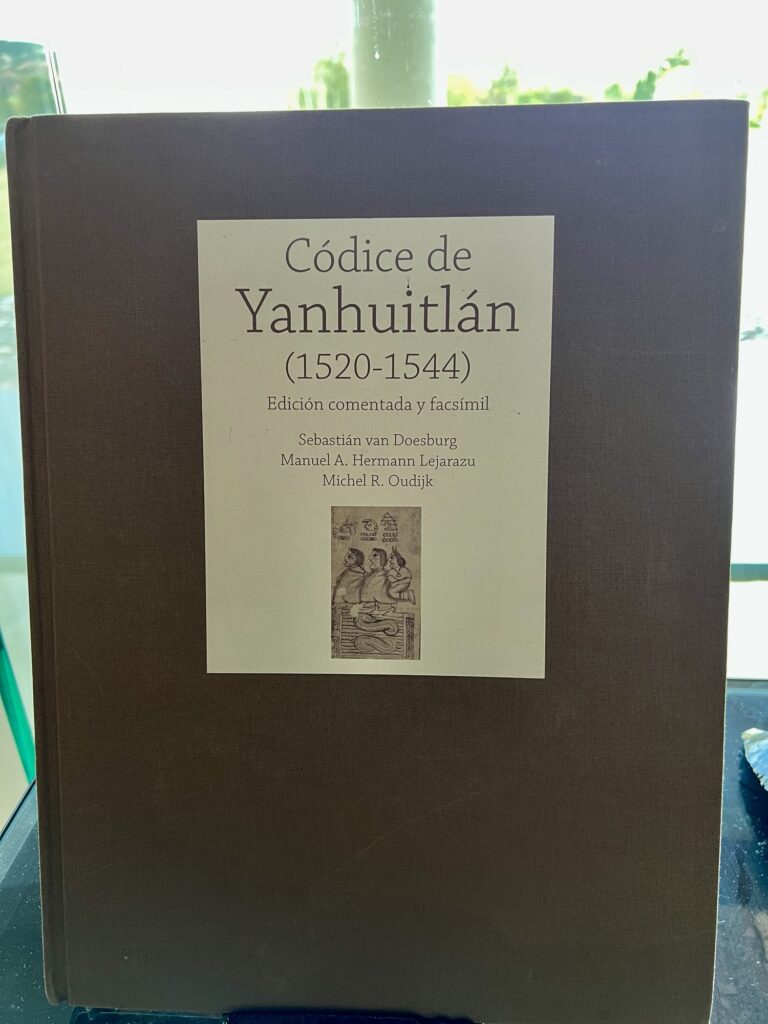
The Codex Yanhuitlán
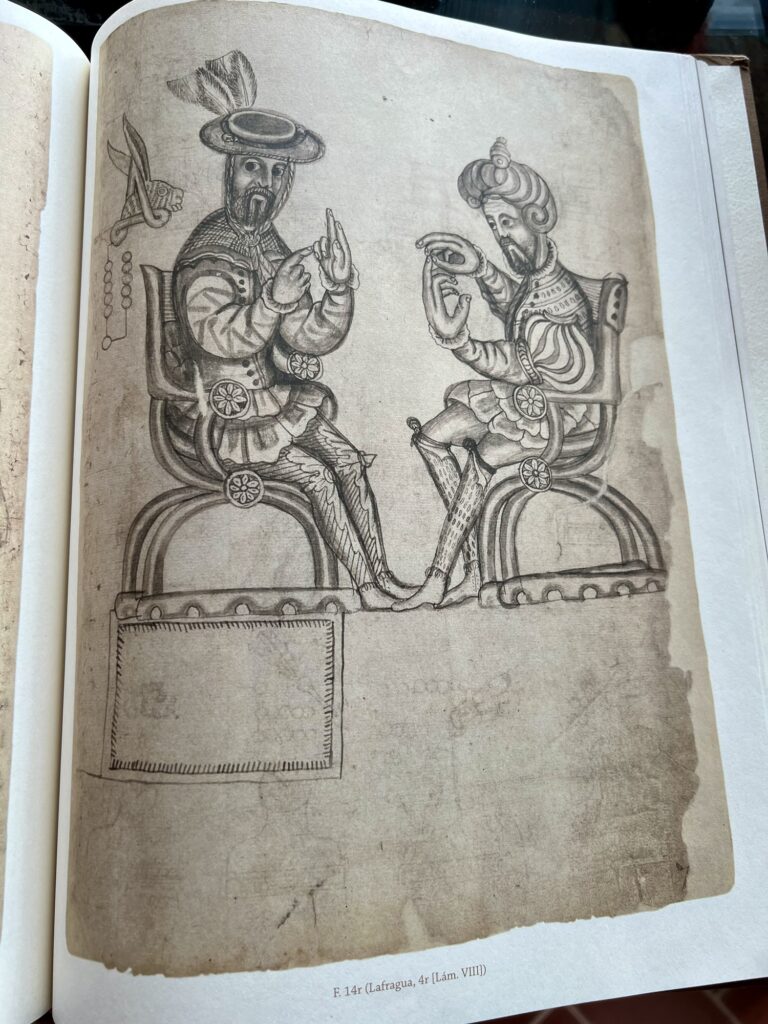
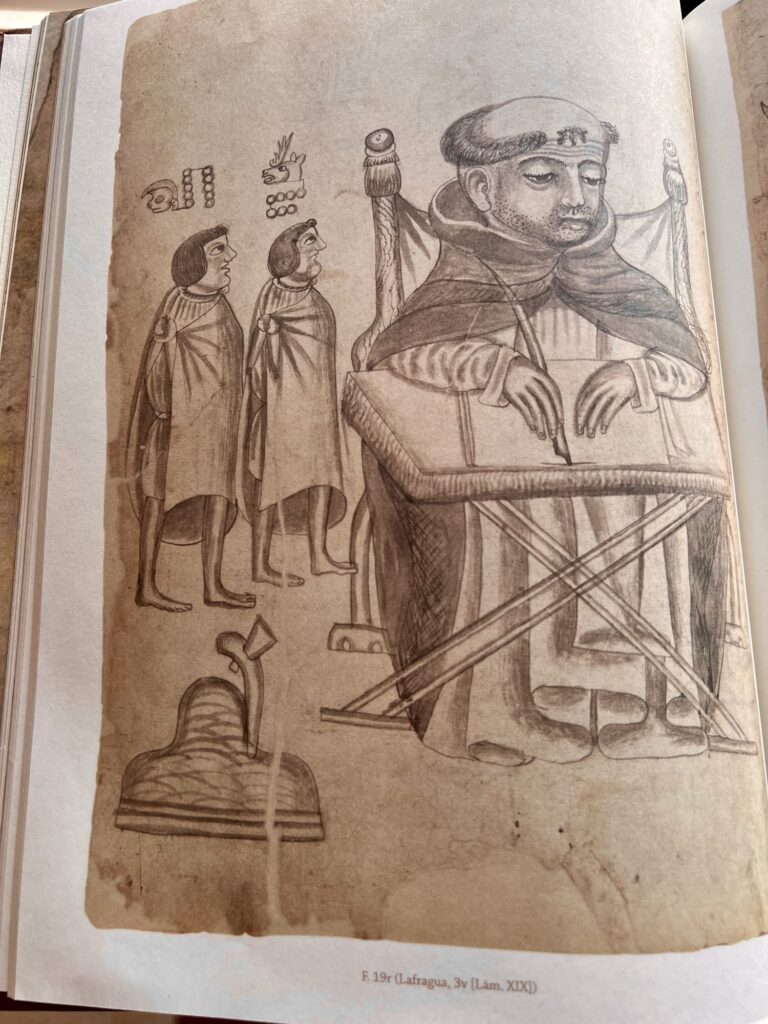
The codex was written by its inhabitants dated 1550 to 1570, to celebrate the agreement between chiefs, religious and encomendero, the document also intended to take stock of what had in taxes and tequitl work or the community to their new rulers. The original is currently in the special collections of the José María Lafragua Historical Library of the Autonomous University of Puebla.
The Yanhuitlán Codex was made in the 16th Century in a different format: instead of using a typical folding document, it was made like an European Codex.The codex serves as a record of dynastic succession and political relationships among indigenous rulers and Spanish authorities.Codex Yanhuitlan: it is interesting how the Saints or Spanish figures appear always bigger in comparison to the natives of the land.
If you go:
Check the official INAH site for hours of operations and costs.
References:
Codice Yanhuitlan, estudio preliminar de María Teresa Sepúlveda y Herrera
Frassani, Alessia. 2013. “The Convento of Yanhuitlan and its Altarpiece: Patronage and the Making of a Colonial Iconography in 16th-century Mixteca Alta.” Colonial Latin American Review 22 (1): 67-97.
Terraciano, Kevin, 2001. The Mixtecs of Colonial Oaxaca, Nudzahui History, 16th-18th Centuries.Stanford: Stanford University Press.
Hacienda Guegorene. San Pedro Taviche, District of Ocotlan de Morelos
The Hacienda Guegorene is a historic Estate located in San Pedro Taviche, in the Ocotlán district of Oaxaca, within the Central Valleys, a region deeply tied to the Zapotec culture.
Historical background
Hacienda Guegorene dates back roughly to the late 17th or early 18th century, making it part of the colonial hacienda system that shaped much of rural Oaxaca’s agricultural economy.
The name Guegorene is believed to come from Zapotec linguistic roots, while interpretations vary locally, historians and linguists generally connect the word to Zapotec terms associated with “place of abundance” fertile agricultural land or a place where life grows, or “river of blood” because of the red color of the copal trees that surrounds the land.
The architecture reflects classic colonial hacienda design, with a central fountain and gardens, large corridors with arches, an estate chapel, surrounding agricultural lands.
Mining in the Taviche, Ocotlan areas
Mining in the Taviche area dates back to the 19th century. By the late 1800s and early 1900s, many deposits of silver and gold were already being exploited in the Taviche mining district, including areas around San Pedro and San Jerónimo Taviche.
Mines were originally operated on a small scale by local haciendas like Guegorene. Later, foreign and national companies became involved in extracting the metals. The area became known as a precious-metal district with multiple underground mines.
Mining slowed down during the Mexican Revolution (around 1910) but resumed again in the 1920s and later decades.
Montserrat Franco at the Chappel in honor to the Lady of Juquila. Hacienda Guegorene The agave fields across Hacienda Guegorene The spring water pool Breakfast at Hacienda Guegorene Four generations of Skidmore rest at the Hacienda’s chappel The kitchen with some ancient artifacts The kitchen The Chappel The arched corridors of the hacienda Several chambers are located across the hacienda complex
The chapel on the property reportedly contains a Virgin of Juquila image from 1827, showing how the estate also became integrated into the local religious and social life of the community.
The Union of Texan miners and Zapotec women
María Saturnina Jiménez García, of Zapotec descent, was the matriarch who led the operations of the hacienda alongside her Texan husband and son of Frank, the founder: Charles Henry Skidmore.
Dolores Skidmore Jiménez and Carlos Skidmore Jiménez preserved the estate and its agricultural vocation. They had eleven kids.
Today, Eduardo Muñozcano Skidmore, great-grandson of Frank, leads the comprehensive restoration of the historic center and creates the brand Quiéreme Mucho, bringing tradition into the 21st century with a sustainable vision and international outlook.
Oaxaca’s carnivals are among the most picturesque and diverse in Mesoamerica, celebrated between February and March before Lent.
They feature colorful parades, music, and unique characters like the “cachudos” of Santa María Coyotepec, the “diablos pintos” of Santa Catarina Minas, and the devils of Santiago Juxtlahuaca.
Santa Catarina Minas carnivals
Some of the most iconic carnivals include:
Putleco Carnival (Putla Villa de Guerrero): Famous for its “tiliches”, characters covered in colorful rags dancing nonstop.
San Martín Tilcajete: Features oiled-up “diablitos” roaming the streets with bells.
Villa de Zaachila: Devils and decorated eggs filled with flour are thrown at young women as a courtship gesture. The tradition of devils and love eggs in Zaachila is a vibrant expression of Zapotec culture. On Fat Tuesday, groups dress up as devils with papier-mâché masks, ringing bells to signal the last day for “carnal” or bad deeds before Lent. The Devils and Love Eggs Devils carry decorated eggshells filled with baby powder or flour and confetti, breaking them on single ladies’ heads as a sign of interest. These “love eggs” are displayed on embroidered handkerchiefs with love declarations, adding a romantic touch. Zaachila, the last Zapotec Empire capital, preserves traditions like mask-making, feather art, and embroidery.
Santa Catarina Minas: The story goes that in ancient times, they celebrated “Carnestolendas” on the Tuesday before Ash Wednesday, as a way to “cast out their demons” and give death to carnal desires. It was also the last day to eat meat before Ash Wednesday, when they’d go to receive ashes and observe Lent. What are the “diablos pintos” The “pintos” were people who painted their bodies and faces with natural pigments like tizate, apasle, palm, cuernamentas, and animal hides. They’d go out to scare the landowners and rebel, revealing their anger and indignation without being recognized, as their faces were covered or painted. The tradition They’d go to the hills to gather these natural pigments and then descend to frighten the authorities, expressing their inner “demons” and purifying themselves before Lent. This ancient tradition was a form of catharsis, releasing tensions and negative emotions before the reflective period of Lent. It’s fascinating to see how these ancient traditions influence today’s Carnival celebrations in Oaxaca and beyond.
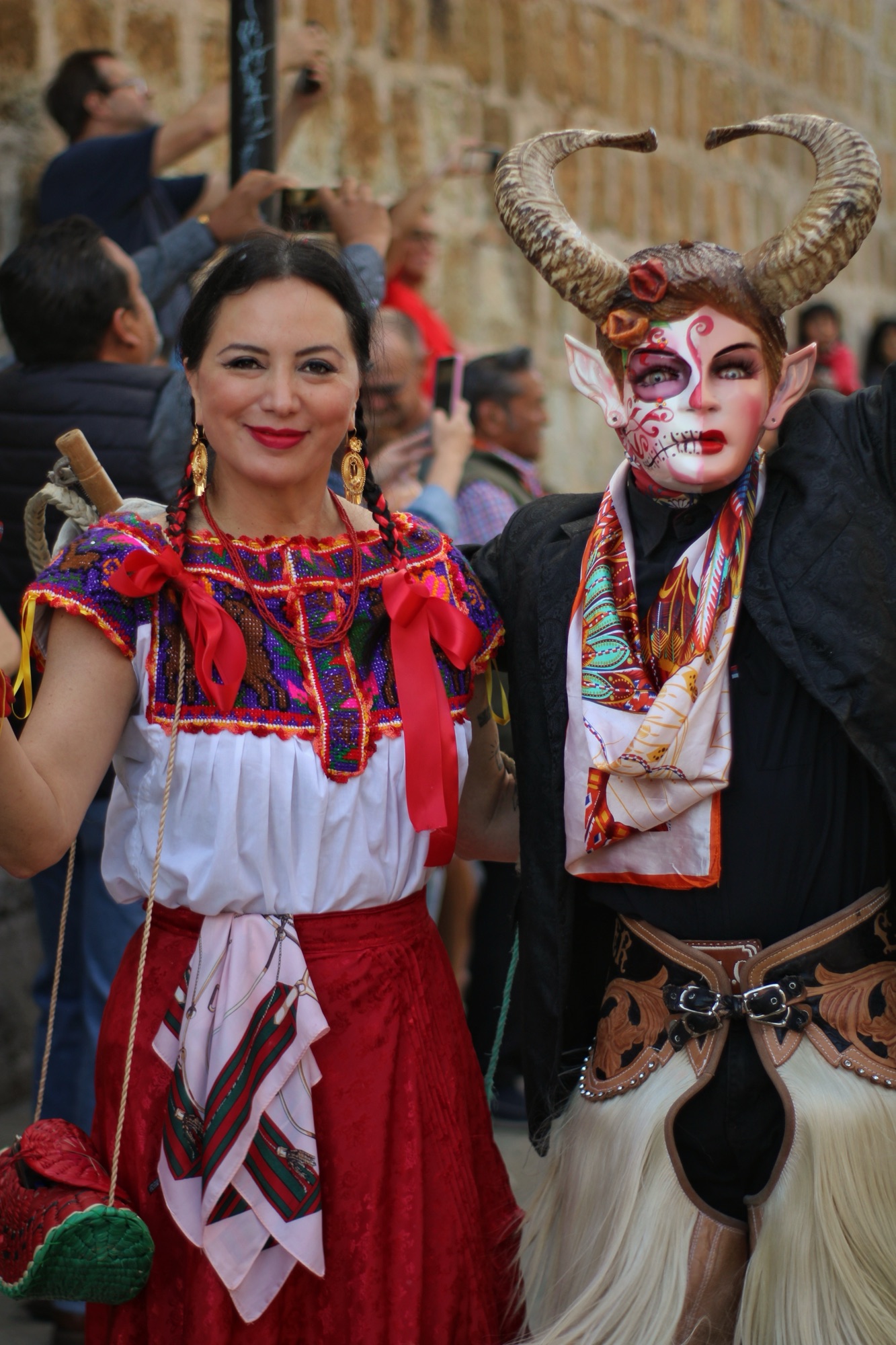
Montserrat Franco and a female Tiliche in Ocotlan de Morelos carnival The Santa Catarina Minas Carnival The Devil of Juxtlahuaca The Devil of Juxtlahuaca Zaachila’s zancudos Montserrat Franco and Cachudos of Santa Maria Coyotepec
Others include San Bartolo Coyotepec, San Juan Bautista la Raya, Ocotlan de Morelos, Magdalena Teitipac, and San Bartolomé Quialana.
Montserrat Franco in Juquila’s traditional outfit with the Devil of Santiago Juxtlahuaca. Photo credit: Mayin López Decorated eggs filled with flour at Zaachila’s carnivals Zancudos of Zaachila Montserrat Franco with “pintos” dot painting in Santa Catarina Mina’s carnival. Photo credit: Sinuhé Gerardo Montserrat Franco wearing a paper mache mask from Zaachila A devil in Zaachila A family during Zaachila’s carnival
The city of Coral Gables was developed by George Merrick with the conception of “The Beautiful City” an architectural movement from the late 1800’s and early 1900’s that includes the “Beaux-Arts” style characteristic to many buildings not only in Coral Gables but also can be seen in Downtown Miami.
Merrick a visioner himself created unique villages in to the City, on a plan that only Walt Disney could conceive; Merrick was determined to make this town beautiful.
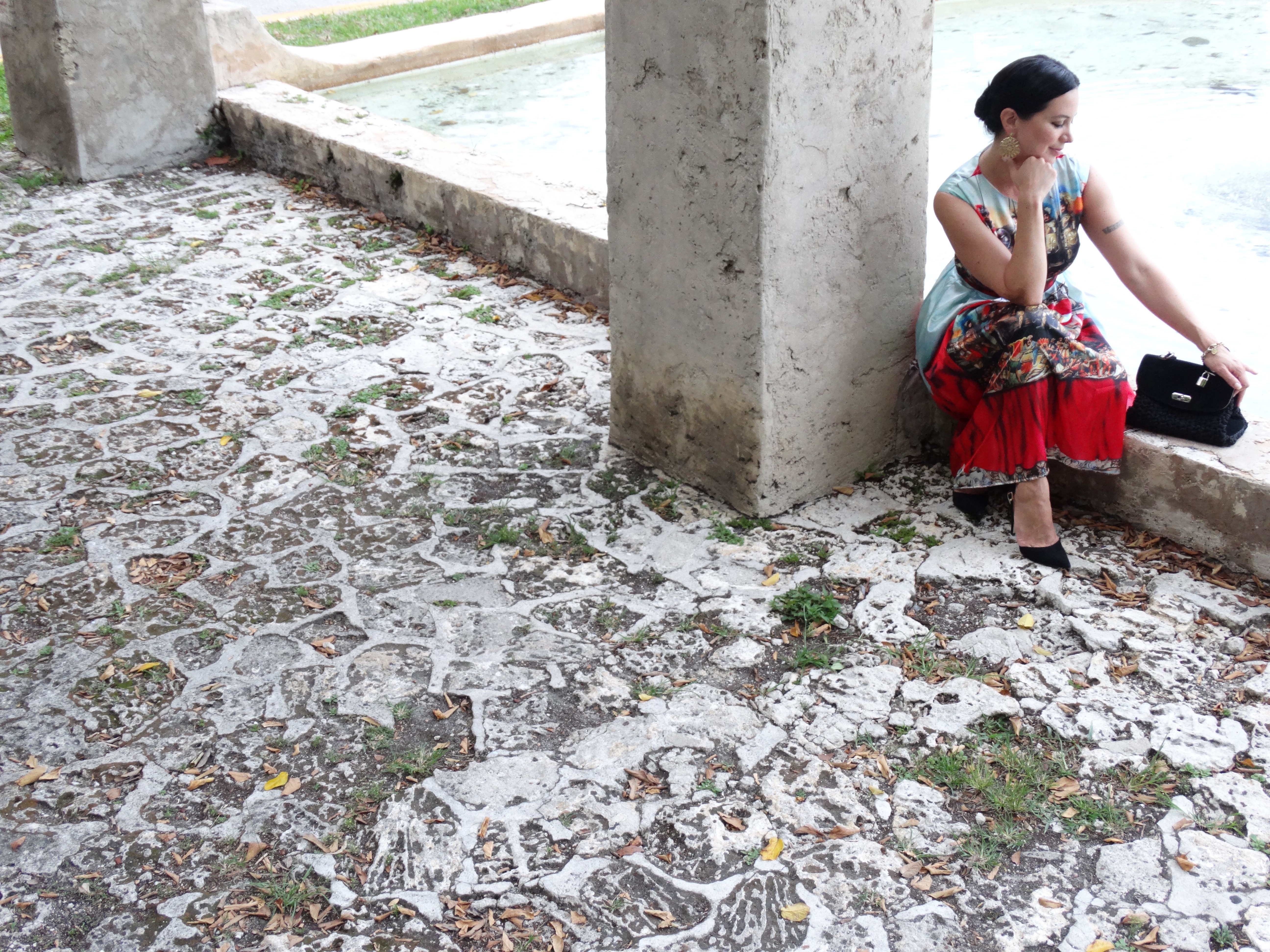
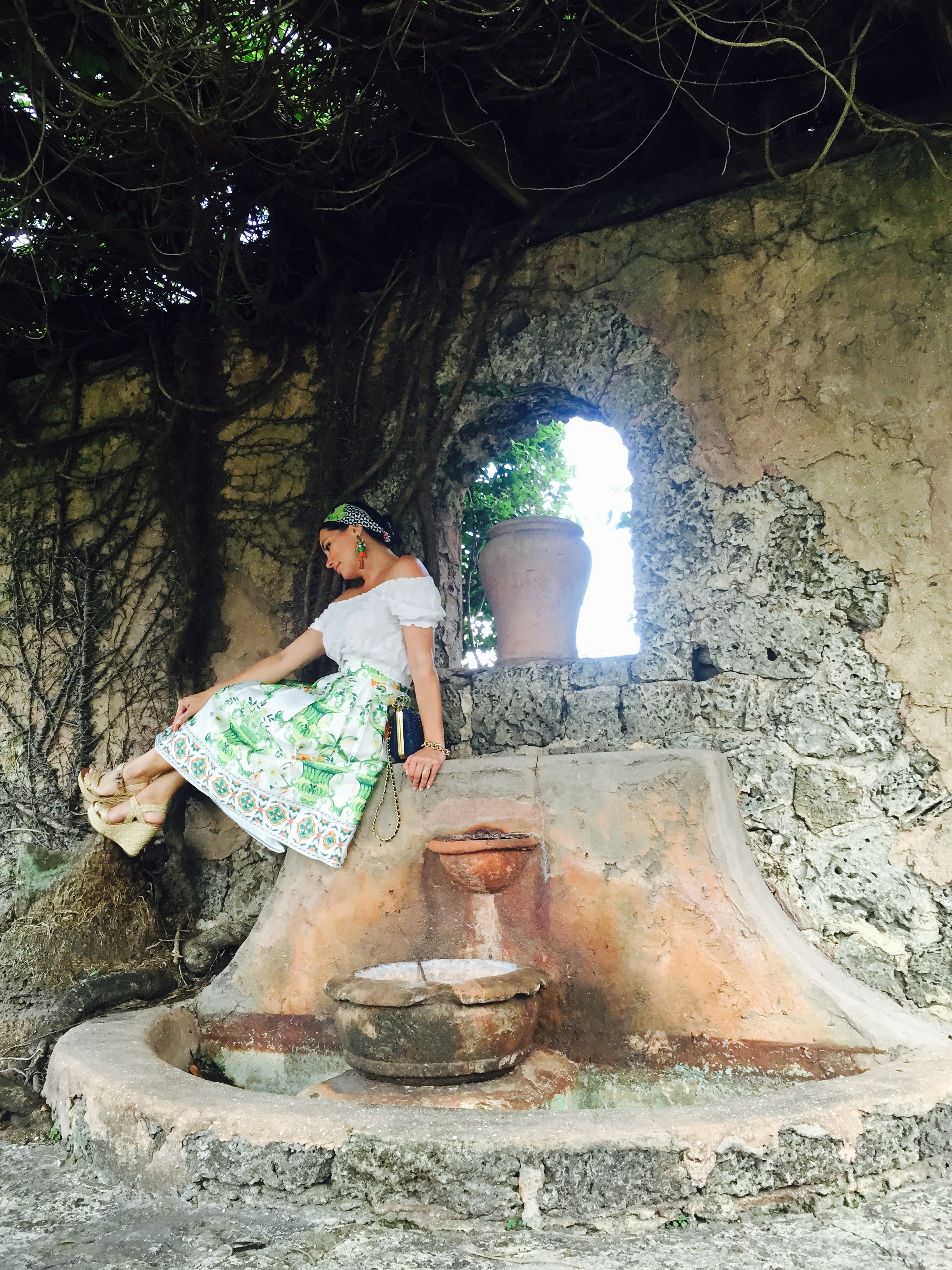
One of the typical scenes in Coral Gables, a fountain built on the coral rock (limestone) bringing reminiscences of an ancient Spanish village.
The Villages
I invite you to take a closer look to the villages and admire the architecture, the gardens, the arched gates and feel like you have travelled around the globe in less than a day.
The Italian Village: Stroll on Montserrat, Palmarito and Altara Avenues, the homes here will transport you to the Villas of the 17th century in Italy. Frank Wyatt Woods designed them in 1926.
The French Villages: Conceived after 18th century French country farm houses and chateaux; these villages are located on the 500 to 1000 block of Hardee Road.
French Normandy Village: Did you notice when driving on traffic on LeJeune Road the particular houses by the 400 block of Vizcaya Ave? These are the 15th century homes found in England and France; constructed here in the 1930’s.
Pioneer Village: When driving or walking around Santa Maria Street by the Golf Course of The Biltmore Hotel; take a look at the Colonial Village with tall pillars, white picket fences, two story porticoes.
Chinese Village: The colorful Chinese compound style residences were designed in 1926 and you can see them on the 5100 blocks of Riviera Drive, Menendez, Castania, Maggiore and Sansovino Avenues.
Dutch South African Village: Designed by Palm Beach Architect Marion Syms Wyeth, these L and U shaped farmhouses resemble the homes of the wealthy Dutch colonists and you can see them on LeJeune Road and Riviera Drive, Maya Street.
The predominant architectural lines in Coral Gables are the 1920’s Mediterranean Revival Style and The Spanish Renaissance often confused with the 1930’s Art Deco because of the timeline between styles.
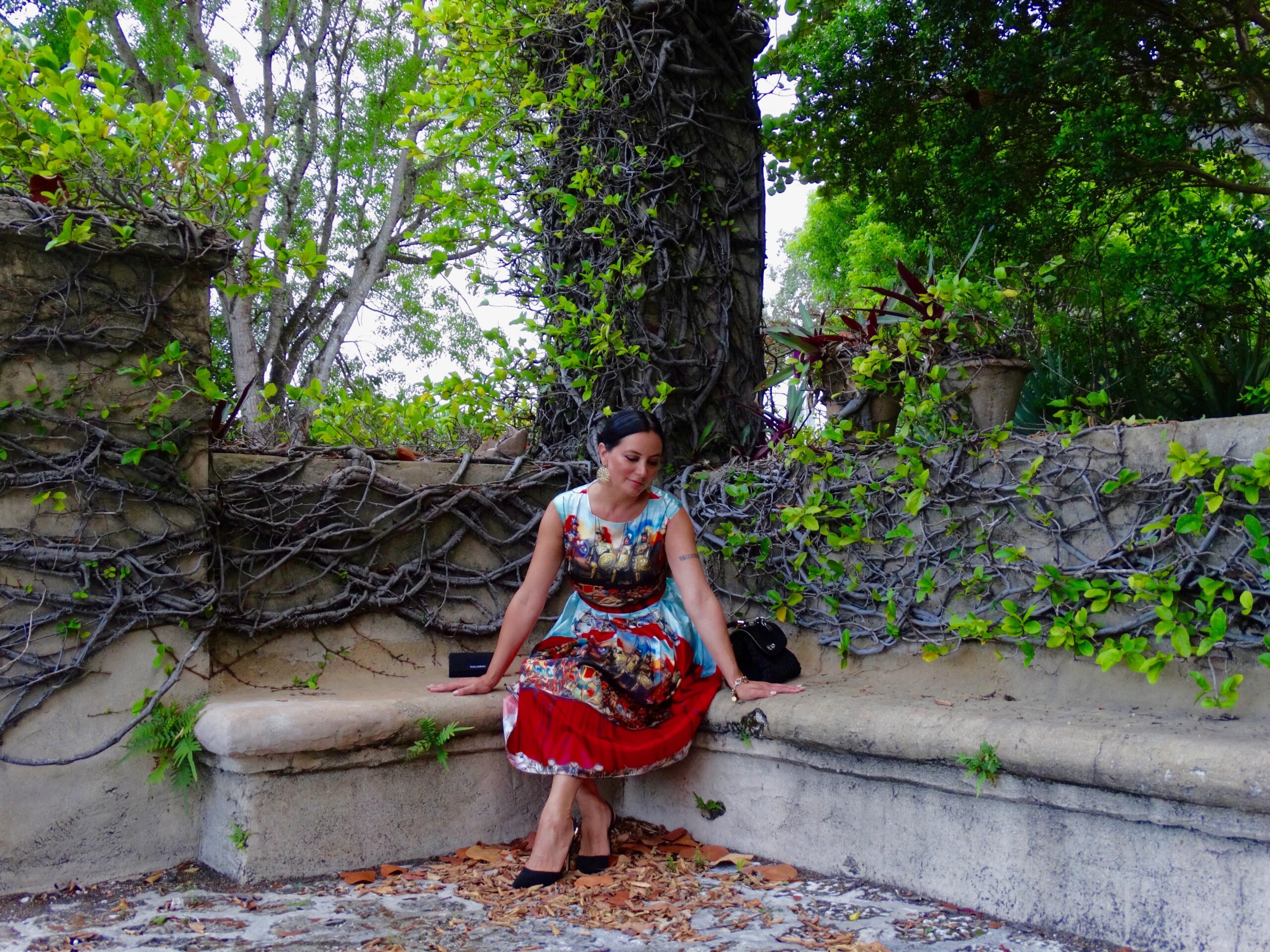
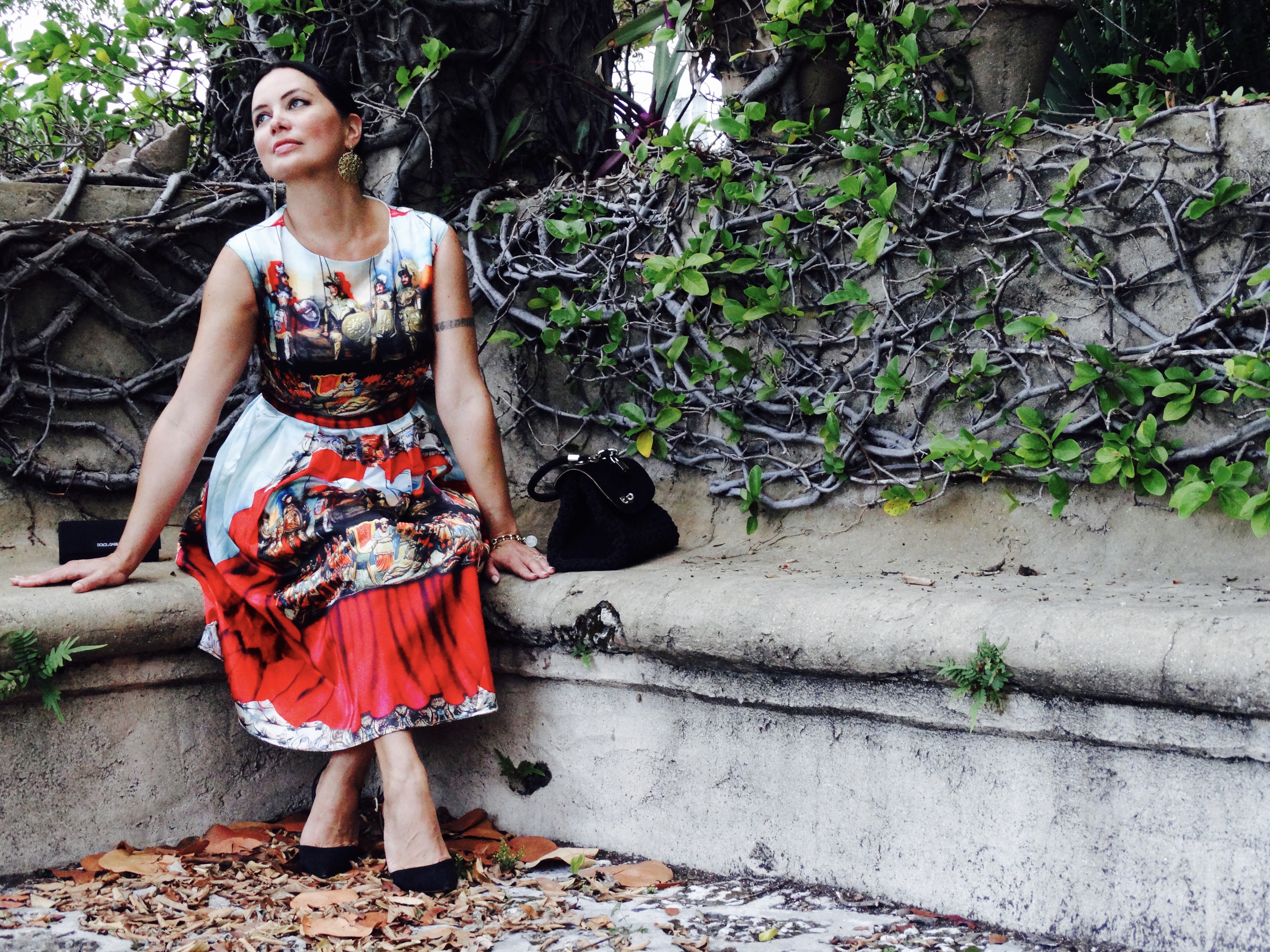
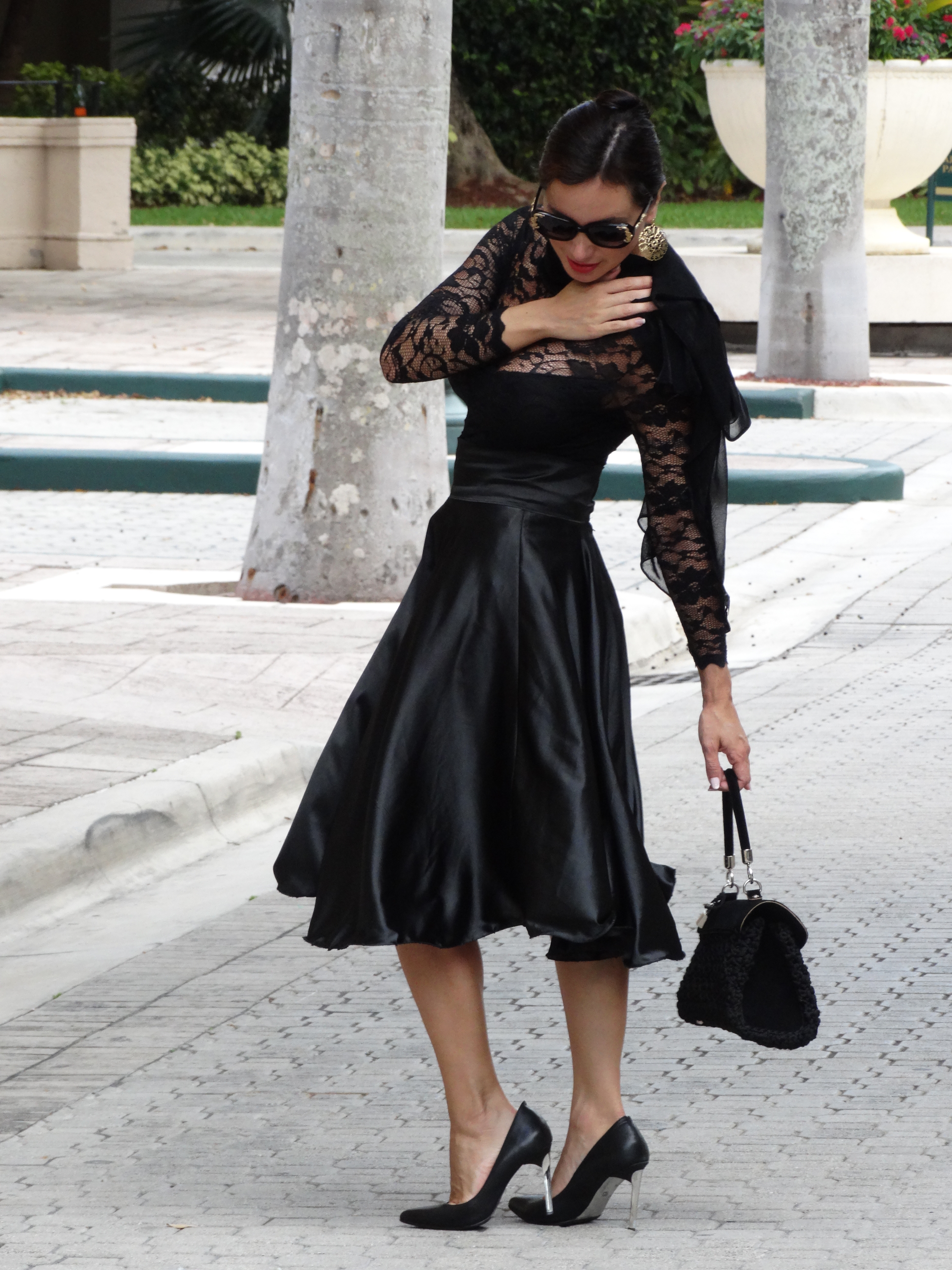
Montserrat Franco in Coral Gables, wearing a dress from the Dolce Gabbana Teatro dei Pupi (Theatre of marionettes) collection
The Gates of Coral Gables
George Merrick also envisioned eight different entrances to Coral Gables inspired in Spanish hill towns; only four were completed. You may drive by almost everyday around these gates but take a pause and look around a piece of history on your very own town.
The Douglas entrance (on Douglas and 8th Street) also called “La Puerta del Sol” is one of the most elaborated built between 1925 and 1927. It is registered on the National Registry of Historic Places.
A view of the building connected to the gate “Puerta del Sol”
Montserrat Franco in Coral Gables (Puerta del Sol entrance) wearing a Dolce Gabbana dress and sunglasses from the Sicilian Baroque collection
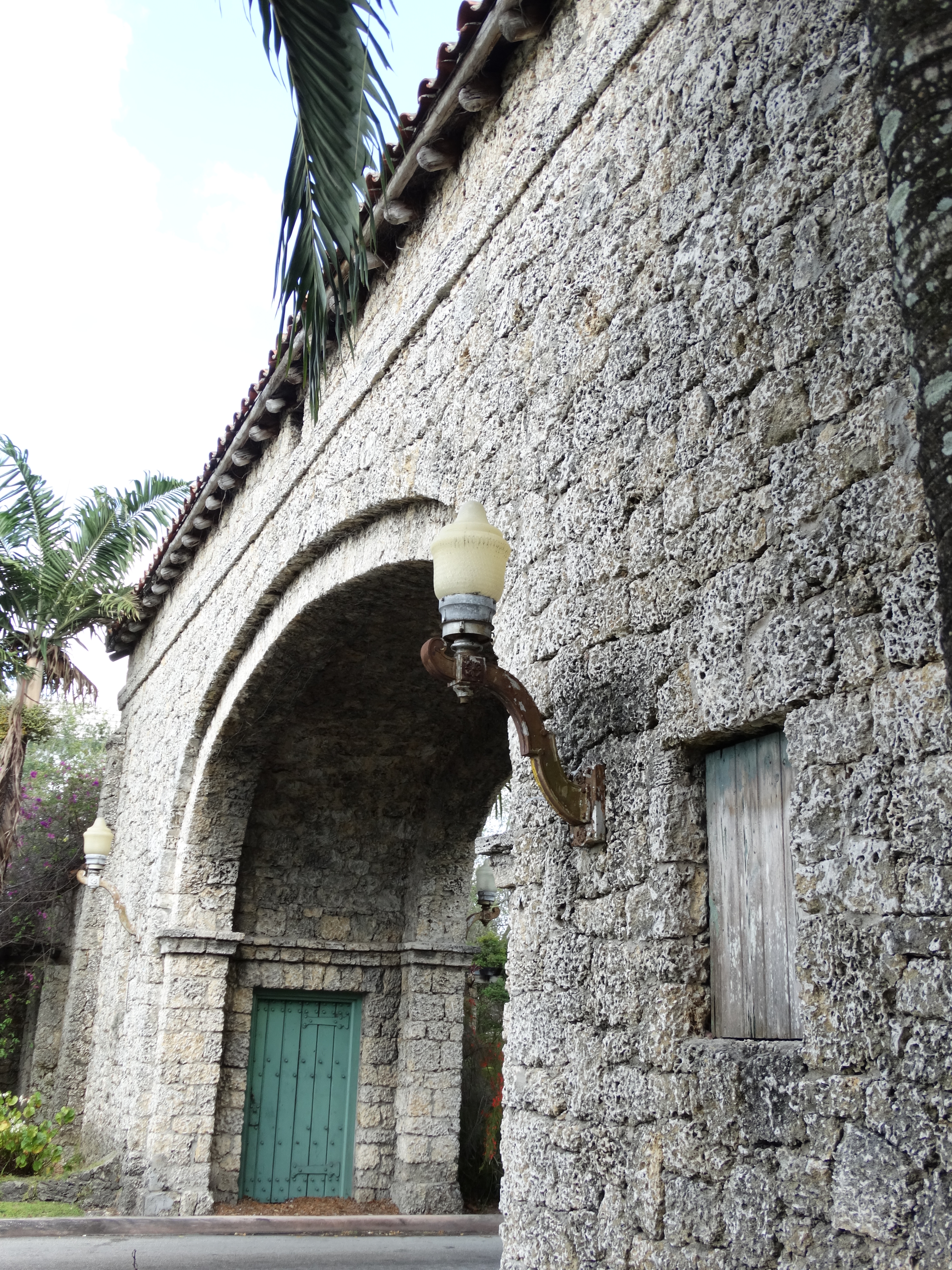
The Granada Entrance: Located at Granada Blvd and SW 8th st built on coral rock (limestone). The arch spans Granada Blvd which is a historic roadway.
The Granada entrance
Montserrat Franco at the Granada walls in a Dolce Gabbana dress from the Byzantine collection
The Prado entrance: Located at the NW corner of the City of Coral Gables at S.W. 8th Street and S.W. 57th Avenue (Red Road). For years the Country Club Prado Arch has been a setting for photography, specially wedding, engagement, etc.
The Alhambra Entrance: Located at S.W. 37 Avenue (Douglas Road), Majorca Avenue and Alhambra Circle. The Alhambra entry arch is also known as the commercial entry to Coral Gables, as Alhambra Circle leads to the central business district and Miracle Mile.
So much to explore in Coral Gables that you may want to come back for more, a long walk around charming homes with clustered buganvilias on limestone walls; unexpected fountains; spanish coats of arms on pillars and immense banyan trees to get the feeling of that Mediterranean getaway not so far away from home.
A Land of diversity, Cultural Heritage declared by Unesco, a destination like no other
Montserrat Franco
Oaxaca is not like any other part of Mexico; Oaxaca is a country of its own and that is reflected in the pride of 16 different linguistic groups and 26 sub-linguistic groups in their distinctive 8 regions.
The diversity in the culinary and mezcal is impressive counting the different terroirs, soils and elevations as well as the historic taste of each community: Cañada or Sugar cane fields (home of interesting Agricole rums and Oaxacan whiskey), Coast (excellent fish and sea food), Isthmus (most of the representative Tehuana and Muxe cultures, the famous Iguana soup and other delicacies), Mixteca(famous for their corn), Papaloapan (border with Veracruz, famous for their coffee and cacao), Northern Highlands, Southern Highlands, Central Valleys (where you will be mostly touring and will have all the diversity of agaves for the mezcal production).
Some recommendations:
· Most places, especially markets, taxis, stores, artisan shops, only accept cash in Oaxaca, credit cards only at fine dining restaurants and mixology bars. Always have Mexican pesos and if you need to, check with your bank which bank partners have no foreign commissions on transactions. Remember that US dollars are very low now and change is at around 16.28. You can exchange at the airport upon arrival and at the historic center at the exchange shops, just check the rates first.
· There’s no Uber in Oaxaca but there’s an app call Didi that you can download and place your credit card, it connects to yellow taxis and the rates are lower than negotiating with taxis on the street, I recommend to set the app to “Pay with cash” because when the driver sees that you are paying with CC on file, he can just cancel your trip because it takes longer for them to get paid.
· Always take a yellow cab; if you see a red or blue cab, those are called independent or “foraneos taxis” and connect closest cities but they are not allowed to enter inside the city center of Oaxaca, you may end up your trip far from your hotel if you take one of those taxis, paying the same rate.
· Getting around with taxis in Oaxaca can be a pain because they can technically charge you anything; always ask first how much the ride will be from your place to a place you go and agree to it.
· Tips are voluntary and servers always ask if you want to leave tips. US nationals are always the most generous but servers are not used to more than 10 or 15% gratuity.
· Always wear comfortable shoes, you walk a lot in Oaxaca
· Always wear sunscreen, hats, sunglasses, sun is pretty strong
· Keep yourself hydrated, never drink water from the faucet, not even to brush your teeth, use bottled water.
· Have some repellent, there are mosquitoes in the villages and there’s dengue going on right now.
· Oaxaca is pretty safe but avoid walking on dark streets during late hours (midnight and up) at the historic center. If you exit from a Mezcaleria try to always go on main streets; you will see the lively scene but always keep an eye on your back and surroundings.
· In any situation enjoy everything that Oaxaca has to offer: the gastronomy, the mezcal, the craft and the lively scenery because every day in Oaxaca is a celebration; you will see most of these “calendas” or processions with dancers, giant props “monos”, globes “marmotas”, live marching bands and all of that is just part of their daily lives and is free for the public to see it and enjoy around the main streets of the Santo Domingo Temple. If you just walk around there or have a coffee or drink at a rooftop nearby Santo Domingo at around 5 to 7 pm each afternoon; you will experience it, most-likely is wedding or a Quinceanera (Sweet 15 celebrated in Oaxaca) depending of the date it is also a celebration of a Saint Patron (they have so many all year long)
The Santo Domingo Temple is the center of the everything that happens around the city of OaxacaMezcal service and cocktail offering at Casa Oaxaca
Culinary etiquette and must tries in Oaxaca:
Memelas: Handmade white corn patties made of “masa” they are always made to order in the comal (kind of like a hot clay grill) once cooked, the memelas (thicker than regular tortillas) are brushed with “asiento” (pork lard) placed again in the comal, they add “frijoles” (beans puree) “quesillo” cheese (often called “Oaxaca Cheese” but the correct name is “Quesillo”) those are the basic ingredients but you can add toppers such as: meats “tasajo” (a thin slice of beef) “Cecina” (a thin slice of marinated in chiles beef). Memelas are usually taken for breakfast with “café de olla” (if you are an espresso person, you may not like it as it is diluted with water; coffee cooked on a clay pot with spices such as cinnamon, cloves and it is already sweeten with “piloncillo” (unrefined cane sugar paste)
Memelas and salsitas service at Ancestral restaurant in Xochimilco
Tlayudas: These are white or blue corn patties made by hand and then pressed to make them very thin; cooked at the comal and then left to dry. They can remain edible for a long time in airtight containers. Some foodies describe them as the Oaxacan pizza, the tlayudas are something so traditional of Oaxaca that you can’t leave without trying them. Once the thin patties are ready and crispy, they are placed at the comal and “asiento” is added (if you are vegan or for religious reasons you could ask them to make it without asiento or with a vegan base asiento (most established restaurants can accommodate), then the frijoles, then quesillo (the main ingredient in the tlayuda) avocado slices, you have a choice of Cecina or tasajo and is accompanied with roasted green onions and radish.
Salsa verde and salsa roja: These salsitas are always present to accompany any dish, the green sometimes can be very spicy as it is made with habanero, the red can be a mix of mild chiles, some restaurants make these salsas in front of you and you can choose the salts you want and level of spiciness.
A traditional Oaxacan platter with meat, grilled cheese, guacamole, chiles, pork, sausage, bean, salsa roja and totopos (corn chips)
Chapulines: the roasted and seasoned crickets are the signature topping for any dish in Oaxaca. They contain more protein than a slice of beef. You can find them in all sizes and can eat them as a snack, on top of guacamole they taste fantastic, with salty peanuts and nuts. They are also grinded and made into salts.
A vendor stand at the Merced market with an assortment of chapulines salt and other favor “botanas” (appetisers)
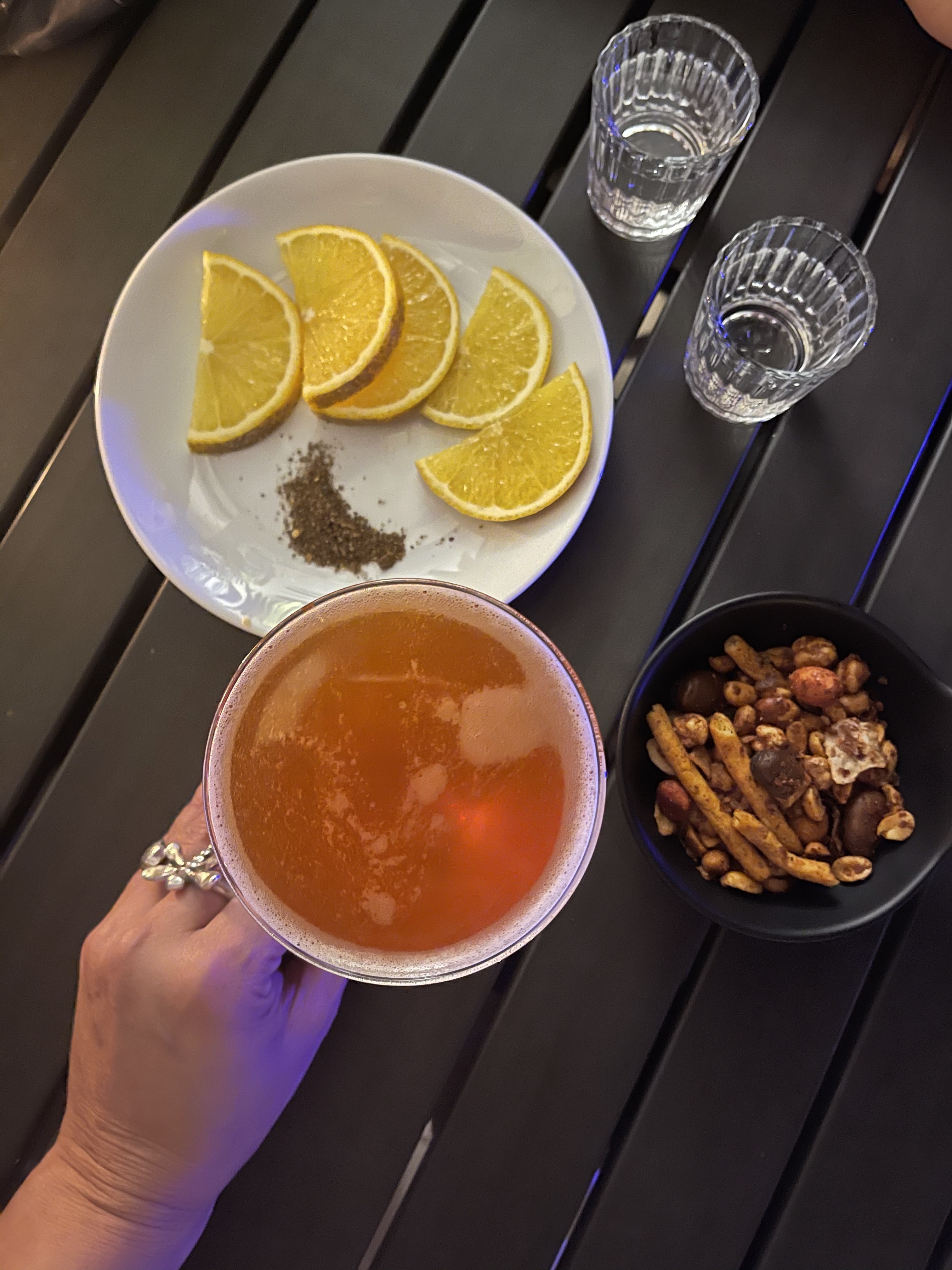
Sal de Gusano: the worm that is around the maguey (agave) is soaking the agave SAP and is rich in flavor; it is collected and let to dry, then roasted and ground with spices to be converted into salt. It is served along with orange slices, green apples or jicama after a sip of mezcal but is preferred to have just the mezcal without any of that and use the gusano salt mostly as a rim for cocktails.
Mole: there are 7 different types of Mole in Oaxaca as opposed to Puebla where there is only 1. The competition has always been there as to who makes the best mole, but the reality is that each family in each region of Oaxaca has a signature recipe and their traditional mole for each occasion. On my recommendations there are some moles to taste in restaurants but you can also taste some at the mercados or towns nearby and see the difference.
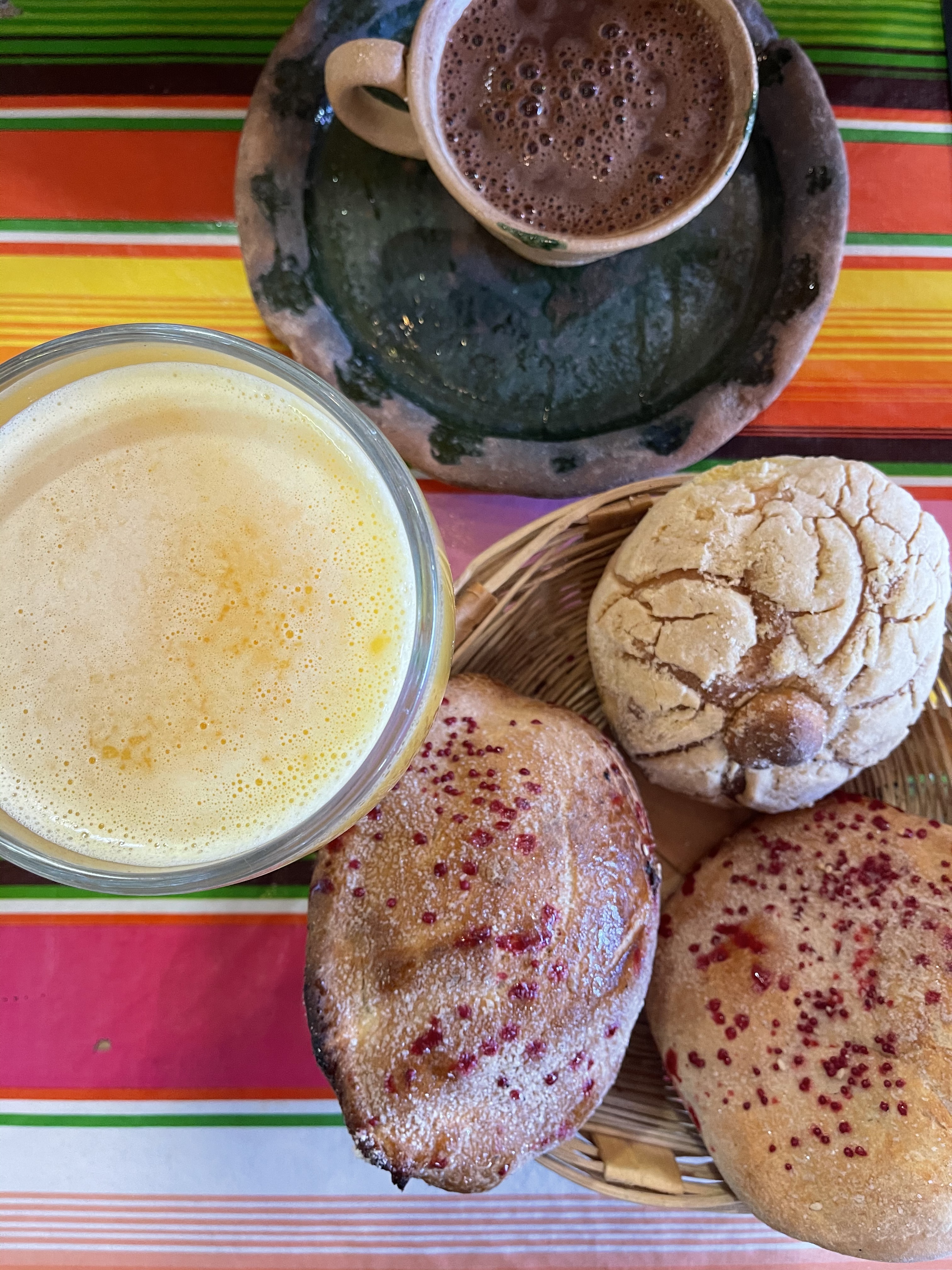
Chocolate: in Oaxaca they will offer you for breakfast even before coffee a Chocolate de agua (basically a non dairy hot chocolate) and a Chocolate con leche (a hot chocolate on hot milk) the beverage is very rich in flavor and already has lots of added sugar, vanilla and roasted almonds. The basic chocolate paste is made on the metate (an ancient stone grinder). On my recommendations you can also visit a traditional Chocolate factory at one of the mercados where you can see the process, now made in metal grinders, is still very old fashioned. The most important thing about the chocolate they serve you is that they will use a green or red clay jar and a molinillo (some kind of a wooden wisp) to make the bubbles right in front of you. If it doesn’t make bubbles, the hot chocolate is not perfectly served.
The famous Oaxacan Chocolate served in a clay jarrito at La Merced Market
Tejate: an ancient drink that had ceremonial purposes in the past. It is very refreshing and you will see it in the streets served from giant clay containers on “jicaras” hand painted gourd vessels, you can also ask for a plastic container to go.
Pan de Yema or Pan Dulce: an egg, water, flour and pulque (fermented agave SAP) yeast, some bread makers now use baker’s yeast. They will always serve you this bread (that is the original recipe for the Pan de Muertos) with a chocolate beverage or coffee. The Pan dulce will have some variations on shape and the crusty top (also called “conchas” in other parts of Mexico).
Pan de yema and pan dulce served with chocolate and orange juice at La Merced market
Barbacoa: best barbacoas you will find at the village’s markets; the most popular barbacoas are the ones of the village of Zaachila which was the last capital of the Zapotec empire and about 40 minutes from the center of Oaxaca or in the Tlacolula market (about 40 minutes from Oaxaca’s city center) Barbacoa can be of sheep, goat or cow but most popular and rich in flavor are the first two. Beef is first marinated with spices and then cooked in an underground oven, a mezcal bottle is placed next to it as a blessing. You can also experience and see the “destapada” when they open the oven and serve you a copita (tiny glass) of warm mezcal to open the appetite before having the barbacoa for breakfast or lunch. Usually it is the meal/brunch on Sundays. At markets it is served with a generous dish of soup from the barbacoa itself and large tortillas with all the toppings to make your own barbacoa tacos.
Aguas Frescas: at any restaurants or markets the aguas frescas are always available and since this is pure fruit juice, you have all the variety that the tropical and sub-tropical region has to offer.
Nieves: These are Oaxacan sorbets, made with real fruit, water or milk in the old fashioned way (wooden tanks) . They have great flavor. Some of the best nieves are at La OaxaqueñaPlaza de la Danza, on the same plaza of La Soledad Church, this is great area to have a seat and enjoy the sunset or after a meal, have some nieves and listen to the marimba (steel drum) players that are always there.
Mezcal: the pride and joy of Oaxaca is Mezcal, I have recommendations on the next posts of some of my favorite mezcal routes and mezcalerias as each region has a signature mezcal making and agave diversity as well as each region’s microclimate, water and terroir will influence on the final product. What used to be a drink of the community made in small batches for that special occasion is today a fashionable spirit praised by bartenders around the world and loved by millennials. Today is the fastest growing spirit category.
“Some people look for a beautiful place, others make the place beautiful”
St Barth; an almost unreachable destination in the French West Indies is the perfect hideaway for the jet setter. Surrounded by pristine white sand beaches, unspoiled nature; mountains and the turquoise clear waters of the Atlantic Ocean this associated Island of France had a long history before becoming the top destination for celebrities in search for privacy.
The airport in St Jean – St Barth is actually one of the most difficult landings in the history of aviation
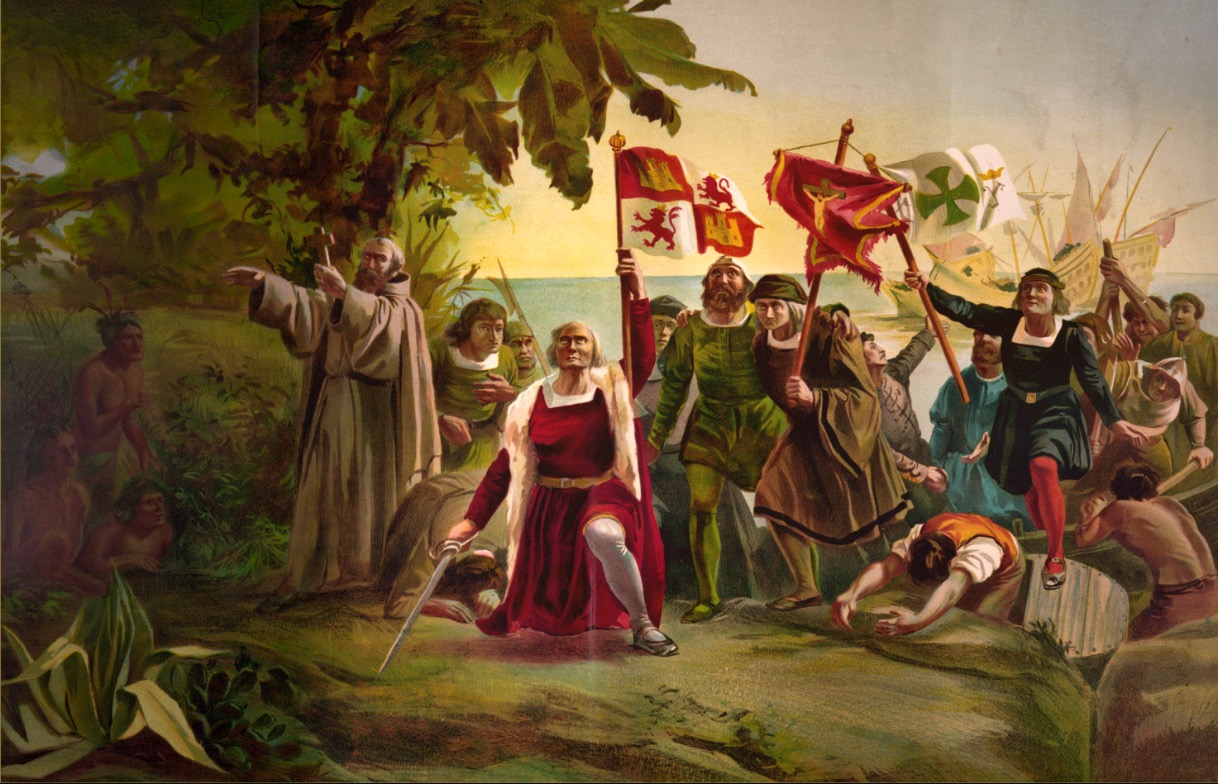
The Beginnings: In 1493 Columbus landed in St Barth and named the Island after his brother Bartolomeo; the first inhabitants of the Island were the Arawak Indians; hostile conditions and the lack of gold were crucial for the Spanish Crown and St Barth remained forgotten for centuries; later ruled by the French; then sold to the Dutch to be returned to the French; St Barth started to be noticed by luxury resort developers just in the 1950’s when Rockefeller built his private home in the top of the mountains in Colombier; West side of the Island.
The discovery of St Barthelemy. Columbus gave to the Island the name of his brother Bartolomeo.
A view from the cliff at Colombier.
Today; the most expensive yachts in the world are no strangers to St Barth and every day is almost a competition on size and style.
The Eclipse mega yacht owned by Russian Billionaire Roman Abramovich, I spotted from my balcony at the Beach House in Corossol.
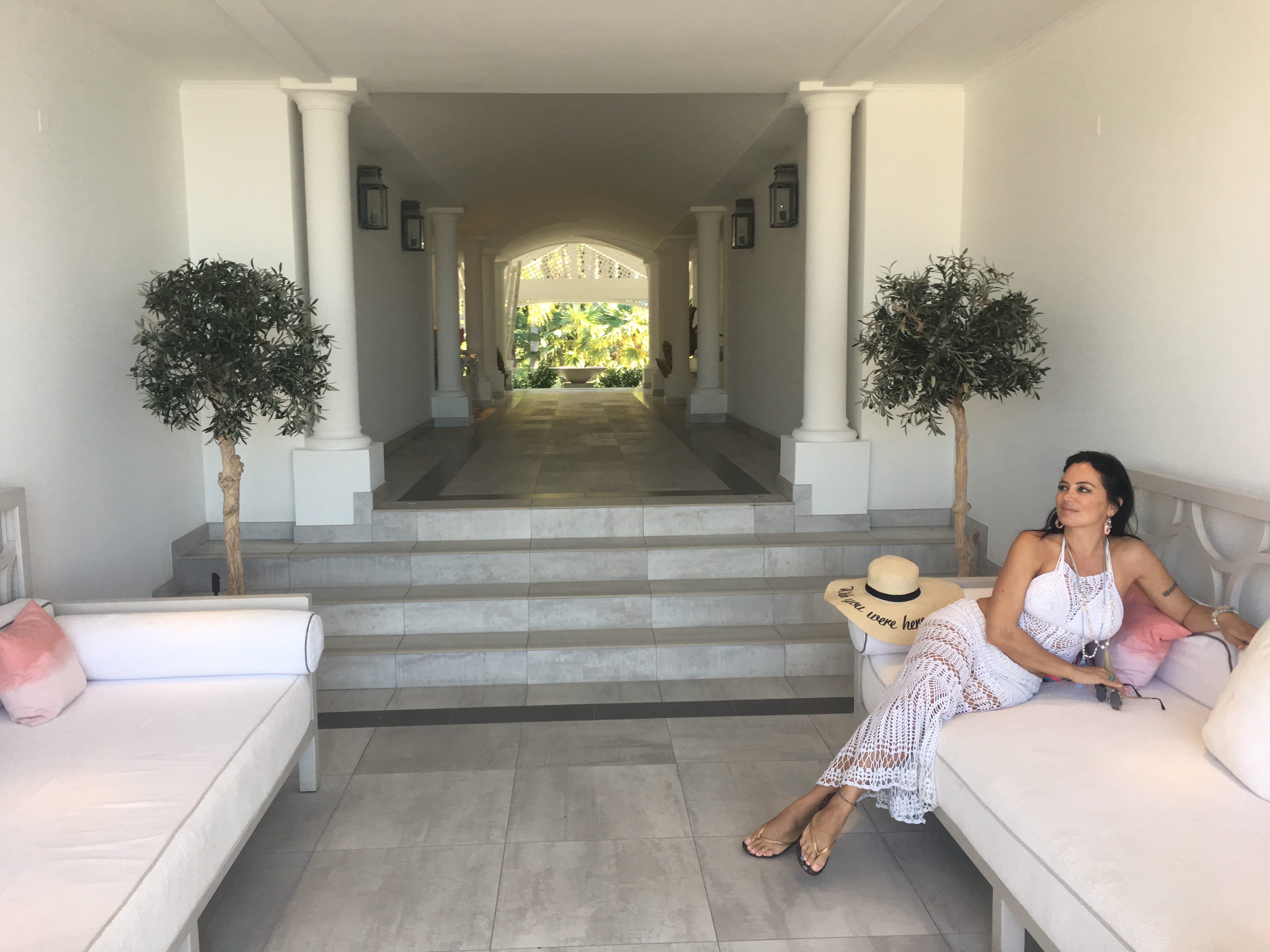
Hotel Cheval Blanc LVMH Flamandes Beach
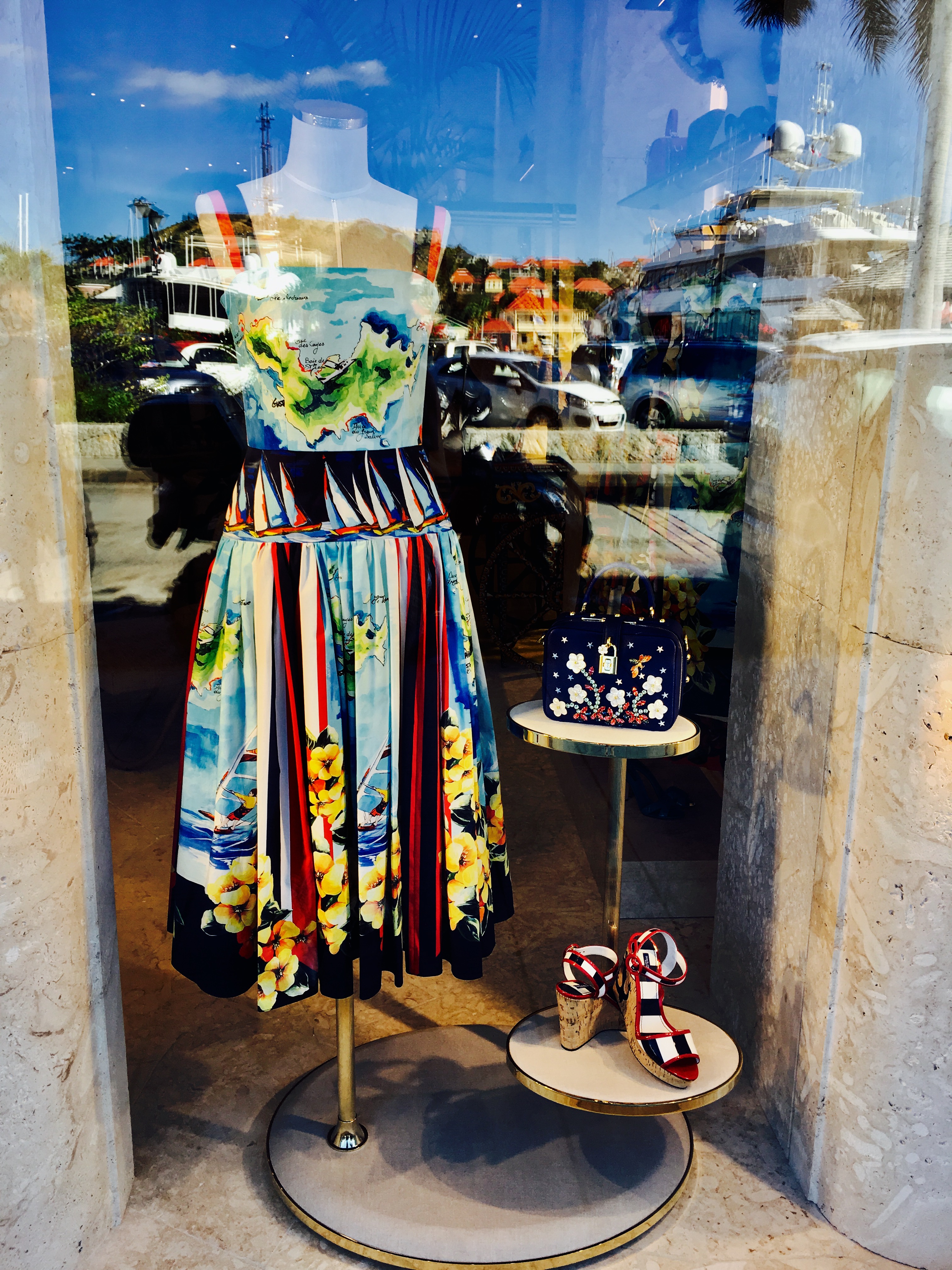
Shopping: For luxury shopping the Quai de la Republique; Le Carre D’Or; a Caribbean version of Beverly Hills with the most desirable designers and limited edition collections made exclusively for St Barth. I spent many hours at the Dolce & Gabanna flagship store opened just a few months ago with its own Martini Bar for D & G collaboration. The colorful collection reflects the spirit of the Island; floral scarfs; bejeweled mules, oversized sunglasses, embellished straw baskets and wedges and the 1950’s inspired cocktail dresses just makes us want to wear them all and go for a stroll in a Moke (the ultimate transportation in the Island) around Gustavia.
The Dolce & Gabanna loves St Barth collection at the DG flagship store in Gustavia
The Moke is the best transportation in St Barth. Wearing a hand embroidered dress and Mayan necklace.
St Barth is the culinary capital of the Caribbean; suddenly we see people walking with baguettes on the streets and freshly made pastries can be found at any of the Boulangeries and Patisseries; at supermarkets all of them carry French brands and is like going to Paris in the middle of a tropical setting.
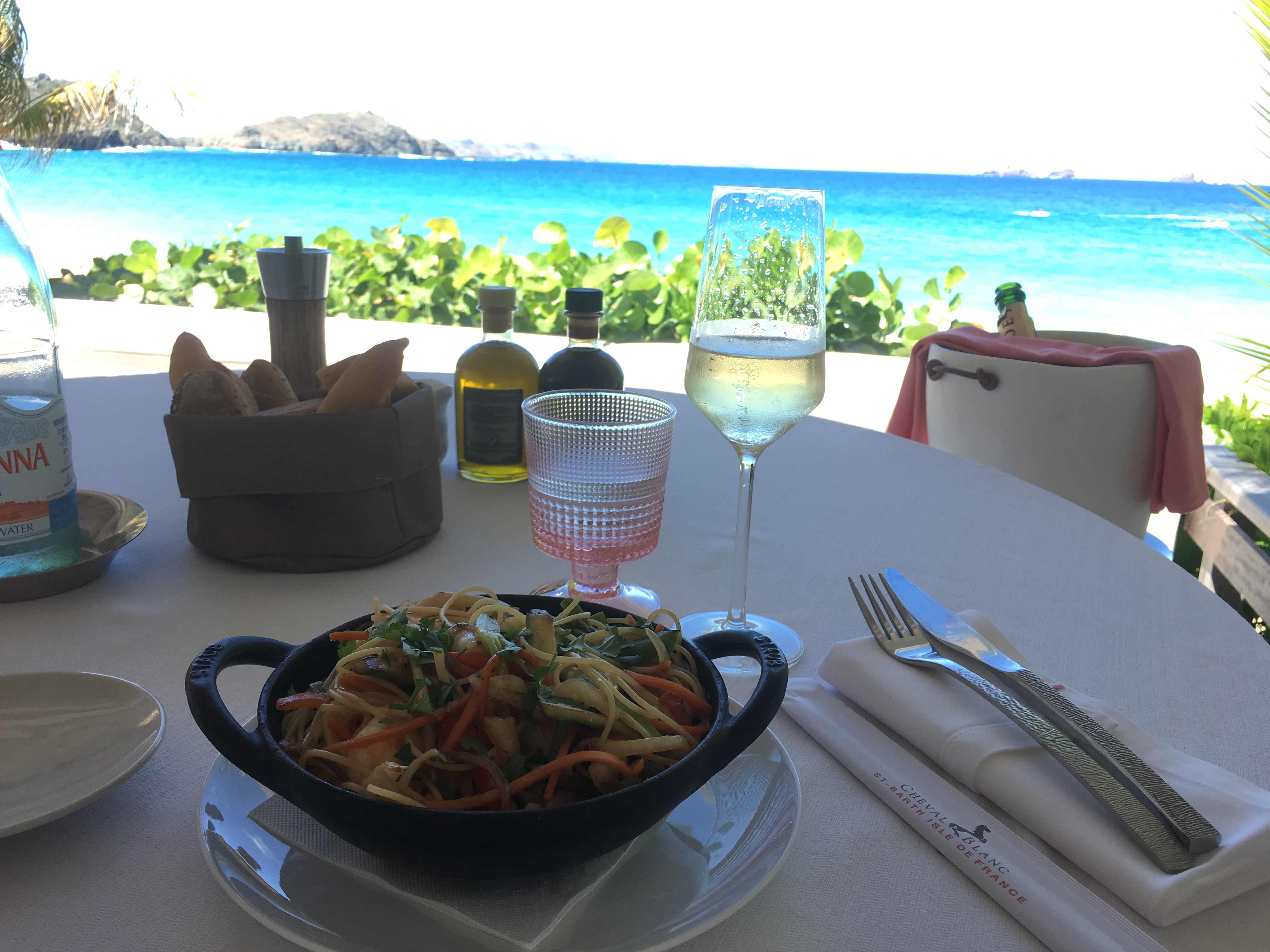
Desserts served at Cheval Blanc. Flamandes Beach
Flamandes: The lifestyle of the Island is resort chic with impeccable service and attention to details, the French touch is notorious; For lunch I truly enjoyed The Cheval Blanc in Flamandes; it was also the best beach for swim and great cuisine by Chef Yann Vinsont. The Cheval Blanc is part of the LVMH Luxury Resort collection.
Flamandes Beach
Lunch at Case de L’Isle Hotel Cheval Blanc LVMH
Grand Cul de Sac: Lunch at Le Sereno in Grand Cul de Sac is another must on my list; from its sister 5 star hotel “Il Sereno” in Laco di Cuomo; Le Sereno exudes style; designed by renowned Parisian designer Christian Liaigre.
The lagoon at Sereno Beach is also perfect for paddle boarding or canoeing in the afternoon. Great place to spot the turtles swimming on the water or picking up giant conch between the rocks.
Next to Le Sereno; Le Guanahani is another impressive luxury resort with a Spa by Clarins and its distinctive tiki bars by the beach; Le Guanahani offers true island feeling.
Wearing an embroidered vintage Manila shawl at the beach of Le Guanahani – Grand Cul de Sac, St Barth
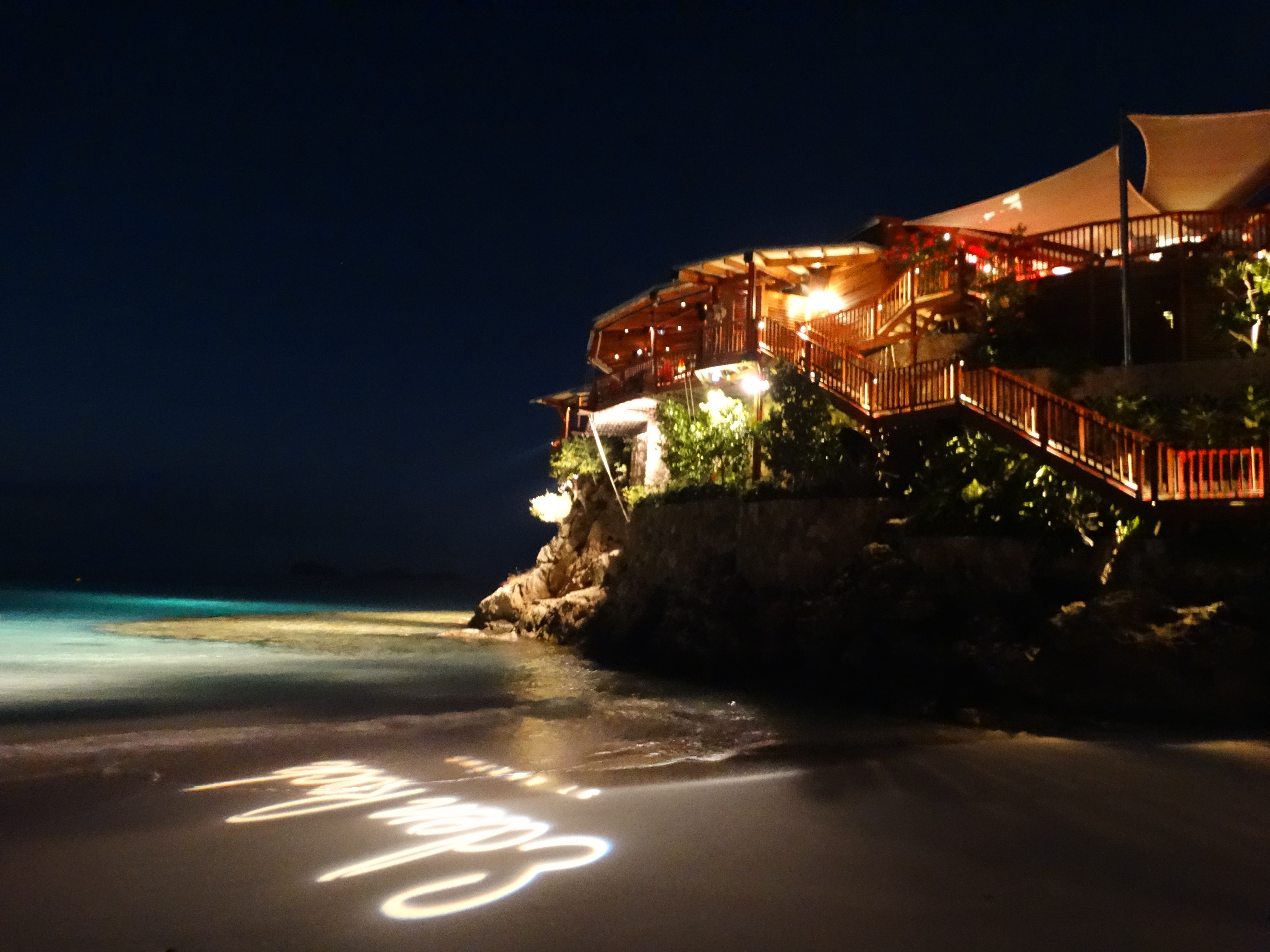
St Jean: Dining in St Barth: a must is the Eden Rock at the “In” Beach of St Jean just next to the airport; with two signature restaurants: “On the Rocks” at the top of the cliff or “The Sand Bar” both headed by Michelin starred Chef Jean-Georges.
Eden Rock St Barth by night
St Barth preserve its Colonial charm from the Dutch era; the Creole and the French; signs on the streets are both in Dutch and French.
At the Comca-Comca Creole Village in St Jean wearing a custom embroidered Otomi dress
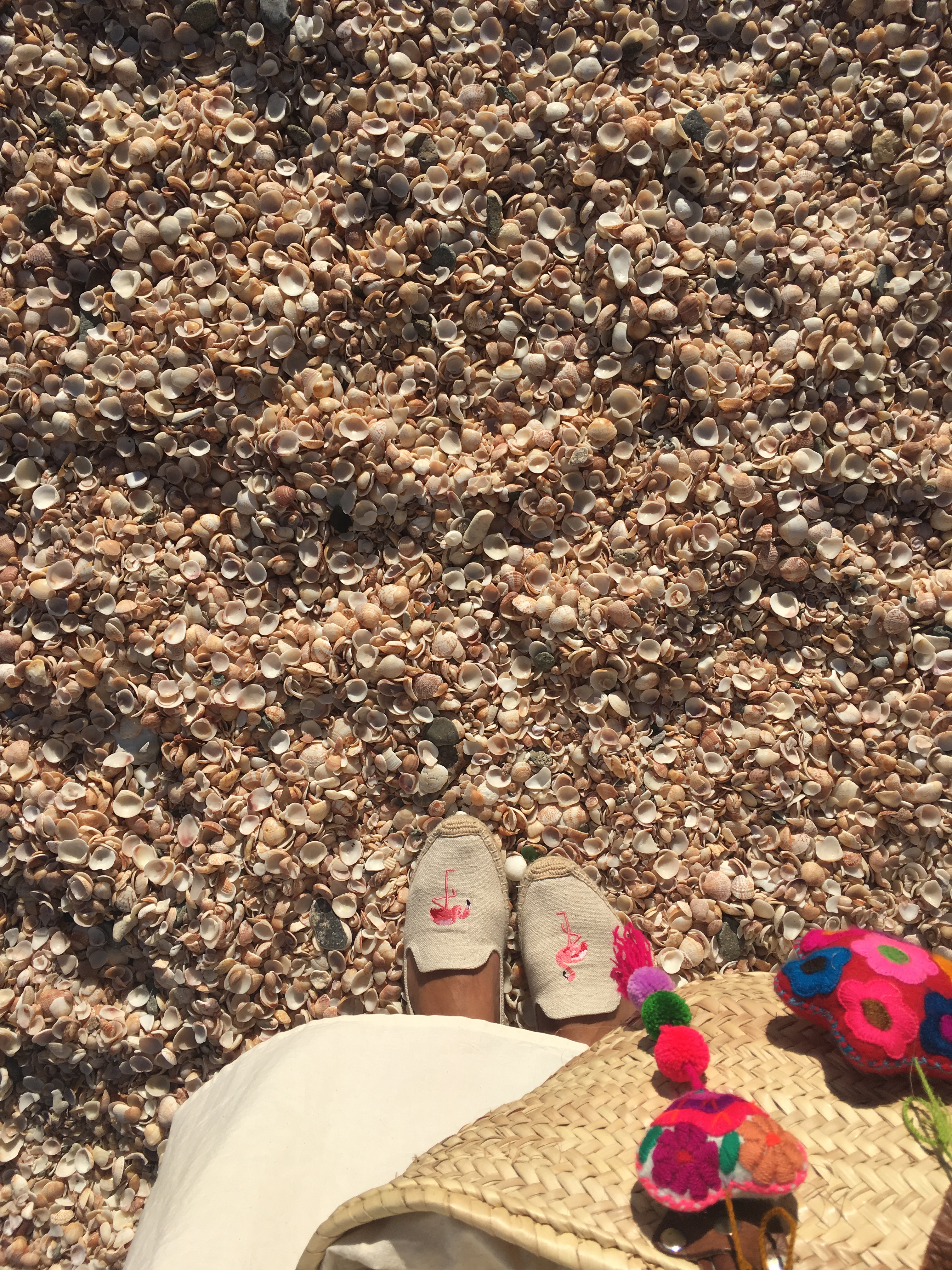
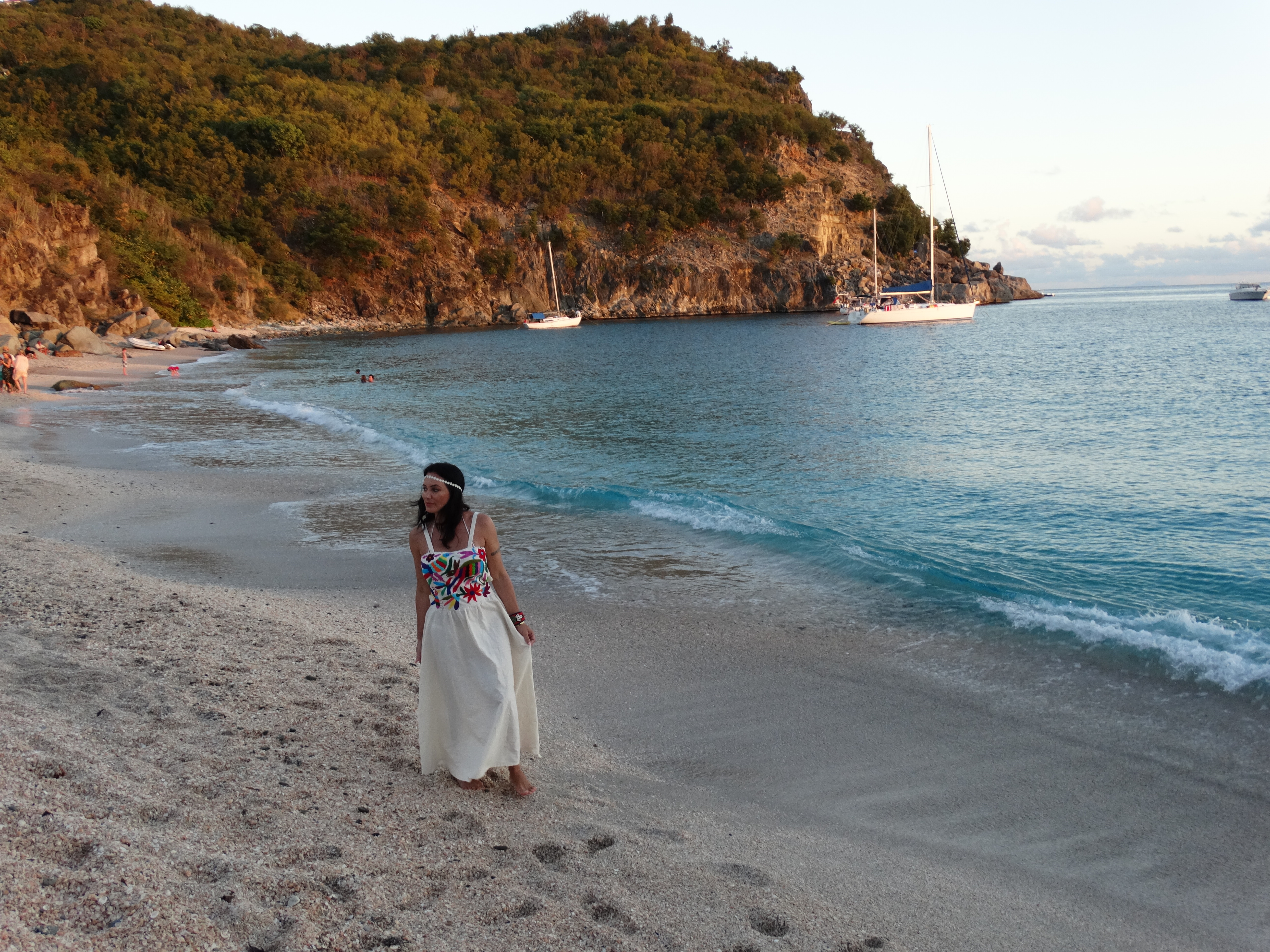
Shell Beach: Walking distance from the lively port of Gustavia and just steps from divine dining spots like Bagatelle and Bonito; we are in Shell Beach; a small portion of the Island covered with shells of all types and colors; you never know when you’ll find a unique one in the middle of all these shells.
Shell Beach and Flamingo espadrilles by Soludos @soludos weaved basket with Chiapas accesories
St Barth has it all; from hiking thru the mountains and spotting baby turtles on the way to incredible views of the secluded Island in Colombier to infinite white sandy beaches in Saline or the freshest catch of the day to your table.
Shell Beach
“Travel is the only thing you buy that makes you richer” – Anonymous.
With so much to do in Miami it is hard to decide where to start your day but if you are in the Downtown area, need a great cup of coffee and at the same time support your local roasters stop by Eternity Coffee Roasters on 117 SE 2nd Ave. They have a roasterie and tasting room where you can choose your grains, make your own blends and they will roast it and brew for you on site. I took my European friends to the tiny shop and they all agreed the coffee was superb, the espressos made just right, the aromas and the blends fantastic.
Just like in the wine world, the coffee can be tasted and appreciated, today there are more coffee connoisseurs who are showing interest in the “art of the barista” (coffee barman) So now you know, when you need your Java dose try Eternity Coffee and get the whole experience of coffee tasting.
The roaster at Eternity Coffee shop and tasting room. Their single origin grains are mainly from Colombia from Farm direct trades.
Choose, smell and taste the finest grains at Eternity Coffee roasters coming directly from the Farms in Colombia, Guatemala and other plantations in the world.
The flavor profile of each coffee is indigenous from the grain itself some of them with wild flower honey hints and herbal notes, hazelnut, milk chocolate, vainilla or tangy cranberry
If you didn’t make a trip yet to Miami’s newest Museum the Perez Art Museum Miami (PAMM) there’s no better time to do it then now and there are no excuses to be immersed in the contemporary art world with all this Museum has to offer. Arrive to the Museum by car, foot or take the Metro Mover stopping at the Museum station and you will be right there on 1103 Biscayne Blvd. Each second Saturday of the month there’s a free admission for everyone, a program sponsored by Target.
Most of the Latin American Art collection including Botero, Diego Rivera and Wilfredo Lam comes from Colombian-born developer Jorge Perez who donated $40 million in cash and art to earn naming rights. Perez, the son of Cuban exiles, has been a major force in Miami’s urban redevelopment.
A visit to the PAMM will definitely open new ways to look at art and think twice when labeling Miami as a less cultural town.
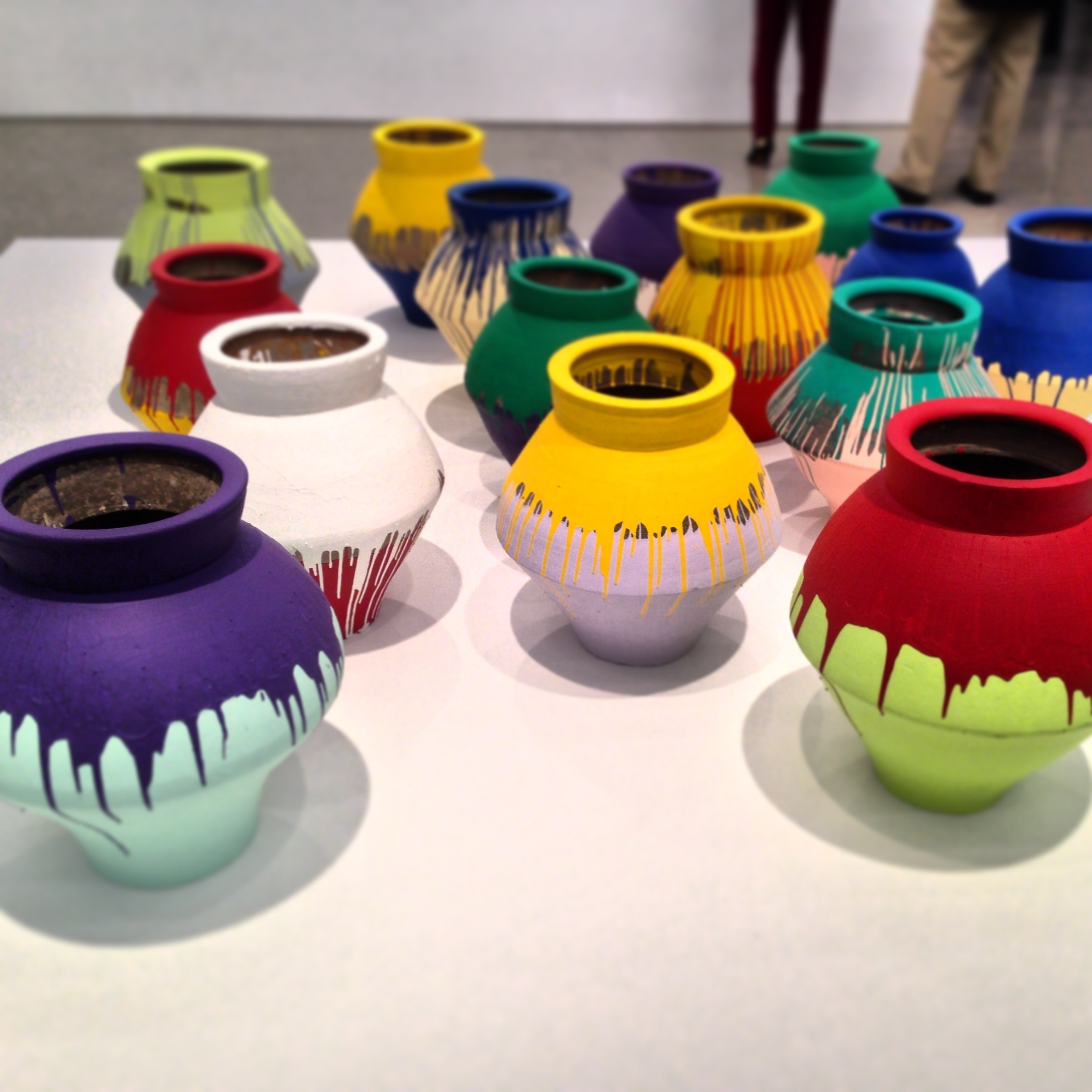
Ai Weiwei “According to what?” retrospective at PAMM on display through mid March
The Museum is open from Tuesdays through Sundays from 10 am to 6 pm. Tickets are $12 for Adults and $8 for Seniors and Children 7-18 years old
Piles of crabs installation by Chinese Master Ai Weiwei during the Opening reception of the PAMM
Time for lunch? Visit the Historic Miami River neighborhood, one of the oldest in Miami. At a settlement from the early 1840’s is where you will find Garcia’s Seafood and Grill Fish Market located on 398 NW North River Dr. you will find fresh fish and seafood from the boats to your plate served with the traditional Caribbean seasonings and flavors. For over 40 years The Garcia’s (a Cuban-born family of 11 kids) have been offering affordable dining with fresh catch grilled to order on a casual riverside setting.
Grilled Yellowtail, stone crabs, sides of fried plantains (tostones), yellow rice and fried sweet plantains (maduros) with grilled shrimp. These side dishes are perhaps part of Miami’s Cuban traditional gastronomy
Garcia’s fresh stone crab
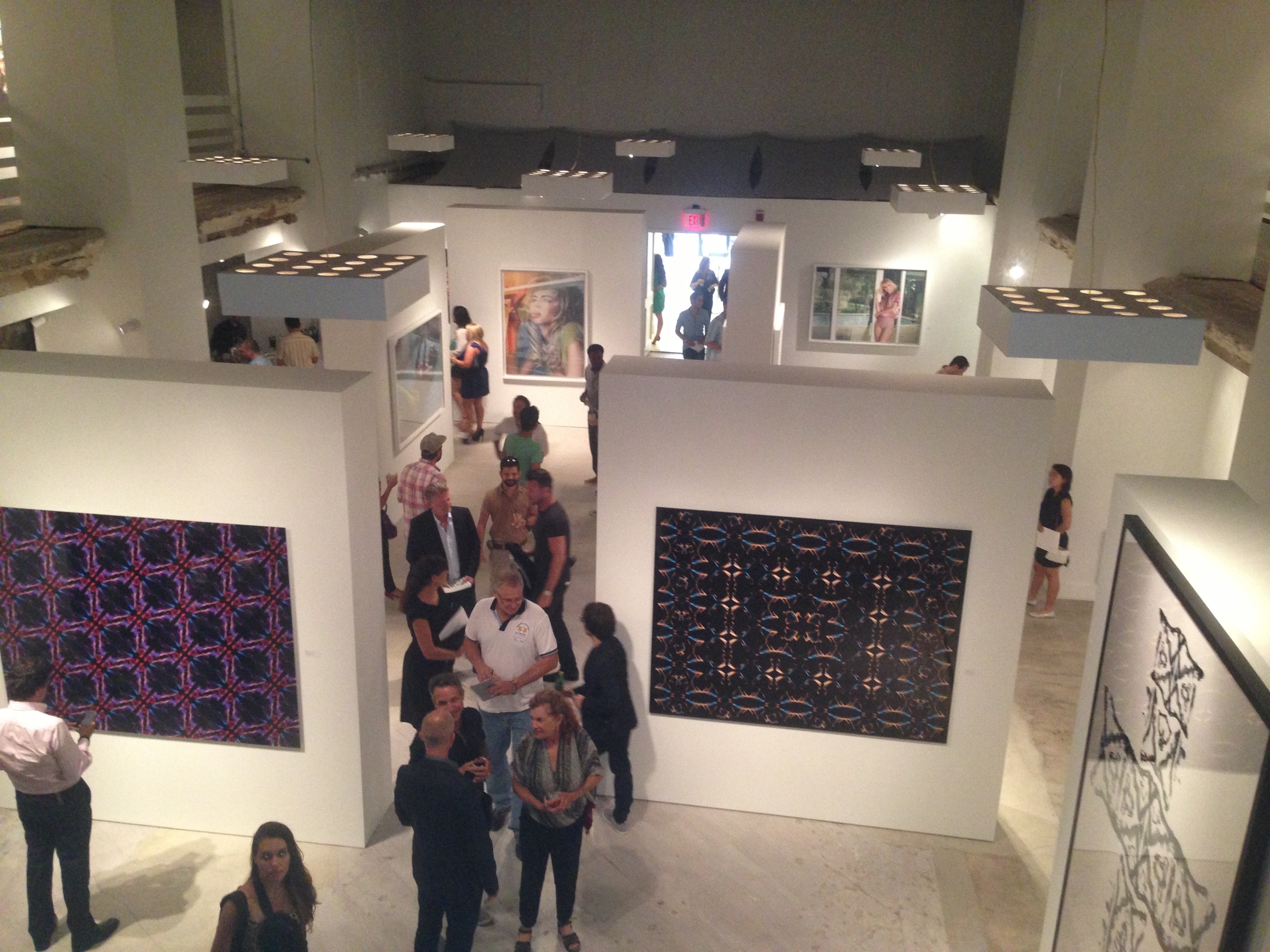
Now is time to visit another great unconventional Gallery on a Historic site in Downtown Miami, CU1 Gallery at the Security Building on 117 NE 1st Ave.
The Security Building in Downtown Miami was the most imposing building at time of construction in 1926. Constructed in the Beaux Arts architectural style, is listed on the National Register of Historic Places
CU1 Gallery is a photo space located inside the iconic Security Building. You can visit the gallery Tuesdays through Saturdays from 1 to 6 pm. Free admission
“Look at Me” was the first opening exhibition at CU1 Gallery where you can take a look through the photographer’s lens inside the vault at The Security Building
“Look at Me” showcased works by European photographers, most of them with extensive backgrounds in editorial and fashion advertising.
For the European partners of CU1 Goettlicher, Weber, Schmidt and Mueller who believed in Miami’s art life, Downtown Miami will be facing an incredible art renaissance and it’s going to happen.
“Eye to Eye” is the current exhibition at CU1 Gallery on view until February 14 2014. What are you waiting for? take a look at one of the newest innovative galleries in Miami.
Now get ready for the next art exhibitions on board of the SeaFair docked at the Chopin Plaza next to the Intercontinetal Hotel from January 16th to the 20th of 2014. it is a unique experience to appreciate works of local and international artists showcasing installations, paintings, photography and sculptures. See you on board Miami !!!
The Miami International Art Fair (MIA) is coming on board of the mega yacht SeaFair on January 16th to the 20th