The Monastery and cloisters of St. Bernard of Clairvaux
The origin
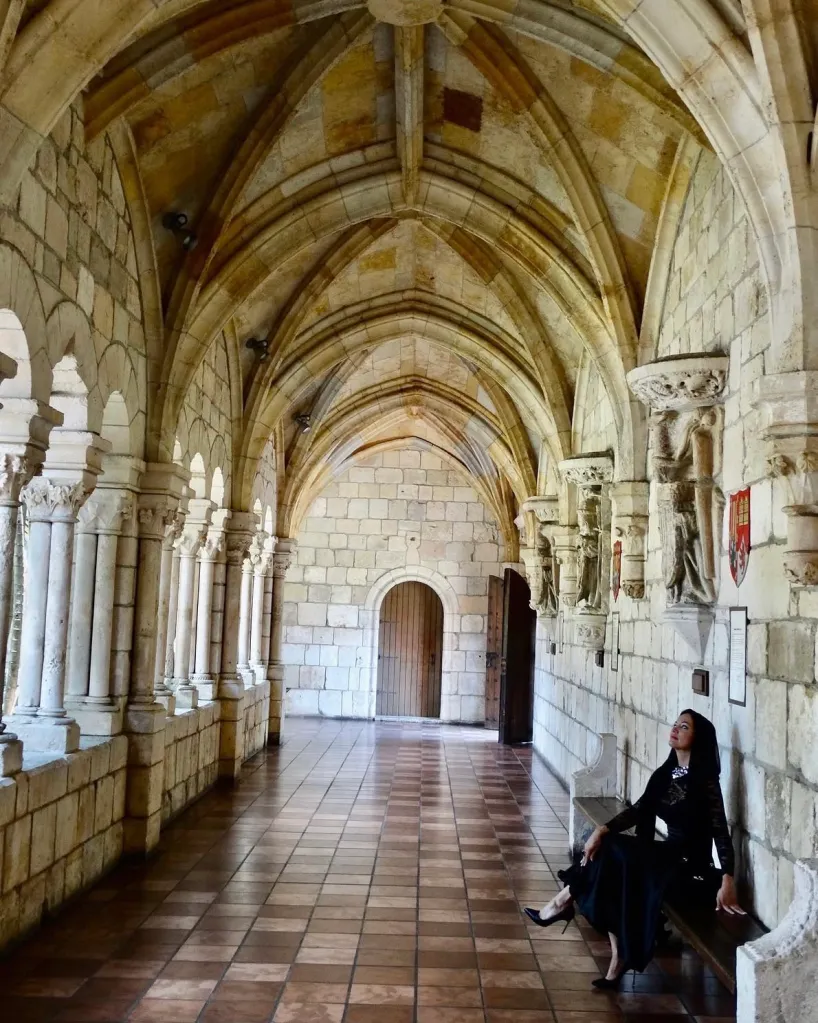
As much as we may think this is a replica or a revival of an architectural style, this is an original Cistercian monastery and cloisters from the Order of St. Bernard of Clairvaux, built in 1133 AD in Segovia, Spain.
Stone by stone, it was transported to its current location in North Miami Beach, Florida and it is considered one of the oldest structures in the entire Western Hemisphere.
The monastery was named for the Cistercian monk Bernard of Clairvaux after his canonization in 1174, and it acted as a home to monks for the roughly 700 years to follow.
Montserrat Franco at the ancient Spanish monastery in North Miami Beach.
The Cistercian architectural style, characterized by its austere design, reflected the monastic order’s devotion to humility and strict discipline.
The purchaseof a monastery
In 1925, William Randolph Hearst purchased the Cloisters and the Monastery’s outbuildings. The structures were dismantled, packed in more than 11,000 wooden crates, numbered for identification and shipped to the United States.
The courtyard with the central well is typically found in Cistercian monastery structures.
The financial issues
Soon after the shipment arrived, Hearst’s financial problems forced most of his collection to be sold at auction. The massive crates remained in a warehouse in Brooklyn, New York, for 26 years.
Cistercian monasteries reflect the severity in the austerely impressive architecture of the more than 700 Cistercian monasteries that spread throughout Europe in the 12th century, most of them built in isolated places. Montserrat Franco walks the ancient Spanish monastery in North Miami Beach.
It took 19 months and the equivalent of nearly $20 million dollars to put the building together. In 1953 Time magazine called it “the biggest jigsaw puzzle in history.”
The repurchase and donation to South Florida
In 1964, Colonel Robert Pentland, Jr, who was a multimillionaire banker, purchased the Cloisters and presented them to the Bishop of Florida in North Miami Beach, where is home of its actual location.
The bell announces time to prayer and mass
If you go:
Please check the website for operating hours, as they may vary.
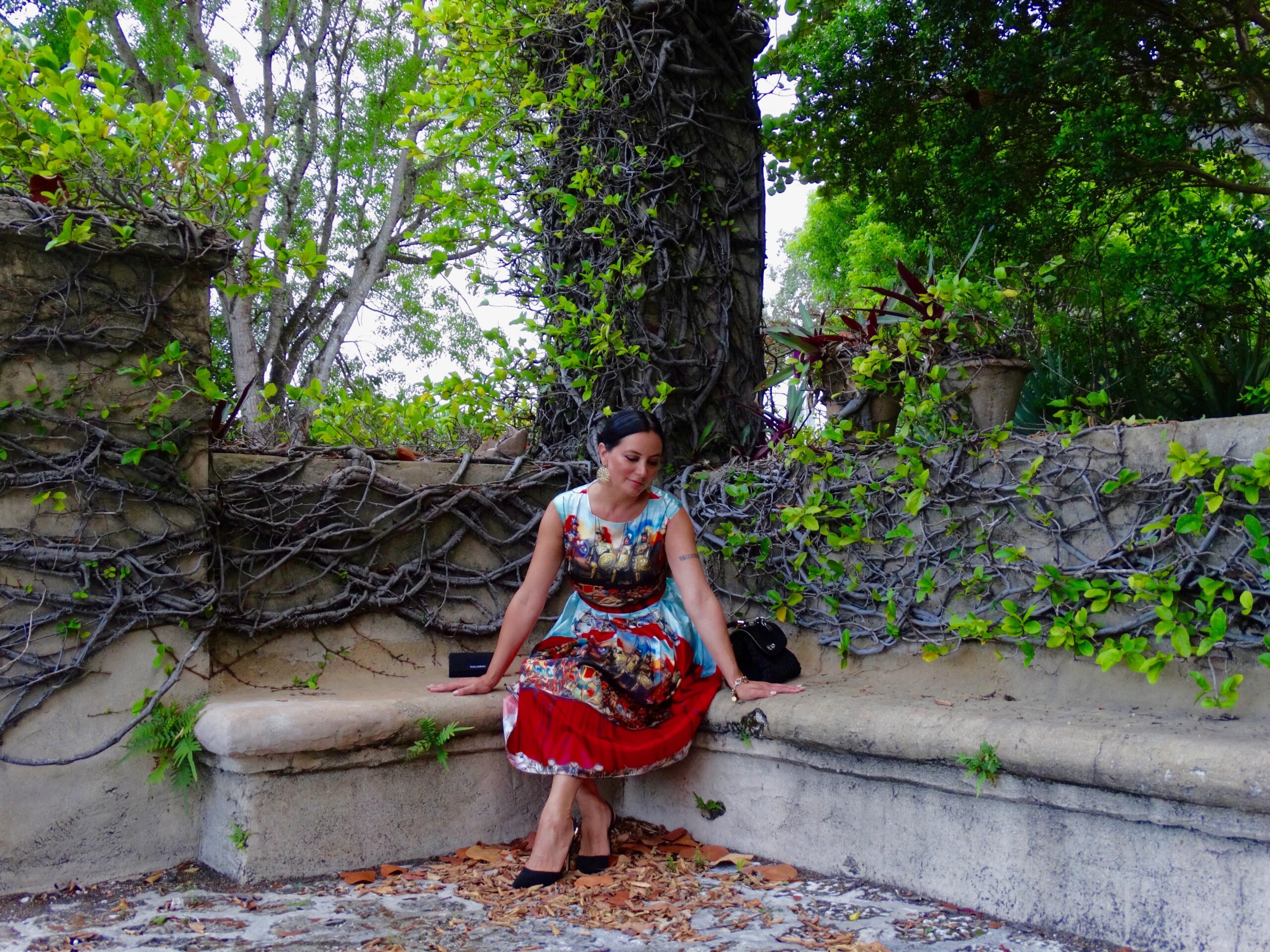
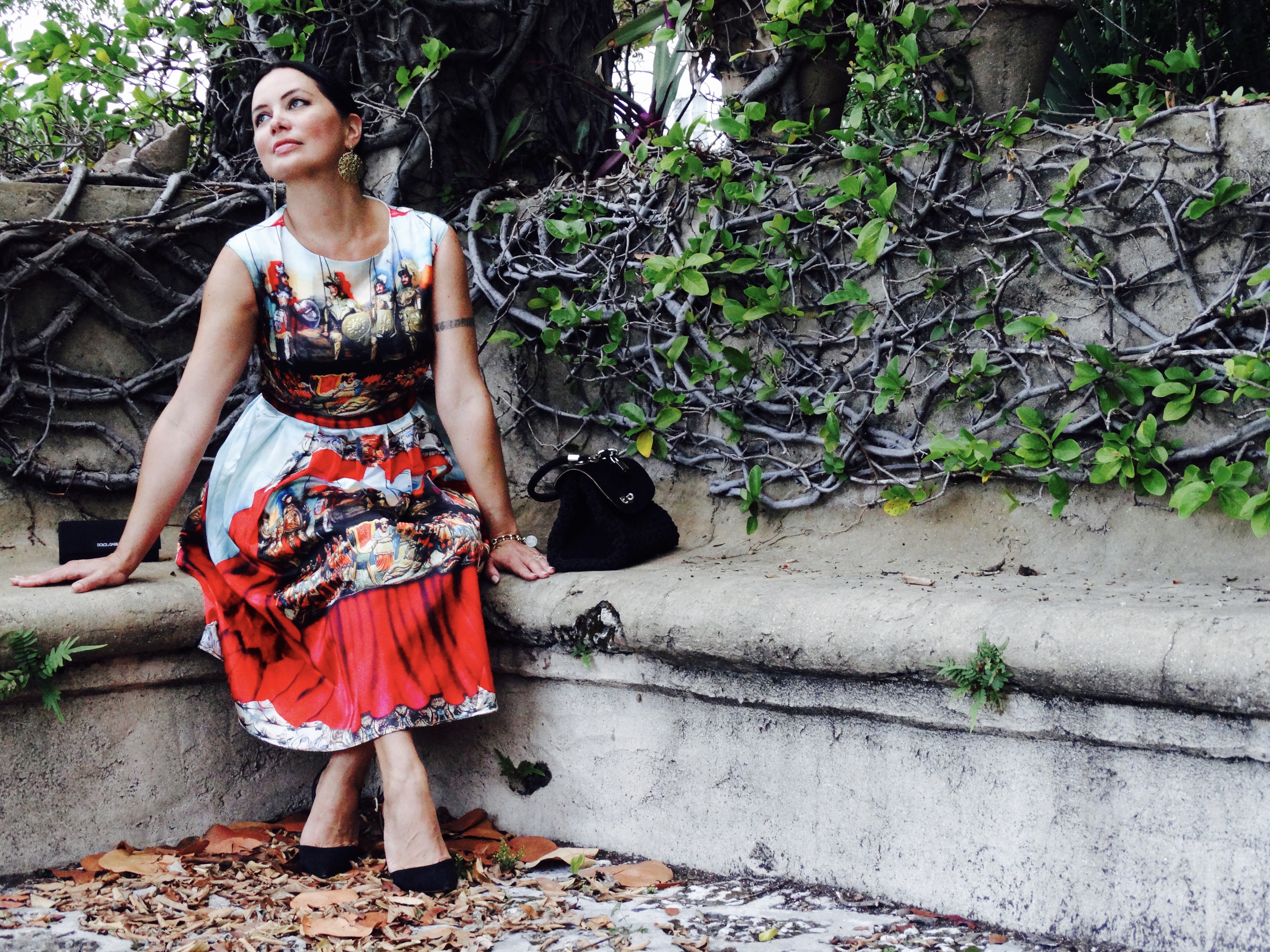
The 12th century was a period of transition between Romanesque art, characterized by massive, compartmentalized architecture with rounded arches and tunnel vaults. Montserrat Franco in Dolce & Gabbana’s Devotion collection. Cistercian churches built in the 12th century were exceedingly plain, unadorned with either figural or decorative sculpture, and usually severely elegant. Montserrat Franco at the Ancient Spanish Monastery in North Miami Beach.
References:
de Ange, Angie (2007). “Oldest Building in the West”. Orange & Blue. University of Florida: College of Journalism & Communications.
The city of Coral Gables was developed by George Merrick with the conception of “The Beautiful City” an architectural movement from the late 1800’s and early 1900’s that includes the “Beaux-Arts” style characteristic to many buildings not only in Coral Gables but also can be seen in Downtown Miami.
Merrick a visioner himself created unique villages in to the City, on a plan that only Walt Disney could conceive; Merrick was determined to make this town beautiful.
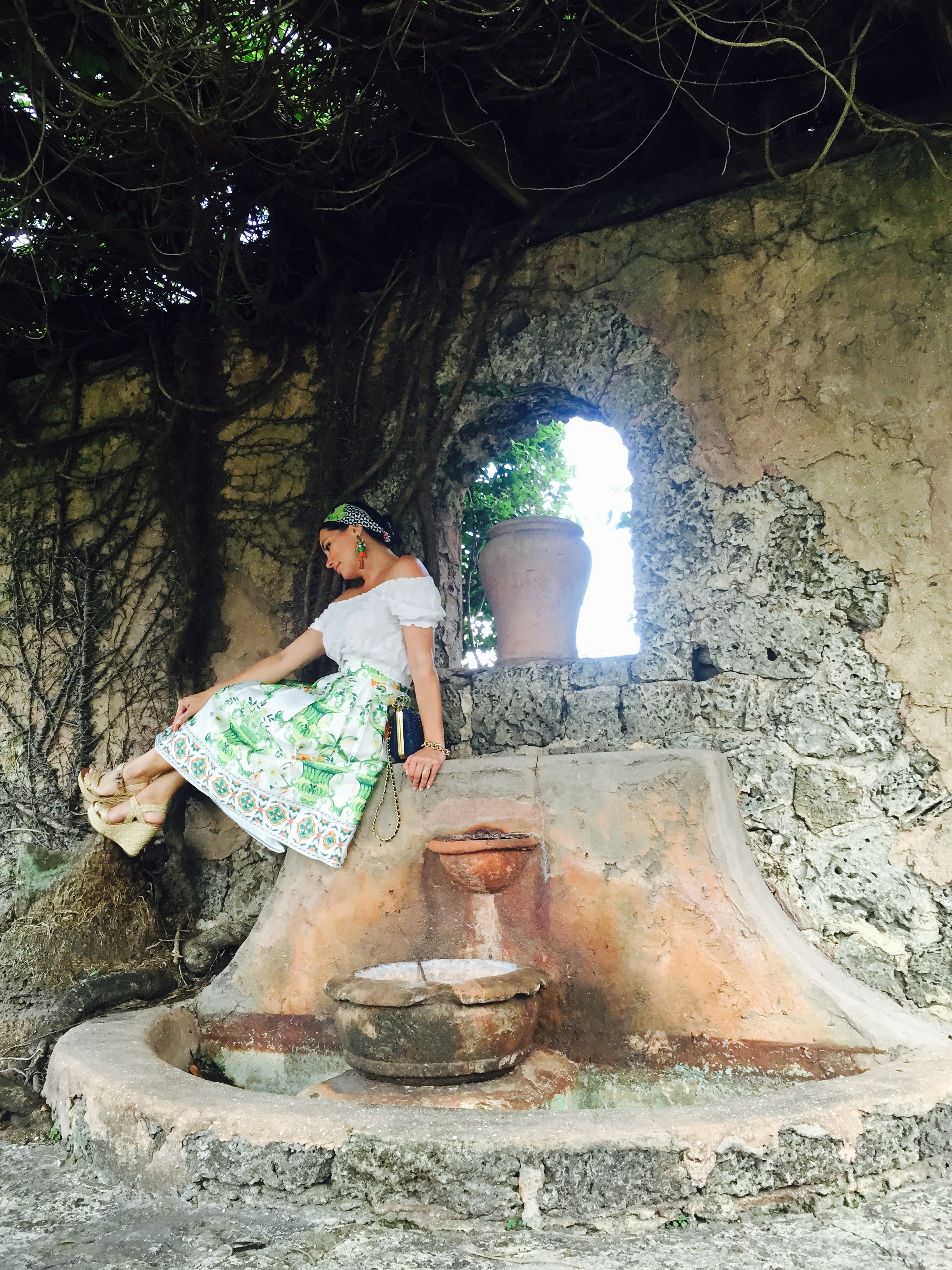
One of the typical scenes in Coral Gables, a fountain built on the coral rock (limestone) bringing reminiscences of an ancient Spanish village.
The Villages
I invite you to take a closer look to the villages and admire the architecture, the gardens, the arched gates and feel like you have travelled around the globe in less than a day.
The Italian Village: Stroll on Montserrat, Palmarito and Altara Avenues, the homes here will transport you to the Villas of the 17th century in Italy. Frank Wyatt Woods designed them in 1926.
The French Villages: Conceived after 18th century French country farm houses and chateaux; these villages are located on the 500 to 1000 block of Hardee Road.
French Normandy Village: Did you notice when driving on traffic on LeJeune Road the particular houses by the 400 block of Vizcaya Ave? These are the 15th century homes found in England and France; constructed here in the 1930’s.
Pioneer Village: When driving or walking around Santa Maria Street by the Golf Course of The Biltmore Hotel; take a look at the Colonial Village with tall pillars, white picket fences, two story porticoes.
Chinese Village: The colorful Chinese compound style residences were designed in 1926 and you can see them on the 5100 blocks of Riviera Drive, Menendez, Castania, Maggiore and Sansovino Avenues.
Dutch South African Village: Designed by Palm Beach Architect Marion Syms Wyeth, these L and U shaped farmhouses resemble the homes of the wealthy Dutch colonists and you can see them on LeJeune Road and Riviera Drive, Maya Street.
The predominant architectural lines in Coral Gables are the 1920’s Mediterranean Revival Style and The Spanish Renaissance often confused with the 1930’s Art Deco because of the timeline between styles.
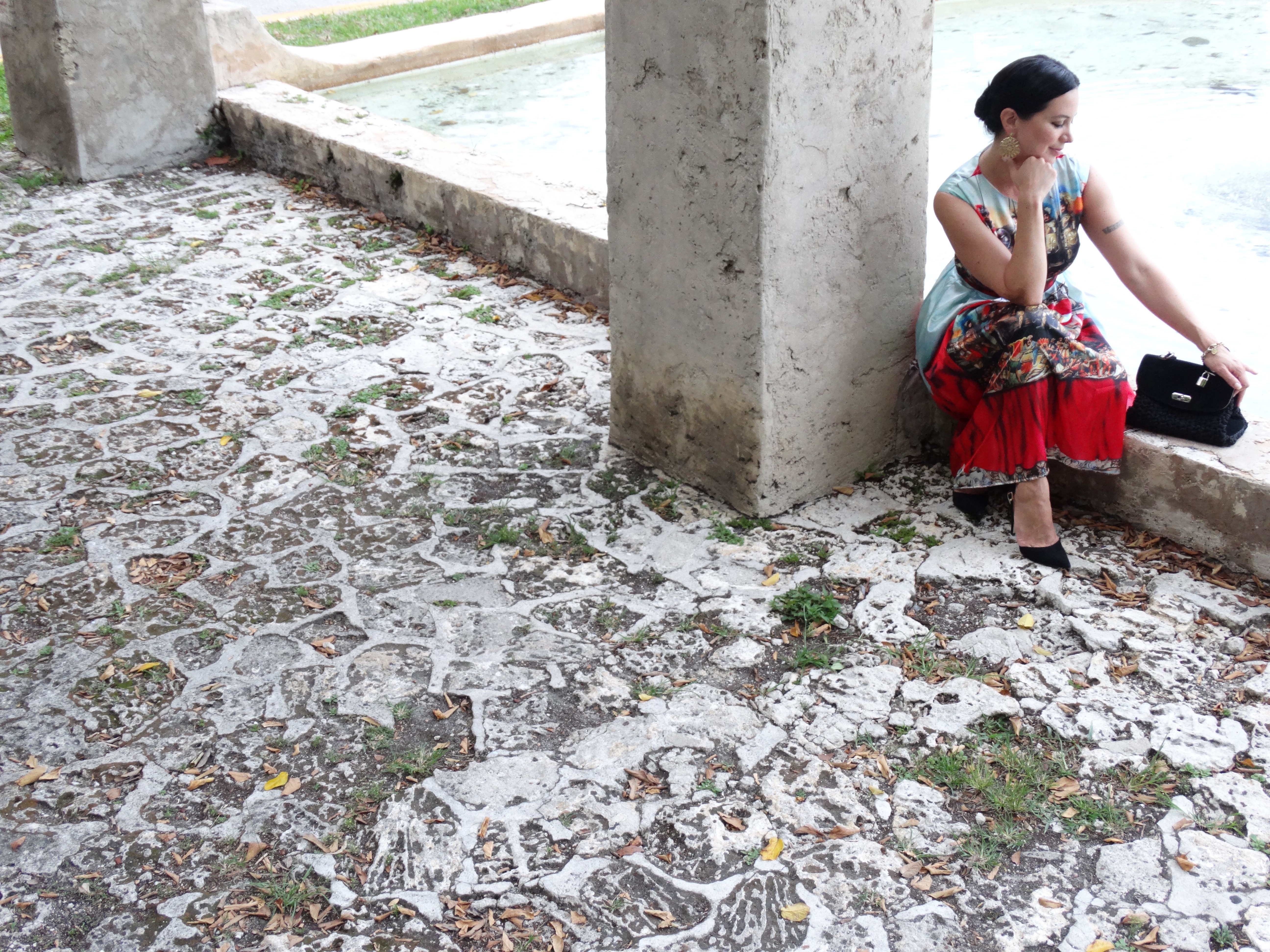
Montserrat Franco in Coral Gables, wearing a dress from the Dolce Gabbana Teatro dei Pupi (Theatre of marionettes) collection
The Gates of Coral Gables
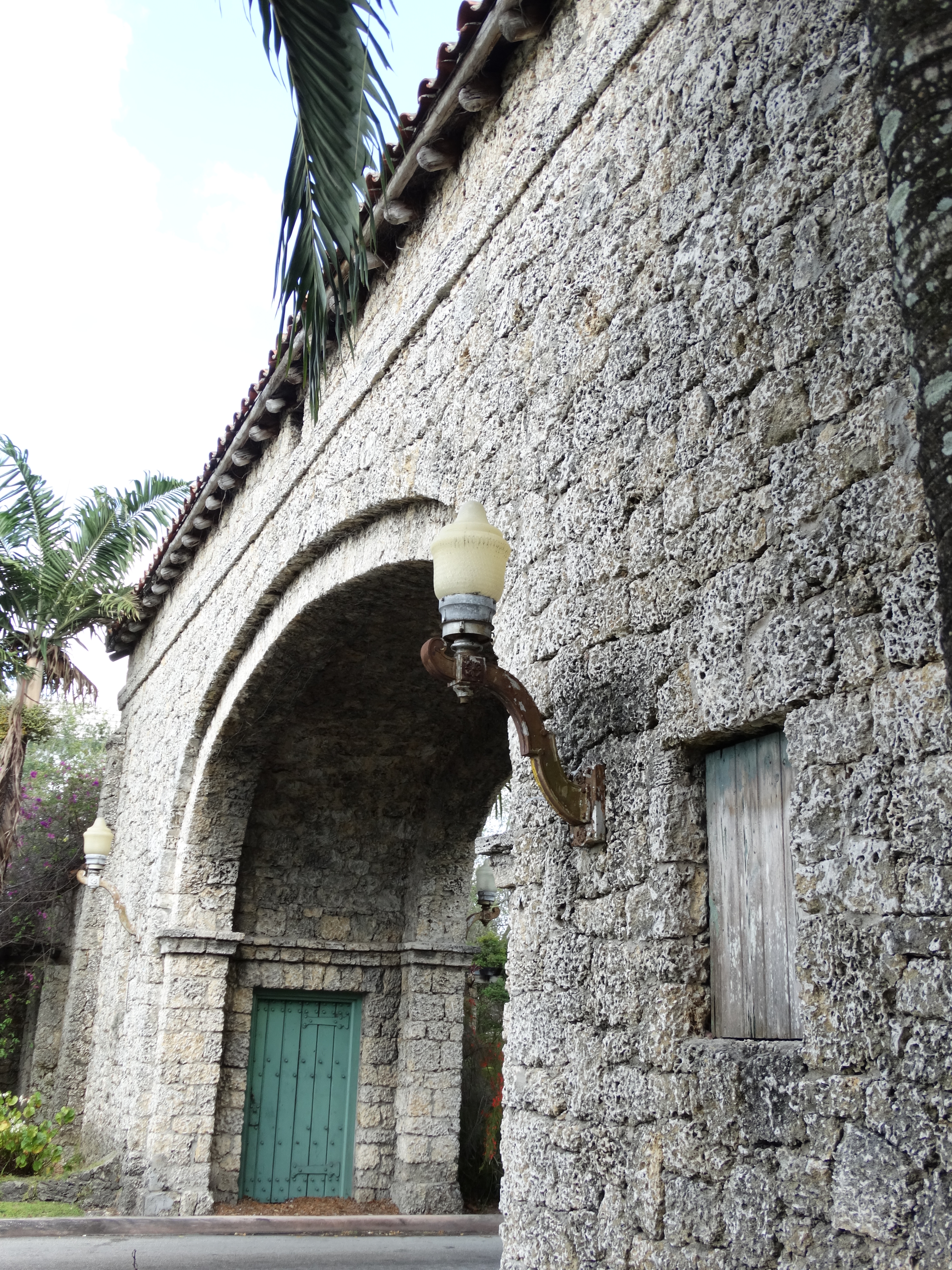
George Merrick also envisioned eight different entrances to Coral Gables inspired in Spanish hill towns; only four were completed. You may drive by almost everyday around these gates but take a pause and look around a piece of history on your very own town.
The Douglas entrance (on Douglas and 8th Street) also called “La Puerta del Sol” is one of the most elaborated built between 1925 and 1927. It is registered on the National Registry of Historic Places.
A view of the building connected to the gate “Puerta del Sol”
Montserrat Franco in Coral Gables (Puerta del Sol entrance) wearing a Dolce Gabbana dress and sunglasses from the Sicilian Baroque collection
The Granada Entrance: Located at Granada Blvd and SW 8th st built on coral rock (limestone). The arch spans Granada Blvd which is a historic roadway.
The Granada entrance
Montserrat Franco at the Granada walls in a Dolce Gabbana dress from the Byzantine collection
The Prado entrance: Located at the NW corner of the City of Coral Gables at S.W. 8th Street and S.W. 57th Avenue (Red Road). For years the Country Club Prado Arch has been a setting for photography, specially wedding, engagement, etc.
The Alhambra Entrance: Located at S.W. 37 Avenue (Douglas Road), Majorca Avenue and Alhambra Circle. The Alhambra entry arch is also known as the commercial entry to Coral Gables, as Alhambra Circle leads to the central business district and Miracle Mile.
So much to explore in Coral Gables that you may want to come back for more, a long walk around charming homes with clustered buganvilias on limestone walls; unexpected fountains; spanish coats of arms on pillars and immense banyan trees to get the feeling of that Mediterranean getaway not so far away from home.
Christian Dior Beauté:
Located at Level 1 inside Neiman Marcus; Christian Dior is the timeless French House of Beauty; choosing the right foundation, brushes and highlighters to enhance is not an easy task so we got expert advice from Yolanda Ayala who kindly guided us in the search for the perfect tones; loved the Dior Show in 2 steps: maximizer and dramatic mascara. Another favorite is the Forever foundation with 35 SPF and shine control; this makeup feels great on the skin leaving a sun kissed look.
For the perfect eyebrows I recommend the Dior Show brow styler, with a few touches following the arch of the eye brows to create a natural and filled look.
Dolce & Gabbana : The Sicilian Bronzer – Limited Edition
When I first saw this beautiful bronzer I said: “I must have it” and I did, thanks again to Yolanda who made it happen. The limited edition “Sicilian carretto” design on this beautiful coffret it’s a keeper.
The Sicilian bronzer will give you that natural glow needed to complete your makeup. I tried the Dolce Matte lipstick in Flirt; a long lasting color that can stay for hours.
The Dolce Gabbana Sicilian Carretto Bronzer Limited Edition is inspired on the colorful art of the carriages in Sicily
L’Occitane en Provence:
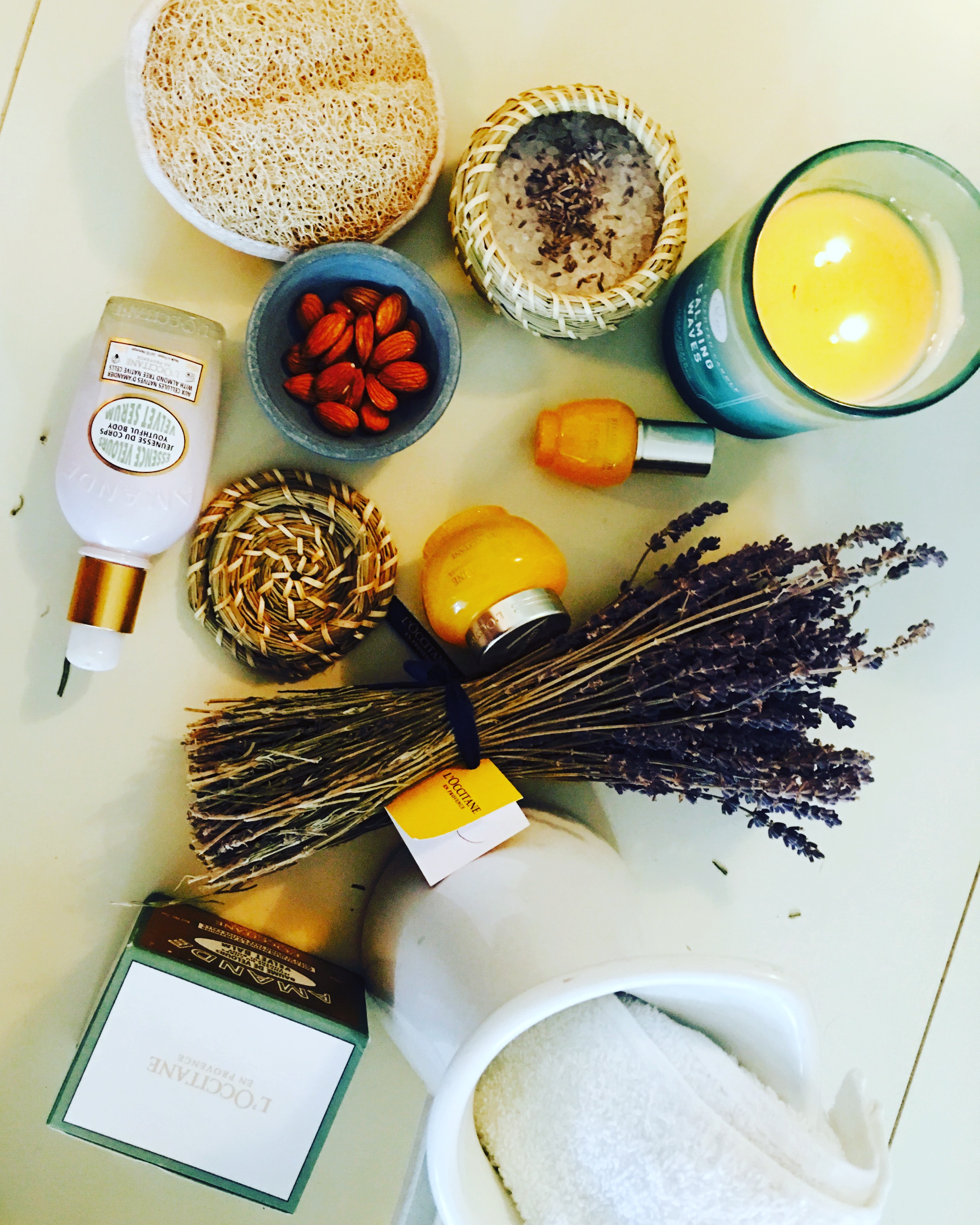
Located on Level 2 at the Shops at Merrick Park; I became a big fan of L’Occitane and the Divine Collection; creams and serums made with essential oils extracted from the “Immortelle flowers” everlastings, plants in the family Asteraceae that grow in the wild island of Corsica and can live forever.
Try also the restorative hand creams and lotions made with original resources from the South of France; almond, lavender, roses and get all the steps to make your own spa indulgence at home.
Did I mention L’Occitane gives back? Not only a promise to the environment, all organic made, never tested on animals but also a support to charities all over the world.
Lilly Pulitzer:
When entering the Lilly Pulitzer store at Merrick Park we can’t be more happy; because Lilly’s designs are just all about a Floridian dream lifestyle, a scape to the tropics.
The iconic prints on the shift dress that made it to our first ladies and socialites closets are here to stay; find one for every occasion at Shops of Merrick Park’s first level.
Bright neons, turquoise hippocamps, pink flamingos, green palm leaves, yellow pineapples and all in between mosaics combined with tassels and charms; Lilly’s artistry is still alive on every dress.
The native of NY who settled in Palm Beach and opened a lemonade stand with her husband never thought how brilliant could be to start her own shift dress business after everyone loved the designs, sooner she sold more dressed than lemonade cups.
When packing for a vacation never miss a statement piece and a Lilly dress, after all… life is better on the beach.
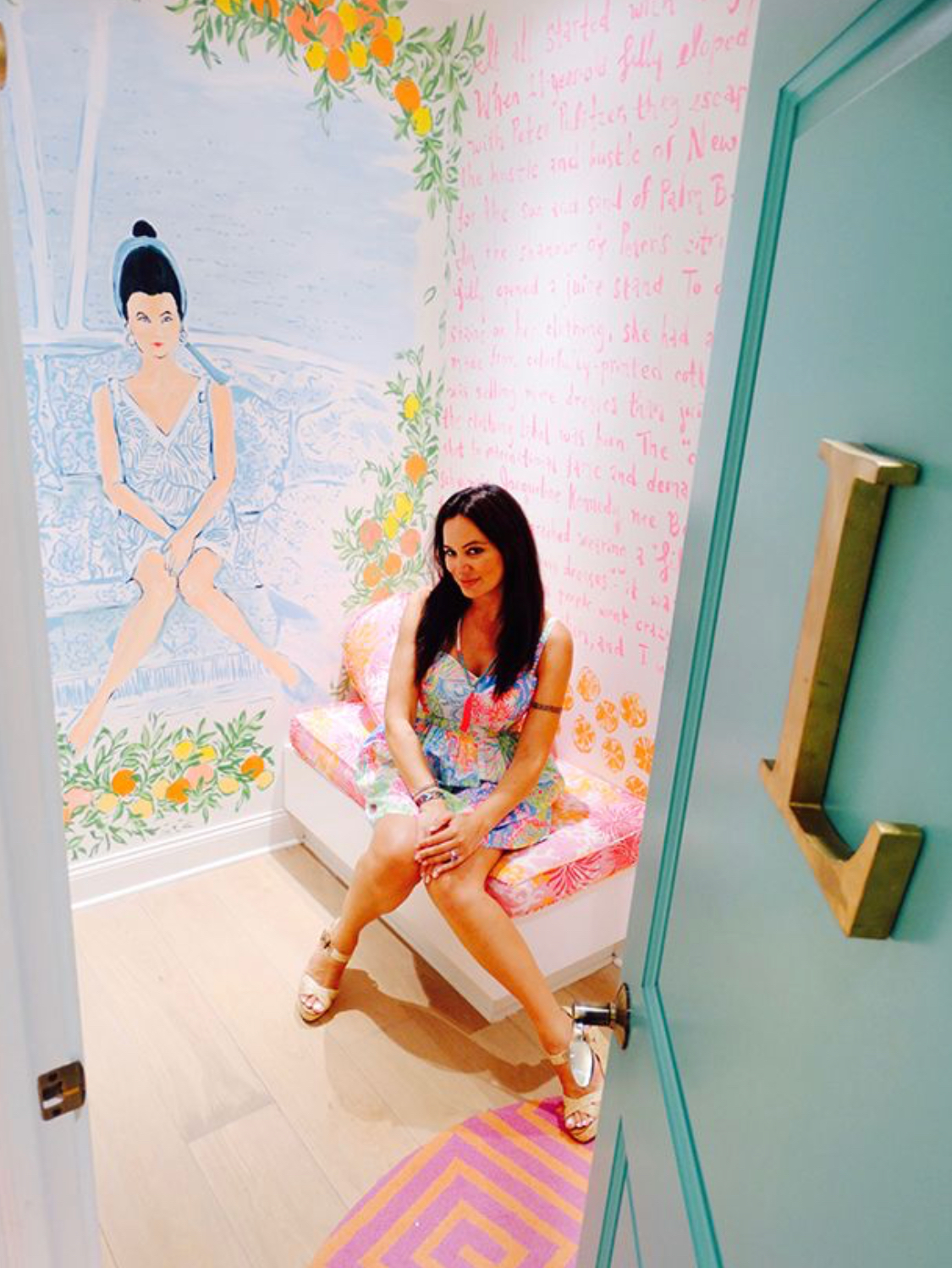
The Town of Coral Gables and City Hall depicted on a hand painted wall at the dressing room of the Lilly Pulitzer boutique at Merrick Park
Also known as the Birdland sanctuary; El Portal (from the Spanish “The Gate”; named this way because of the two main wooden gates that were placed at the entrance of the village) is one of the very first archeological sites registered in Miami Dade County.
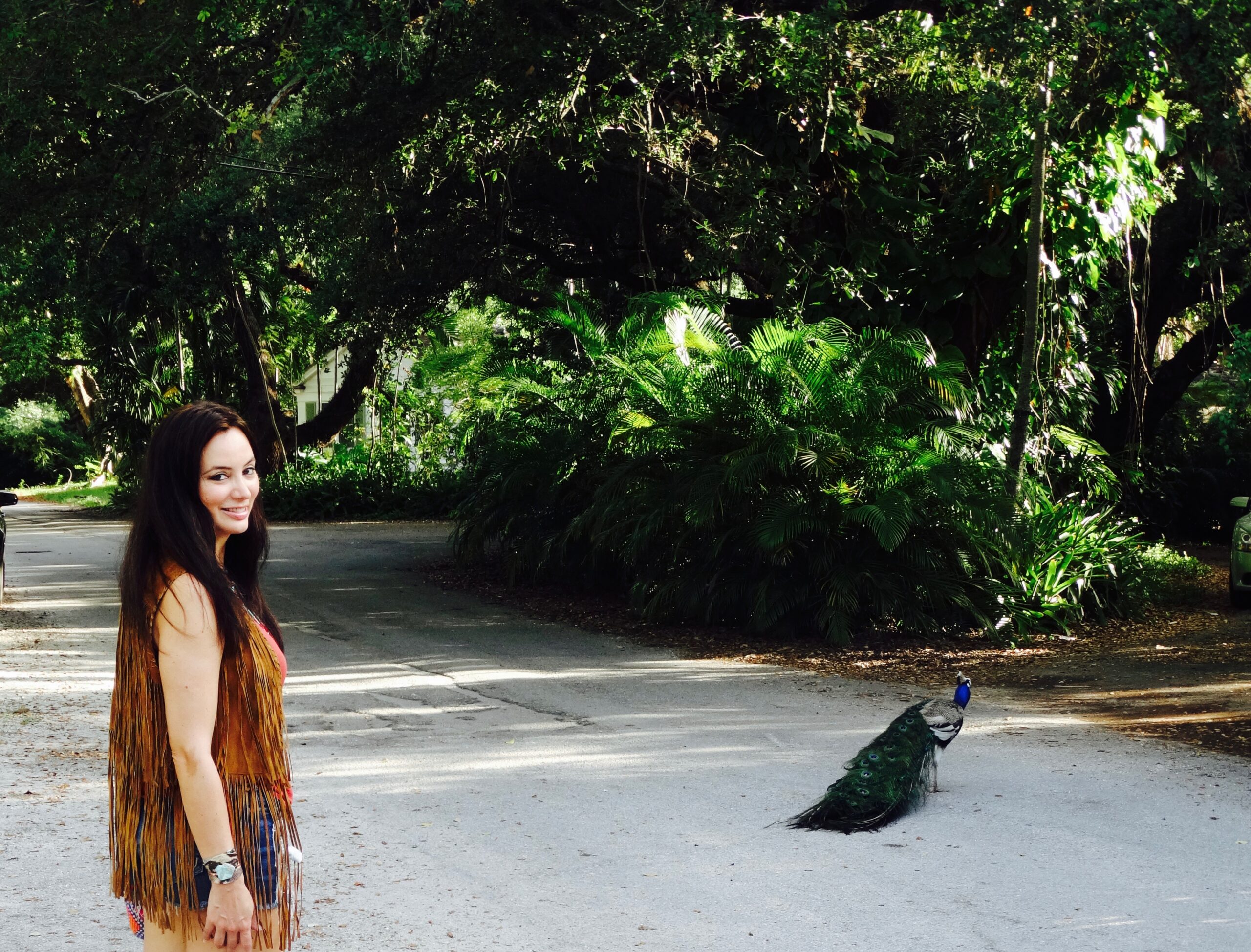
Because El Portal isn’t a touristic attraction opened to the public; please be cautious if decide to visit, respect the nature, the silence and the neighbors. El Portal is a residential village were peacocks walk free; an almost enchanted forest with hundreds of year old trees guiding the path to a Tequesta Indian Burial site.
The Tequesta Indians; one of the first people of today’s South Florida lived in the areas known as the Biscayne Bay and the South bank of the Miami River including what is today the Village of El Portal. In 1560 Admiral Pedro Mendendez de Aviles took contact with the Tequesta Indians who were later transferred to Cuba, converted to the new faith and later vanished.
One of the ancient trees at the Village of El Portal, a sacred habitat.
Once at El Portal; I had my first encounter with that exuberant vegetation and the endless variety of botanical species; because of my Native American origins I felt the need to visit the site and respectfully give back to the earth what is from the mother earth: I had kept for the longest time a few ritual instruments I received from the Mbya Guarani Indians back in Paraguay which I deposited on to the sacred mound. I prayed in silence and felt in harmony with the nature.
This tablet marks the habitation mound of the Tequesta Indians
One of the typical scenes at El Portal: Peacocks crossing the road
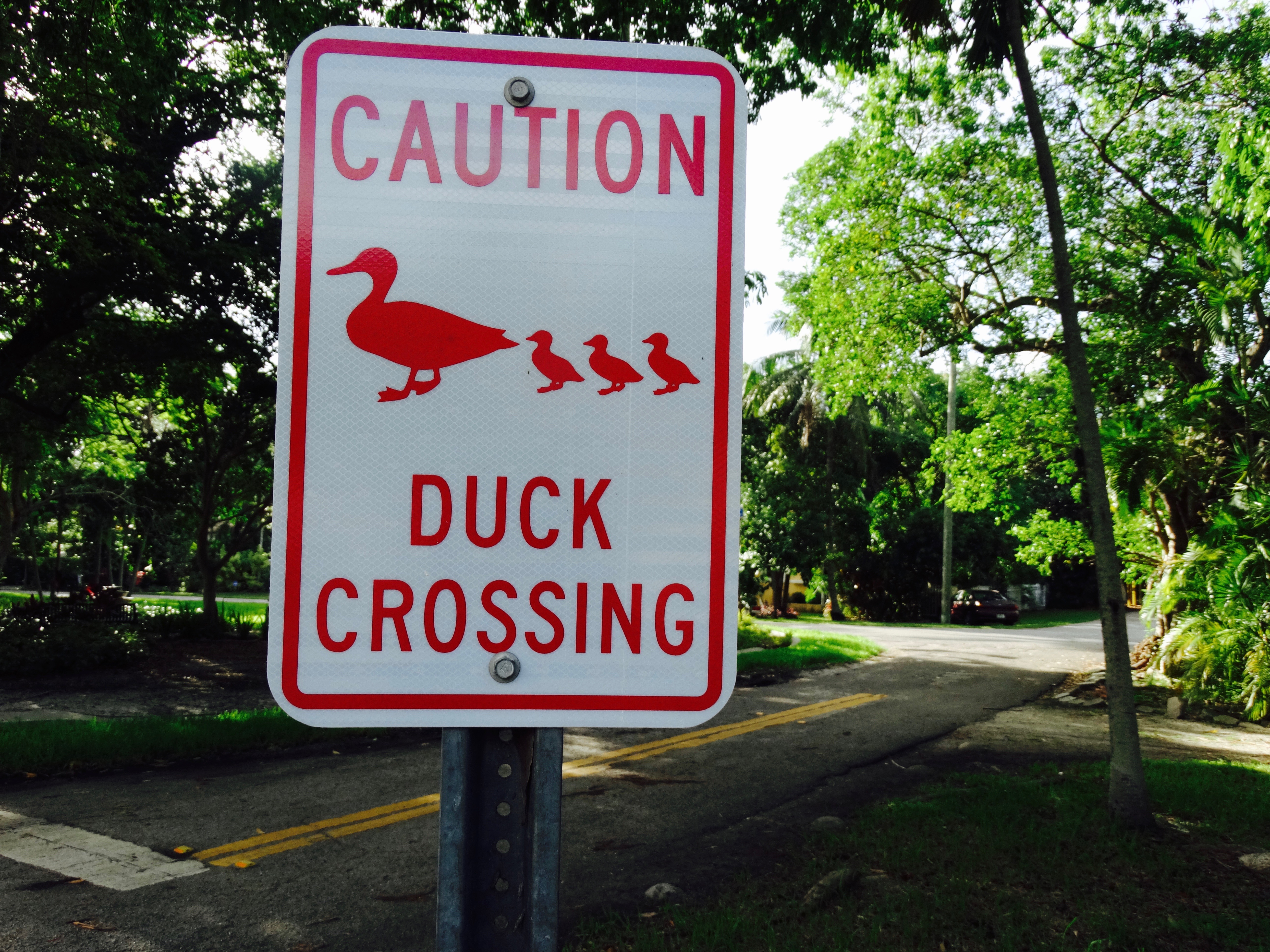
I thought this was also one of the cutest signs: Caution: Duck crossing
In addition El Portal is a certified Wildlife Habitat, as a source of the Four Basic elements needed for wildlife to thrive: food, water, cover and places to raise the young spices. I discovered signs marking the pathways while numerous butterflies revealed their beautiful colors. This site provides also the necessary milkweed, nectar sources and shelter to sustain monarch butterflies as they migrate though North America.
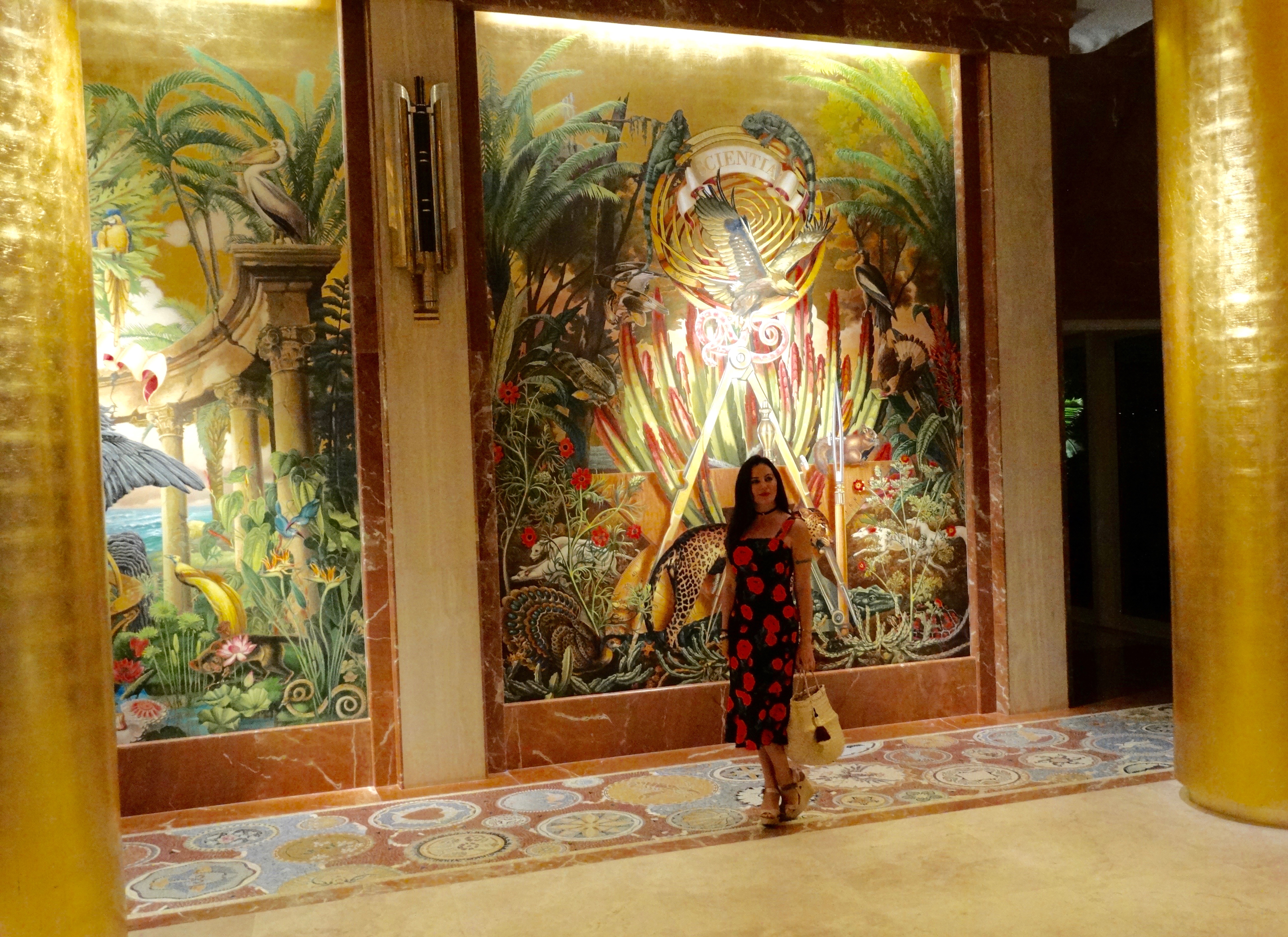
When entering the opulent Faena Hotel is like submerging in to a Cathedral of art; murals and mosaics by renowned Argentinian artist Juan Gatti called the Coined Utopia (Faena + Utopia) a depict of the Journey of Life and a vision of Alan Faena’s magical world.
Montserrat Franco in front of Juan Gatti’s “Coined Utopia” at Faena Miami Beach wearing Dolce & Gabbana
Alan Faena; the orchestrator of this Hotel Universe; has always been the utopian businessman; when believing in areas that no one will give credit to; decades ago back in Argentina, transforming and making its own empire from marginal to chic; like a Midas touch; everything turned in to gold.
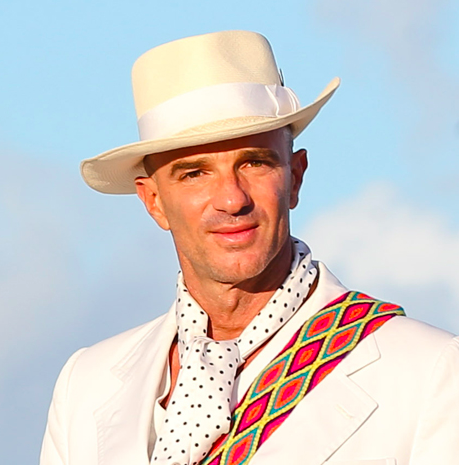
When understanding the Faena’s “cosmovision”; his own style that has been evolving as the Urban Alchemist; dressing in pristine white and a dandy hat but with a folk accessory to complete the outfit: an Indian wayuu crossbody bag. We want to show you more about his fantastic world and here we are for the experience.
Alan Faena
Golden columns and red carpet guide us to the Living room, the tropical lounge retreat with a curated live music set nightly; elaborated mixology and that feeling of being on your best friend’s living room.
Los Fuegos by Francis Mallmann: A few steps right after we are at Los Fuegos by Francis Mallmann; crowned the Ambassador of Fire; Francis Mallmann brings his own South American “Gaucho” mastery for “asado” as the traditional way on his custom designed wood fired grill.
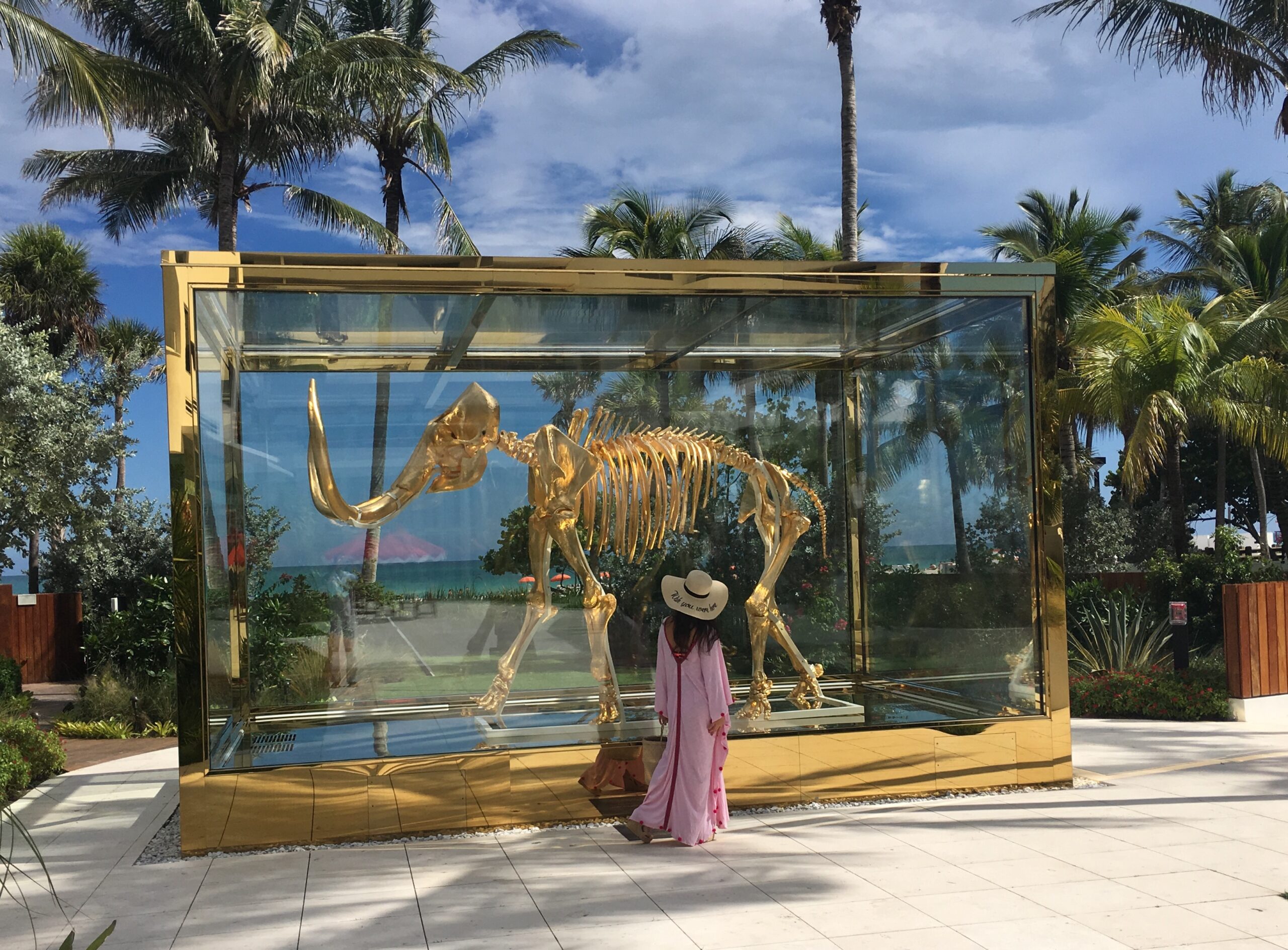
One of the distinctive points at the Faena is the golden mammoth installation by Damien Hirst; “Gone but not forgotten” is an example of the unexpected bringing us back to reality and what is here to stay. The path will take us to the beach on a dreamy oasis of white sands flanked by the characteristic red and white stripped umbrellas with endless tassels; in the Middle East tassels were worn as amulets for protection; tassels can be seen on the decor around the Faena complex.
Damien Hirst: “Gone but not forgotten” Montserrat Franco wearing a Pitusa Sevillana dress
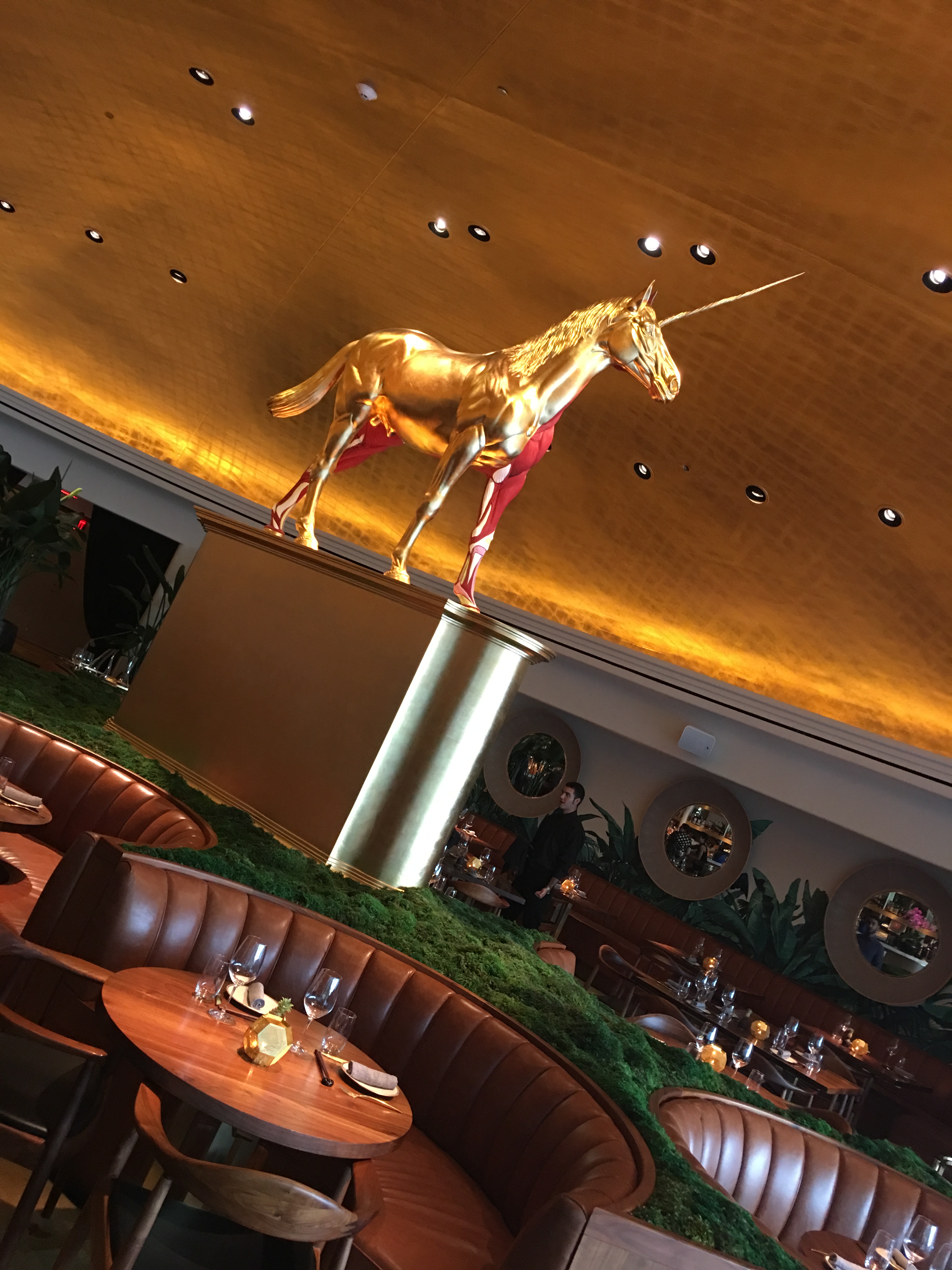
Pao by Paul Qui: Coming back to the dining areas; we are ready to contemplate the stunning views from the terrace at PAO by celebrity Chef Paul Qui; a James Beard winner brings his Pan Asian flair to Faena’s fine dining arena; from stylish presentations to harmonious flavors; the crudos, kinilaw, ceviche, sashimi or tiradito are once again a delectable sharing experience all paired with a cult and collectible wine list under the tutelage of the sommelier team at La Cava. Another Damien Hirst sculpture of The Unicorn; half gold, half alive in the middle of the dining room is a true expression of the dichotomy myth + reality in Faena’s universe.
Damien Hirst: The Unicorn at Pao by Paul Qui
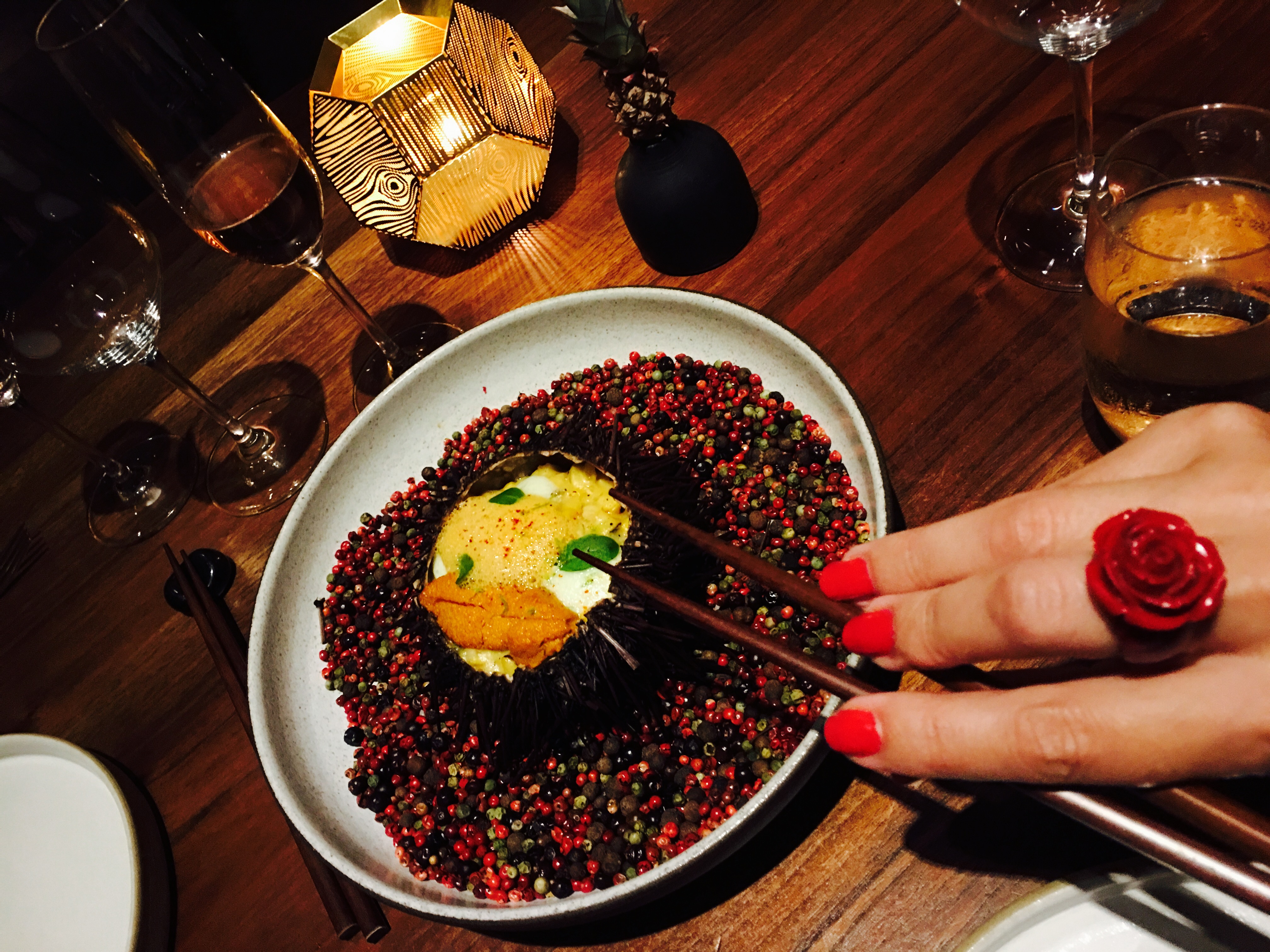
The Unicorn is the name of this creative dish composed of Uni + Corn on a sea urchin shell
Tierra Santa: The Spa
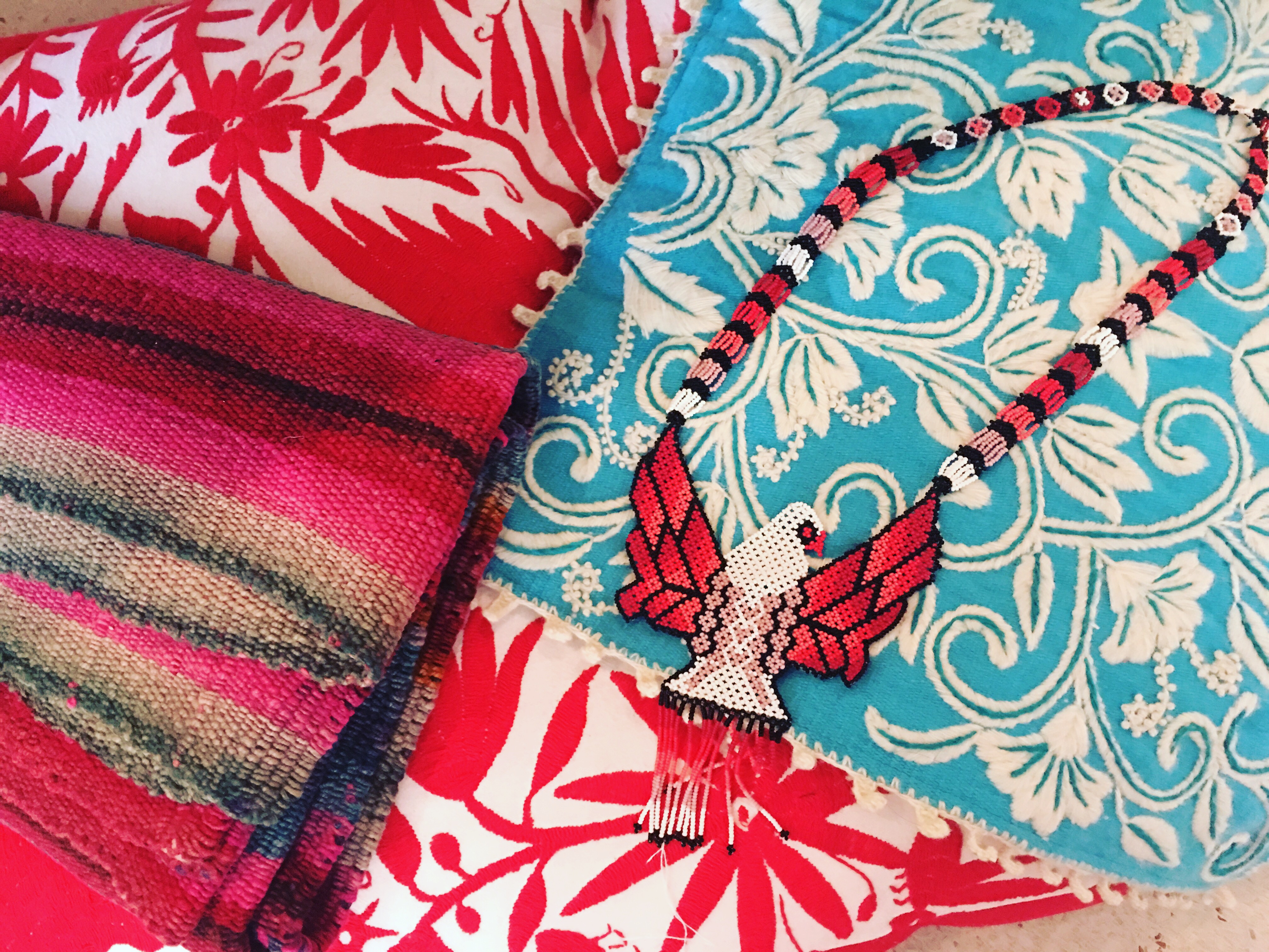
White for the floors and walls, at “Tierra Santa Healing House” spa but full of vibrant colors of Latin American embroidery and handcrafted objects by Eco Fair Trade designer Carolina K who has been working with different ethnic groups from Mexico to Peru and India with successful collaborations such as Anthropology and Urban Outfitters.
Otomi cushion covers and ethnic objects at the Bazar by Carolina K inside Tierra Santa spa. Otomi cushions are also part of Tierra Santa’s decor.
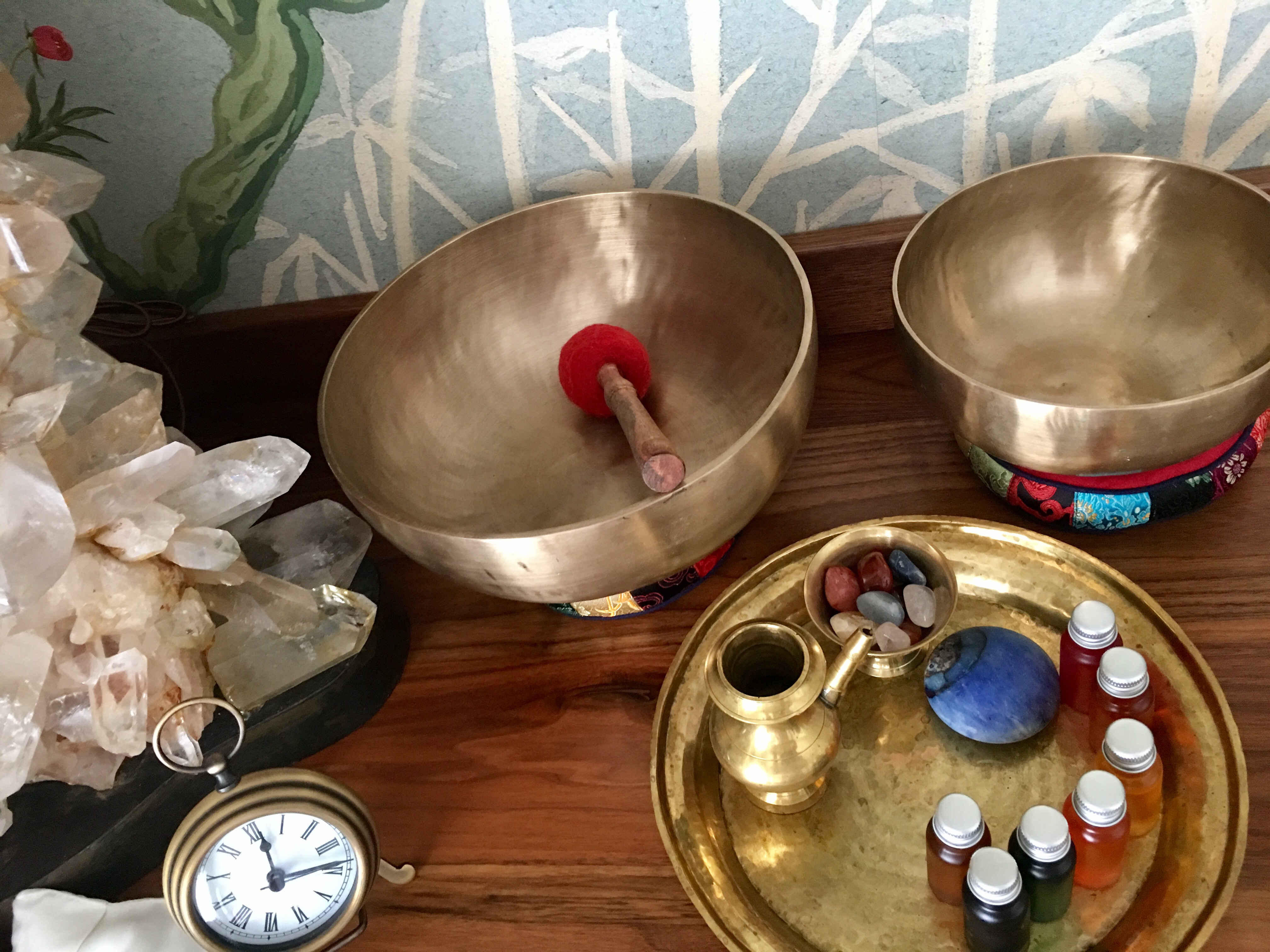
Tierra Santa is America’s first South American inspired spa, combining ancient healing techniques and treatments; hand blended plant oils, rose stones and vibrating singing bowls. Sustainable in so many different levels Tierra Santa’s holistic treatments have been developed respecting the mysticism and rituals of these cultures with their own in-house Shaman.
Tierra Santa Healing House is so different from any other Spa experiences; a unique collection of seven “Moringa” seed base oils representing the 7 chakras to elevate, calm, restore and heal are used on each specific treatment; Amazonian white clay collected from the Marajo shores and Guarana-maca blend scrubs to purify mind and body; a welcoming scent of Palo Santo and their own custom made soap tower are just examples of the attention to every detail. Once at the Wet Spa; guests can experience the journey of the senses; the hammam, centered by heated gobek tasi stone and incrusted with Faena’s signature South American Rose mosaic.
Inside the Hammam the gobek tasi stone incrusted with Faena’s signature South American Rose mosaic.
Signature 7 chakra oils made of moringa seeds and Himalayan singing bowls at Tierra Santa Spa
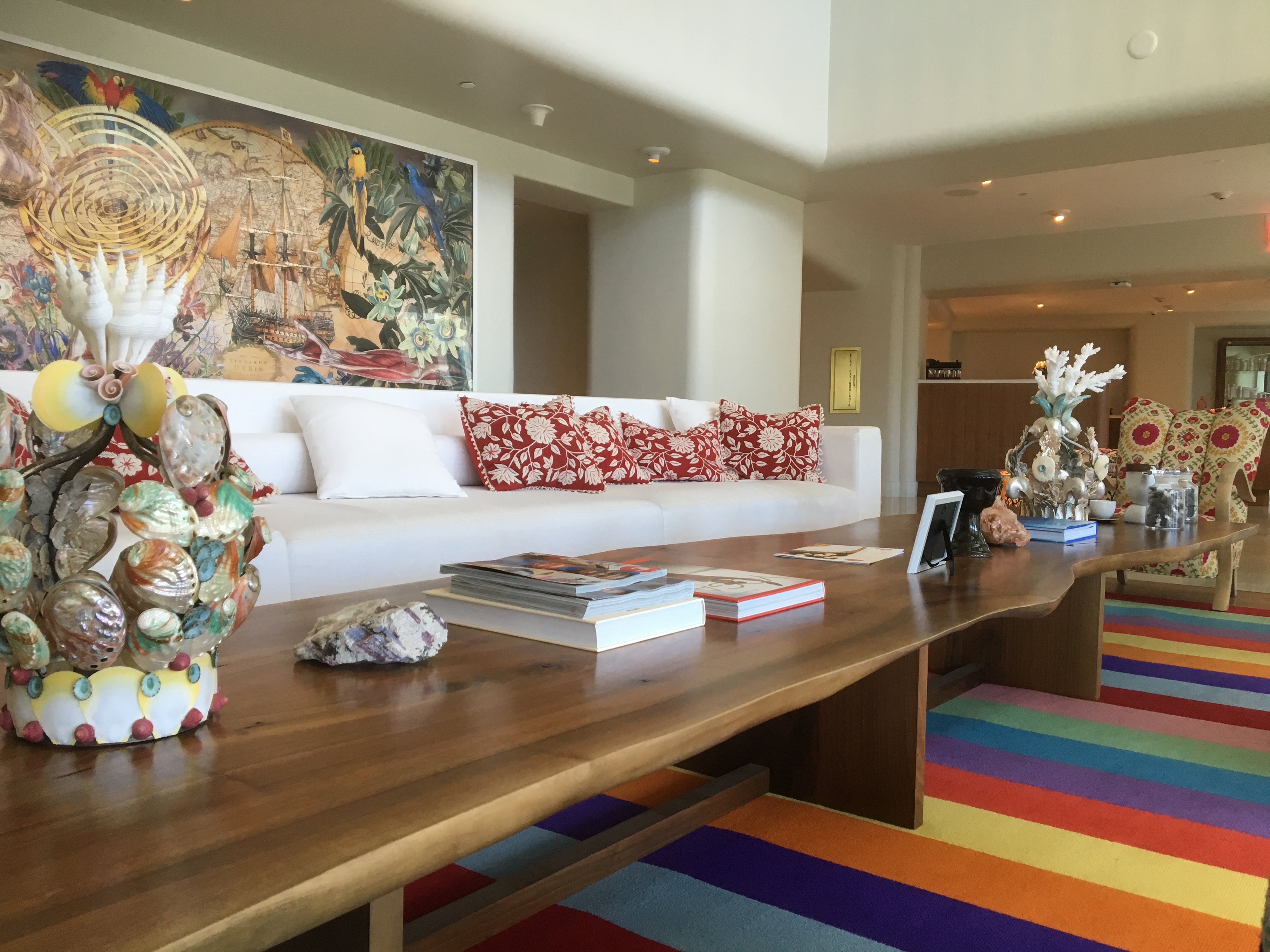
A treatment suite at Tierra Santa spa
Back to the spa suites; a rainbow stripped rug representing the 7 chakras and comfy sofas adorned with otomi embroidered cushions make the perfect spot for sipping on blended teas and healing stone infused water while contemplating views of the tropical oasis.
A gracious spa hostess dressed on Huaxacan styled dress by Carolina K guide us to the gorgeous suites covered with Juan Gatti’s murals. There, a choice of therapeutic power oils, healing stones and custom massages are used in conjunction with singing bowls to elevate the spirit.
Now, we don’t want to go back to reality but we can always dream of that fantastic world and yet have it all; right here in Miami Beach at the Faena District.
For reservations:
Faena Hotel Miami Beach
3201 Collins Ave.
Faena District, Miami Beach, FL 33140
Phone # 305 535 4697
www.faena.com
Tierra Santa Healing House
Phone # 1 844 798 9716
Pao by Paul Qui
Phone # 786 655 5600
Los Fuegos by Francis Mallmann
Phone # 786 655 5600